Pandemic preparedness deserves scrutiny at the point where a promise becomes a practical decision: what is funded, what evidence is required and who can obtain the resulting tests and treatments. A headline about speed does not answer those questions.
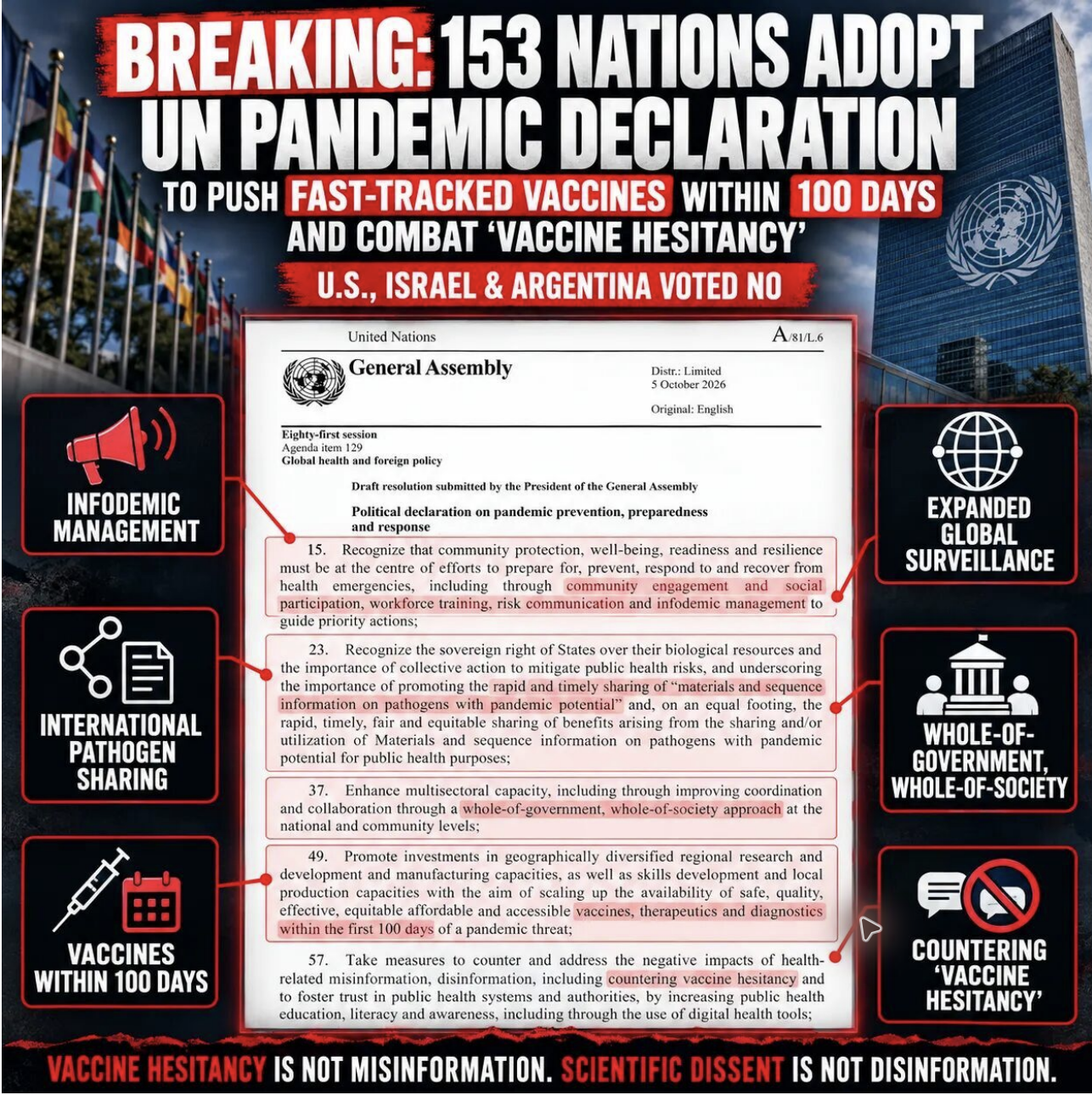
In its 13 October 2026 statement, the International Pandemic Preparedness Secretariat says the new UN political declaration was endorsed by 153 Member States and recognises the aim of making diagnostics, treatments and vaccines available within the first 100 days of a future pandemic threat. IPPS links that ambition to work undertaken before an emergency, including research capacity, manufacturing and regulatory readiness.
That is an institutional account of the declaration and the 100 Days Mission. It is not clinical evidence that any particular future product will be safe or effective. Each product would still need to be judged on the evidence supporting its own use. Readers should also distinguish a policy ambition from a specific national law, regulatory approval or instruction to an individual patient.
The accompanying graphic mixes selected material with commentary. Its labels should be evaluated against the full declaration rather than treated as an authoritative legal summary. Arguments about censorship, compulsory treatment or loss of national control require the relevant wording and implementing measures; a graphic alone cannot establish them.
Our editorial test is straightforward: will decisions and uncertainties be explained, will independent scrutiny be possible, and will preparedness improve access? Those questions offer a more useful basis for accountability than assuming that either the announcement or its critics have already proved the outcome.
References
- IPPS statement, 13 October 2026: endorsement and the 100-day goal
- UN document A/81/L.6: declaration text linked in the original post
- UN-hosted automatic transcript, 12 October 2026: vote at 51:46; not an official written record
