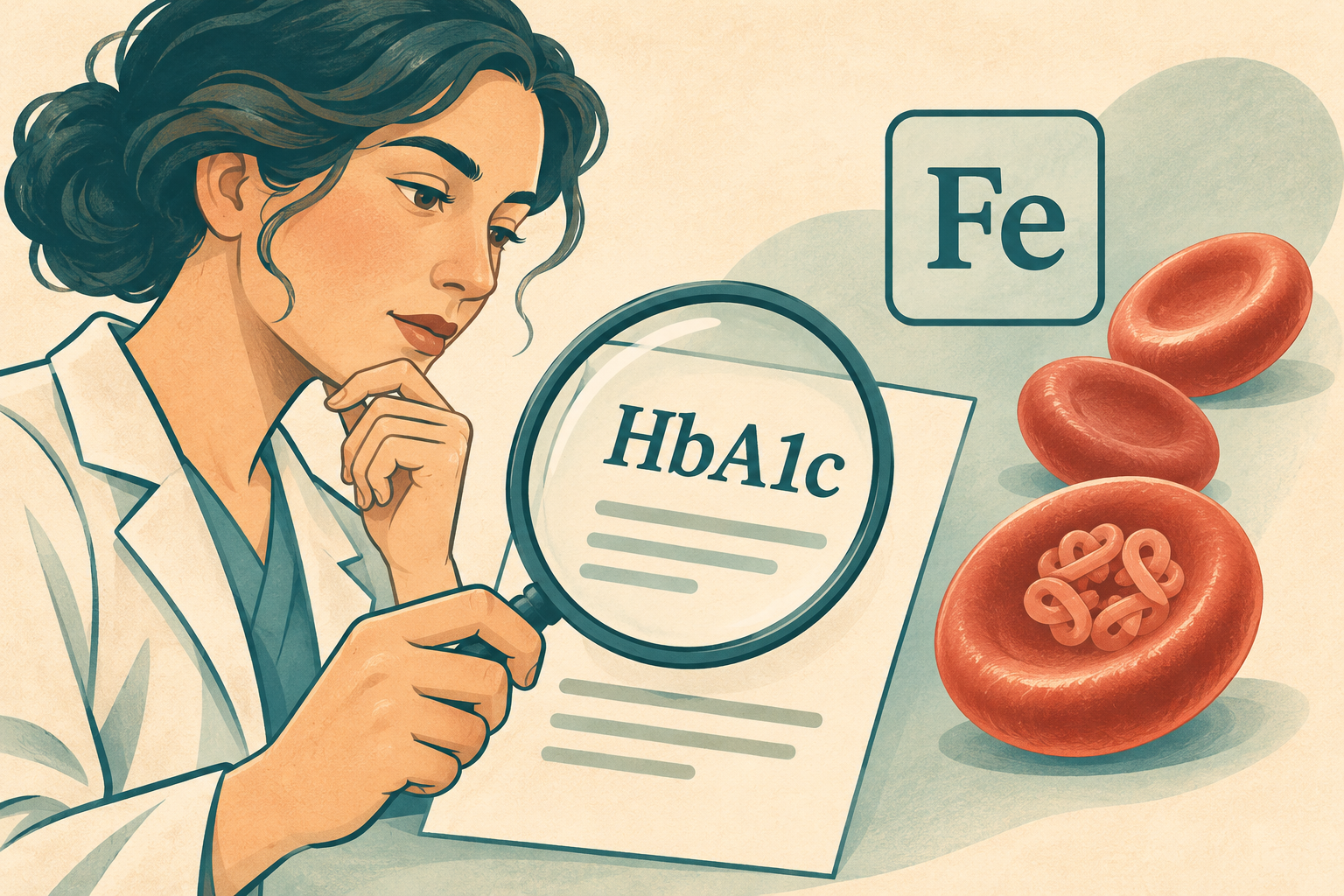
Low iron can sometimes make HbA1c look higher than your glucose levels suggest. The type of anaemia matters.
Your HbA1c has risen, but your glucose readings seem unchanged. Before assuming that diabetes control has worsened, it is worth asking whether something else could be affecting the result.
HbA1c measures the proportion of haemoglobin with glucose attached and helps estimate average blood glucose over approximately three months. It is a valuable test, but changes in red blood cells can make that estimate misleading. NIDDK explains the A1C test.
New to this test? Read our simple HbA1c guide first.
Why this is in the news
On 9 February 2026, The New Indian Express reported concerns about relying on HbA1c alone in South Asian populations. The article covered an evidence-based Viewpoint in The Lancet Regional Health – Southeast Asia, rather than a new patient trial. It highlighted anaemia, inherited haemoglobin disorders and G6PD deficiency as reasons for careful interpretation. Read the original Viewpoint.
More recently, a systematic review published in Biochemia Medica on 15 October 2026 examined iron deficiency and HbA1c. Of 43 studies investigating iron-deficiency anaemia, 33 reported falsely elevated HbA1c. A pooled analysis of 30 studies found an average difference of 0.66 percentage points. However, results varied substantially, and many included studies had important risks of bias. This average must not be used to “correct” an individual’s result. Read the systematic review.
How can iron change the picture?
Iron helps the body make haemoglobin. With significant iron-deficiency anaemia, changes in red-cell production, cell age and glycation can affect HbA1c independently of glucose. The mechanism is not completely settled.
The usual concern is an HbA1c that appears higher than the person’s actual glucose exposure would suggest. Iron treatment can lower the reading as the deficiency improves, so a falling HbA1c does not always represent an equivalent improvement in blood glucose. The NGSP advises using other measures of glucose control when significant iron-deficiency anaemia is present, until it has been treated. NGSP guidance.
Low iron does not always mean a misleading HbA1c
Iron deficiency and iron-deficiency anaemia are not interchangeable. People can have depleted iron stores without being anaemic, and findings in this group are less consistent.
A study published on 2 February 2026 examined 146 adults with type 2 diabetes in Uganda who did not have anaemia. It found no statistically significant difference in HbA1c by iron status, and HbA1c remained strongly correlated with glucose measured by continuous monitoring. This was a relatively small observational analysis, so it cannot settle the question for everyone. Read the PLOS ONE study.
When else should HbA1c be interpreted carefully?
- Red cells being destroyed too quickly, as in haemolytic anaemia, or recovery after acute blood loss can make HbA1c falsely low. Cells have less time to accumulate glucose. NGSP.
- Recent blood transfusion, kidney failure, erythropoietin treatment or liver disease can affect interpretation. The direction depends on the underlying circumstances.
- Haemoglobin variants, including some sickle-cell and thalassaemia-related variants, can interfere with particular laboratory methods. A suitable method may still give reliable results for some people. NIDDK.
- Pregnancy and other conditions that alter red-cell turnover can change the relationship between HbA1c and glucose. ADA Standards of Care 2026.
Also, an average can hide glucose spikes and lows. That limitation is different from a falsely high or low test result.
What should you do with an unexpected result?
If HbA1c repeatedly disagrees with glucose readings, ask your clinician to review the mismatch. Depending on your circumstances, they may check a full blood count and iron studies, review the laboratory method, or investigate other causes.
For diagnosing diabetes when the HbA1c–glucose relationship is altered, the American Diabetes Association recommends plasma glucose criteria, such as fasting plasma glucose or an oral glucose tolerance test. Glucose monitoring, and sometimes other markers, can help with ongoing management. ADA diagnostic guidance.
Keep using HbA1c as part of the picture, with the right context. Do not dismiss an elevated result, change diabetes medicines, or start iron supplements on this information alone. A clinician can establish whether iron deficiency is present, why it developed, and which test best reflects your glucose levels.
For general education, not individual medical advice.
#HbA1c #IronDeficiency #Anaemia #DiabetesAwareness #BloodSugar #LabTests #EvidenceBasedHealth
