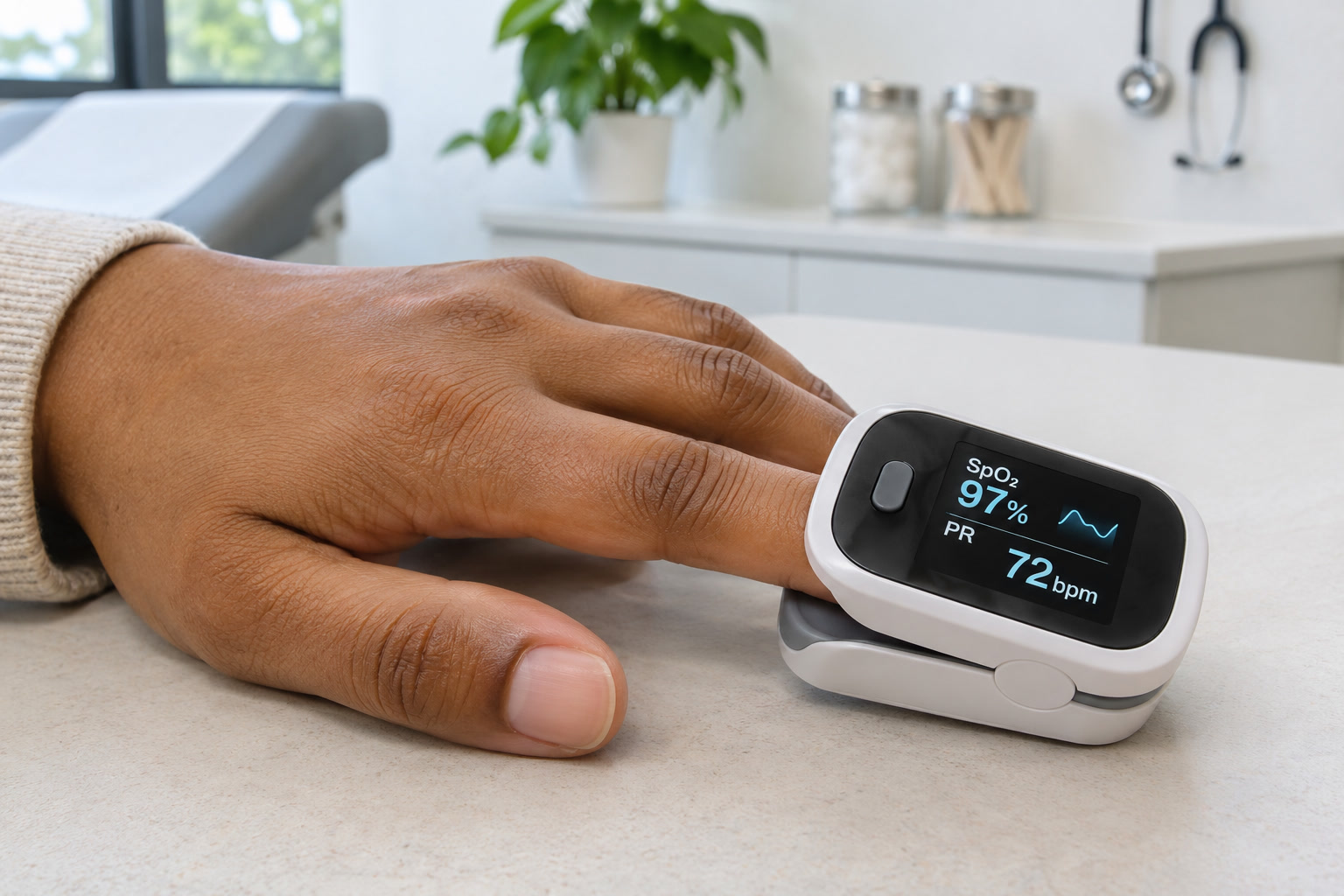
Image: AI-generated illustration. The displayed SpO2 of 97% and pulse of 72 bpm are illustrative, not measurements from a real patient.
A fingertip pulse oximeter can help spot falling blood oxygen, but the number is only part of the picture. Serious symptoms need urgent attention even when the screen looks reassuring.
What does SpO2 mean?
SpO2 means peripheral oxygen saturation: an estimate, taken through the skin, of the percentage of haemoglobin carrying oxygen in arterial blood. A finger clip uses light to produce this estimate without a blood sample.
It is not a measurement of carbon dioxide or a complete test of how effectively you are breathing. An arterial blood gas test can provide information about oxygen, carbon dioxide and blood acidity that an oximeter cannot. A normal-looking SpO2 does not rule out dangerous carbon dioxide retention. WHO: Pulse Oximetry Training Manual
The display usually shows two different measurements:
- SpO2 or %: estimated oxygen saturation.
- PR or bpm: pulse rate, measured in beats per minute. This is not the oxygen reading.
For most healthy people at sea level, SpO2 is usually 95–100%. Altitude and some heart or lung conditions can change a person’s usual level. FDA: Pulse Oximeter Basics
When is pulse oximetry used?
Clinicians may use it when assessing breathlessness, respiratory infections such as COVID-19, and conditions including COPD, asthma and heart failure. It is also used around surgery, during prescribed oxygen treatment, and in the assessment of sleep-related breathing problems.
At home, it is most useful as part of a clinician’s monitoring plan: when to check, your usual reading, and what changes require help. A spot reading alone cannot diagnose a lung condition or rule out sleep apnoea. MedlinePlus: Pulse Oximetry
Choose the right device
Ask your clinician or pharmacist about a validated device intended for medical use and appropriate for you. Do not assume that every online finger monitor or wearable has been assessed for medical decisions. In the United States, some medical-purpose oximeters have FDA clearance for over-the-counter use; general wellness and sporting products are not evaluated in the same way. Regulatory requirements differ by country. FDA: Device categories and clearance
How to take a reading
- Rest first. Sit quietly for at least five minutes rather than measuring immediately after activity.
- Prepare your hand. Make sure it is warm. Remove nail polish or an artificial nail from the finger being tested if possible.
- Fit the clip properly. An index or middle finger is commonly used. Follow the device instructions for finger position and fit; do not force a poorly fitting sensor.
- Keep still. Support your relaxed hand in the position recommended for your device. Avoid talking or moving it during the measurement.
- Let the reading settle. Follow the manufacturer’s timing. Allow about a minute, and longer if the numbers are still changing. Do not record the first number that flashes up.
- Record the result. Note the SpO2, pulse, time and symptoms. Follow your care team’s schedule and compare readings taken under similar conditions.
These practical steps are consistent with NHS home-monitoring instructions and the Mersey Care NHS pulse oximeter guide.
Readings you should not take lightly
Call your local emergency number for severe breathlessness, inability to speak short sentences at rest, significant chest pain, new confusion or collapse, or blue/grey lips or face. Do not delay care to find a device or keep repeating measurements. NHS warning signs and Health Canada safety advice
For adults without a different clinician-agreed plan, the following are useful warning thresholds drawn from NHS adult COVID-19 home-monitoring guidance. They are not universal targets for every illness or person:
- 92% or below: if you are otherwise stable enough, promptly repeat once with correct technique. If it remains at or below 92%, seek emergency assessment immediately. If seriously unwell, act immediately without waiting for a repeat.
- 93–94%: repeat the reading correctly. If it remains in this range, obtain urgent clinical advice, even if you feel relatively well. NHS guidance advises rechecking within an hour, but worsening symptoms mean you should seek help sooner.
- 95–100%: often expected, but not a guarantee that everything is safe. New symptoms or a sustained fall from your usual reading still need attention.
In the UK, emergency help is 999; urgent non-emergency advice is available through NHS 111 or your GP. Elsewhere, use the equivalent local services. NHS England: Adult home-monitoring escalation guidance
What if you have COPD or another long-term condition?
Follow your individual action plan, including what counts as a significant change from your baseline. Do not assume that a low reading is harmless because you have COPD.
You may hear about an 88–92% target for some patients at risk of carbon dioxide retention. That refers to clinician-directed, controlled oxygen treatment in particular circumstances, not a universal safe range for home self-triage. Do not start oxygen or change its flow yourself unless your prescribed plan specifically tells you to. British Thoracic Society oxygen guideline
Children, pregnant people and those recently postpartum need their own clinical advice and escalation thresholds. Do not simply apply an adult home-monitoring checklist to them. NHS England: COVID Oximetry @home guidance
Why an apparently normal number can mislead
Readings can be affected by cold hands, poor circulation, movement, an unsuitable sensor, nail products and tobacco use. Some devices can overestimate oxygen saturation in people with darker skin, potentially missing low oxygen levels. Do not dismiss symptoms because of the display. Health Canada: Accuracy limitations and FDA: Pulse Oximeter Basics
A standard pulse oximeter may also give false reassurance in carbon monoxide poisoning, because it cannot reliably distinguish oxygen-carrying haemoglobin from haemoglobin carrying carbon monoxide. Suspected exposure requires emergency help, regardless of SpO2. WHO: Pulse Oximetry Training Manual
Use the number alongside symptoms, trends and your care plan. Never let a reassuring screen delay urgent care.
This article provides general health information and does not replace personalised medical assessment.
Hashtags
#SpO2 #PulseOximeter #OxygenSaturation #RespiratoryHealth #LungHealth #PatientSafety #HealthEducation #EndYourIllness
