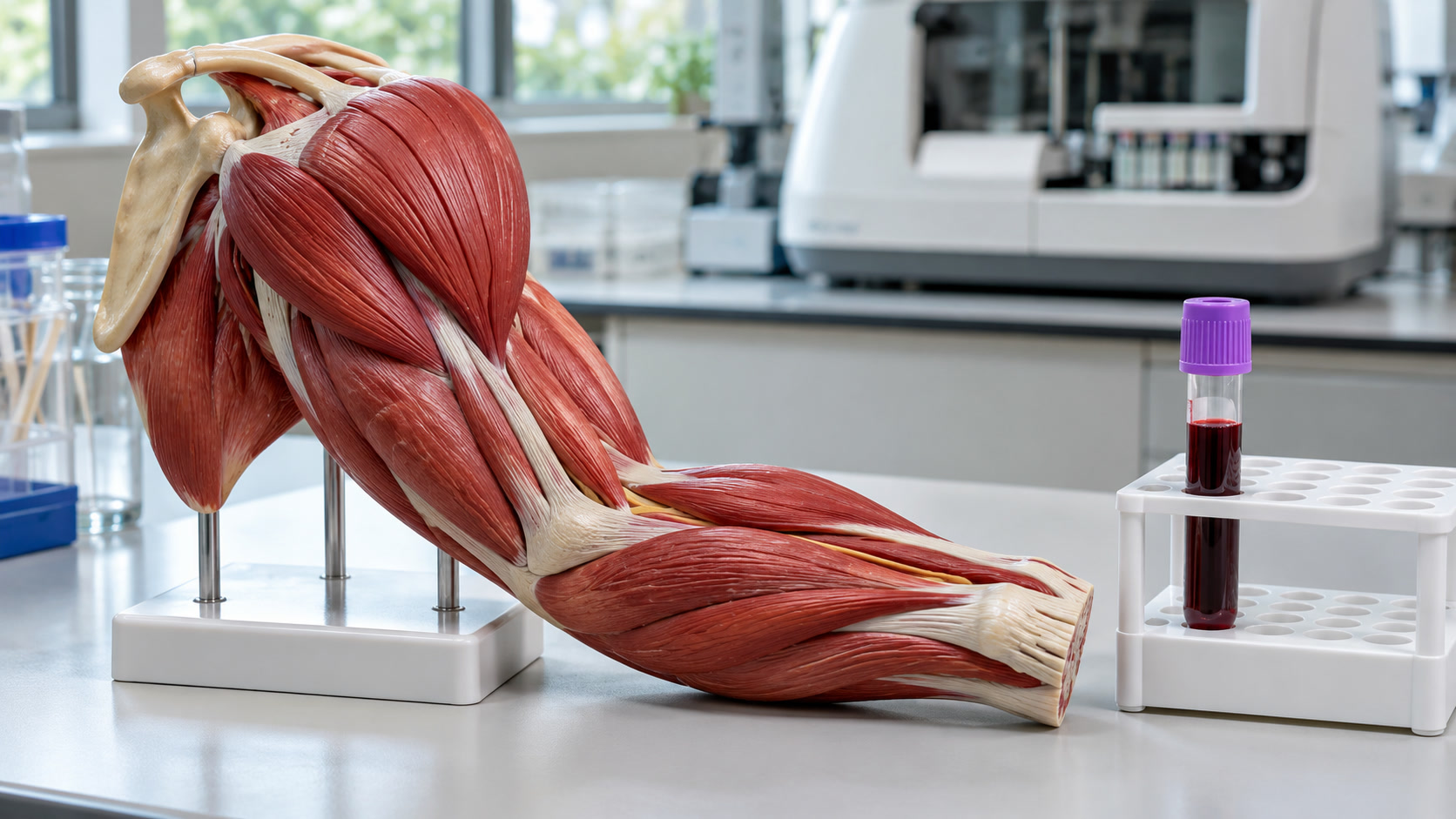
Image: AI-generated illustration of a muscle teaching model and laboratory testing, not a real patient or test result.
EYI Reports | Understanding your blood tests
A blood report may list CK, CPK, CK-MB or aldolase when a clinician is investigating muscle pain, weakness or injury. These names describe different tests, and the reason for ordering them matters as much as the number beside them.
CK and CPK mean the same thing: creatine kinase, also called creatine phosphokinase. This enzyme helps cells use energy. It is especially abundant in the muscles that move your body, with other forms in the heart and brain. When cells are injured, more can enter the blood. MedlinePlus: Creatine kinase
CK or CPK: the main muscle enzyme test
Clinicians use total CK to help investigate or monitor muscle damage. Reasons include a significant injury, unexplained muscle weakness, inflammatory muscle disease such as myositis, inherited muscle disorders and suspected rhabdomyolysis, a potentially dangerous breakdown of muscle tissue. CK may also be checked when symptoms raise concern about a medicine’s effect on muscles.
An elevated result needs context. The amount of muscle you have, recent physical activity and the timing of an injury can affect the result. Repeat measurements may show whether the level is rising or falling. MedlinePlus: Creatine kinase
CK-MM, CK-MB and CK-BB: different forms of CK
An isoenzyme test separates forms of the enzyme to help identify where an elevation may be coming from:
- CK-MM: mainly associated with skeletal muscle, including the muscles in your arms and legs.
- CK-MB: associated mainly with heart muscle. It may appear on a report during a cardiac assessment, but a raised result alone does not establish a heart attack.
- CK-BB: found mainly in the brain and lungs. It is not usually the main test used for ordinary muscle aches.
These names may also be written as CPK-MM, CPK-MB and CPK-BB. MedlinePlus: CPK isoenzymes
Why troponin is preferred when heart injury is suspected
Cardiac troponin I or T, especially a high-sensitivity troponin test, is the preferred blood marker for myocardial injury, meaning injury to heart muscle. When troponin testing is available, adding CK-MB or myoglobin is not useful for diagnosing acute myocardial injury under the AHA/ACC chest-pain guideline. AHA/ACC chest-pain guideline
An elevated troponin is not automatically a heart attack. Clinicians consider symptoms, an ECG, changes across repeat samples and, when needed, imaging. The test’s threshold also depends on the laboratory assay. American College of Cardiology: High-sensitivity troponin
Other markers you may see
Aldolase
Aldolase helps cells release energy from sugars. It is found in muscle and liver, so it is not specific to muscle disease. Clinicians may request it alongside CK when investigating certain muscle disorders. In some cases of myositis, aldolase can be raised even when CK is normal. MedlinePlus: Aldolase
LDH: lactate dehydrogenase
LDH is present in many tissues, including muscle, liver, kidneys and red blood cells. A high result can indicate tissue injury, but it cannot identify the location or cause on its own. It needs to be interpreted with more targeted tests. MedlinePlus: LDH
AST, sometimes called SGOT
AST often appears in a liver panel, but it is also present in heart and skeletal muscle. Muscle injury can therefore contribute to an elevated AST. An isolated high AST does not by itself prove a liver problem or a muscle problem. Clinicians look at the accompanying results and clinical history. MedlinePlus: AST
Myoglobin
Myoglobin is a muscle protein that can be released into blood and urine when muscle is damaged. In rhabdomyolysis, it can harm the kidneys. It may be measured as part of an assessment, alongside CK and other tests. It does not replace cardiac troponin when evaluating suspected acute heart-muscle injury. MedlinePlus: Rhabdomyolysis · AHA/ACC chest-pain guideline
Why kidney and electrolyte tests may be ordered too
When substantial muscle breakdown is suspected, the concern extends beyond the muscles. A clinician may also check creatinine, potassium, calcium and a urine sample to assess effects on the kidneys and body chemistry. These are related safety checks rather than interchangeable muscle-injury markers. Creatinine and creatine kinase are different tests, despite their similar names. MedlinePlus: Rhabdomyolysis
What can affect the result?
Tell the clinician about recent strenuous exercise, muscle injury, surgery or injections into a muscle. Mention all medicines and supplements. Some medicines, including statins and fibrates, can be relevant to a raised CK, but the result alone does not establish the cause. MedlinePlus: Creatine phosphokinase test
Use the reference range and units printed on your own report. Laboratories use different methods and ranges, so an internet cutoff may not match your test. Ask how the result compares with the laboratory’s upper limit and whether a repeat test is appropriate. Follow the preparation instructions provided for the tests you have been asked to take. MedlinePlus: Creatine phosphokinase test
When to seek urgent help
- Get urgent medical attention for severe or unexpected muscle pain, marked weakness, or tea- or cola-coloured urine, particularly after intense exertion, heat exposure or injury. Rhabdomyolysis can present with only some of these symptoms, so do not wait for all of them to appear. CDC: Rhabdomyolysis warning signs
- Call your local emergency number for new chest pain or pressure suggestive of a heart attack, especially with breathlessness, sweating, nausea or pain spreading to the arm, jaw or back. Do not wait for an outpatient blood test or try to rule it out from an old report. American Heart Association: Heart-attack warning signs
Questions to take to your appointment
- Which result is abnormal, and why was this test ordered?
- Could recent exercise, injury or a medicine be relevant?
- Do I need a repeat test or related kidney, liver or heart checks?
- Which symptoms should make me seek help immediately?
A blood marker is a clue, not a diagnosis by itself. Discuss the pattern of results, symptoms and next steps with the clinician who ordered the tests.
This article provides general health information and does not replace individual medical assessment.
Hashtags: #EYIReports #BloodReports #CreatineKinase #CPK #CKMB #Aldolase #LDH #MuscleHealth #Troponin #HealthLiteracy
