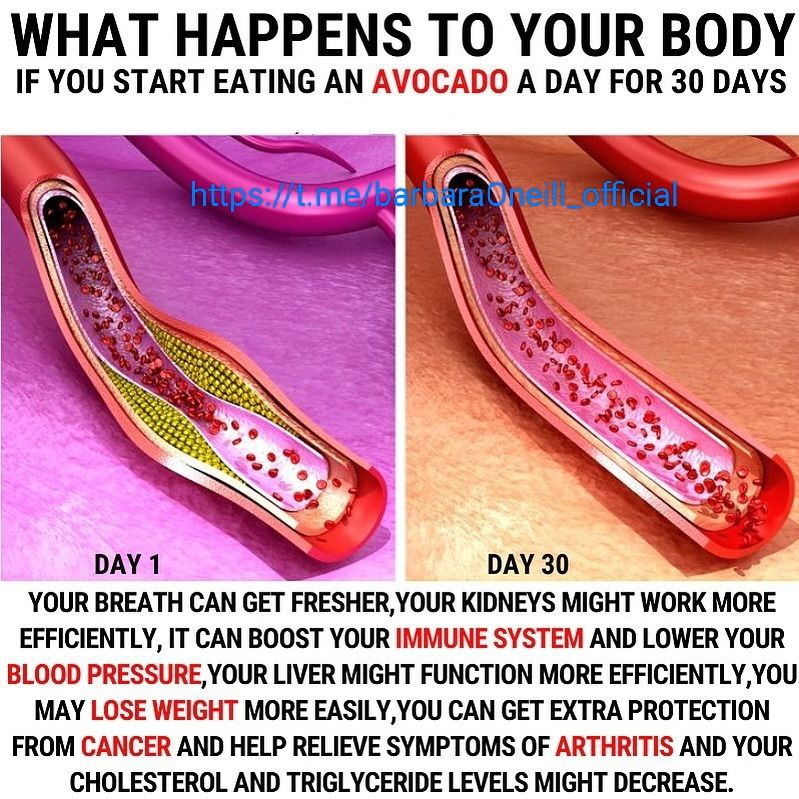
Avocados can be a useful part of a varied diet. The graphic in this post goes much further, suggesting that one avocado every day for 30 days can transform several aspects of health and showing an artery apparently cleared of plaque. Those promises need stronger evidence than an illustration.
What a daily-avocado trial actually found
In the Habitual Diet and Avocado Trial, researchers randomly assigned 1,008 adults with an increased waist circumference to add one large avocado a day or continue their usual diet with limited avocado intake. The study lasted six months, considerably longer than the graphic’s 30-day challenge.
The avocado group did not have a significant reduction in visceral fat, the fat surrounding abdominal organs. Changes in body weight, liver fat and most other measured cardiometabolic risk factors were similar between groups. Diet quality improved, and total and LDL cholesterol fell modestly.
These findings allow a measured conclusion: an avocado can contribute to dietary quality, but adding one every day is not a demonstrated shortcut to weight loss or a broad medical transformation. The trial was funded by the Avocado Nutrition Center, a relevant disclosure when assessing the evidence.
A food choice, not a 30-day treatment
The graphic’s claims about fresher breath, cancer protection, arthritis, immune function and improved kidney or liver performance are not established by that trial. Its artery picture should not be read as a clinical before-and-after image or proof that avocado removes plaque.
Avocado is one option for replacing some foods higher in saturated fat. USDA’s practical example is to use avocado spread instead of butter or cream cheese on toast. What it replaces matters: adding another food and changing the balance of a meal are different choices.
You do not need to follow a daily challenge. Choose an amount that fits your appetite, budget and meals, and keep variety in your diet. If you follow a prescribed diet for a medical condition, discuss a substantial change with your clinician or dietitian.
Simple preparation and a useful evidence check
Wash the outside under running water before cutting, even though you will discard the skin. FDA advises against washing produce with soap or detergent. Use clean hands and utensils.
When a food post promises many benefits, look for the original research, who funded it, what was measured and whether the stated timescale matches the study. A healthy ingredient does not make every claim about it reliable.
Original graphic, retained for context: the claims and illustration below should be read alongside the evidence explained above.
References
- Habitual Diet and Avocado Trial: randomised trial in 1,008 adults — Journal of the American Heart Association, 2022.
- USDA MyPlate: Rethink Fats.
- FDA: Selecting and Serving Produce Safely.
- NIH: How to Evaluate Health Information on the Internet.
- Original avocado graphic retained with its embedded attribution — Claims shown in the graphic are examined in the article; the watermark does not establish authorship or scientific validity.
