If governments turn the UN’s new pandemic declaration into policy, the aftermath could include faster access to vaccines, treatments and tests, alongside wider public-health messaging. Whether that strengthens preparedness and public trust will depend on rigorous safety scrutiny, transparent decisions and how authorities respond to legitimate questions.
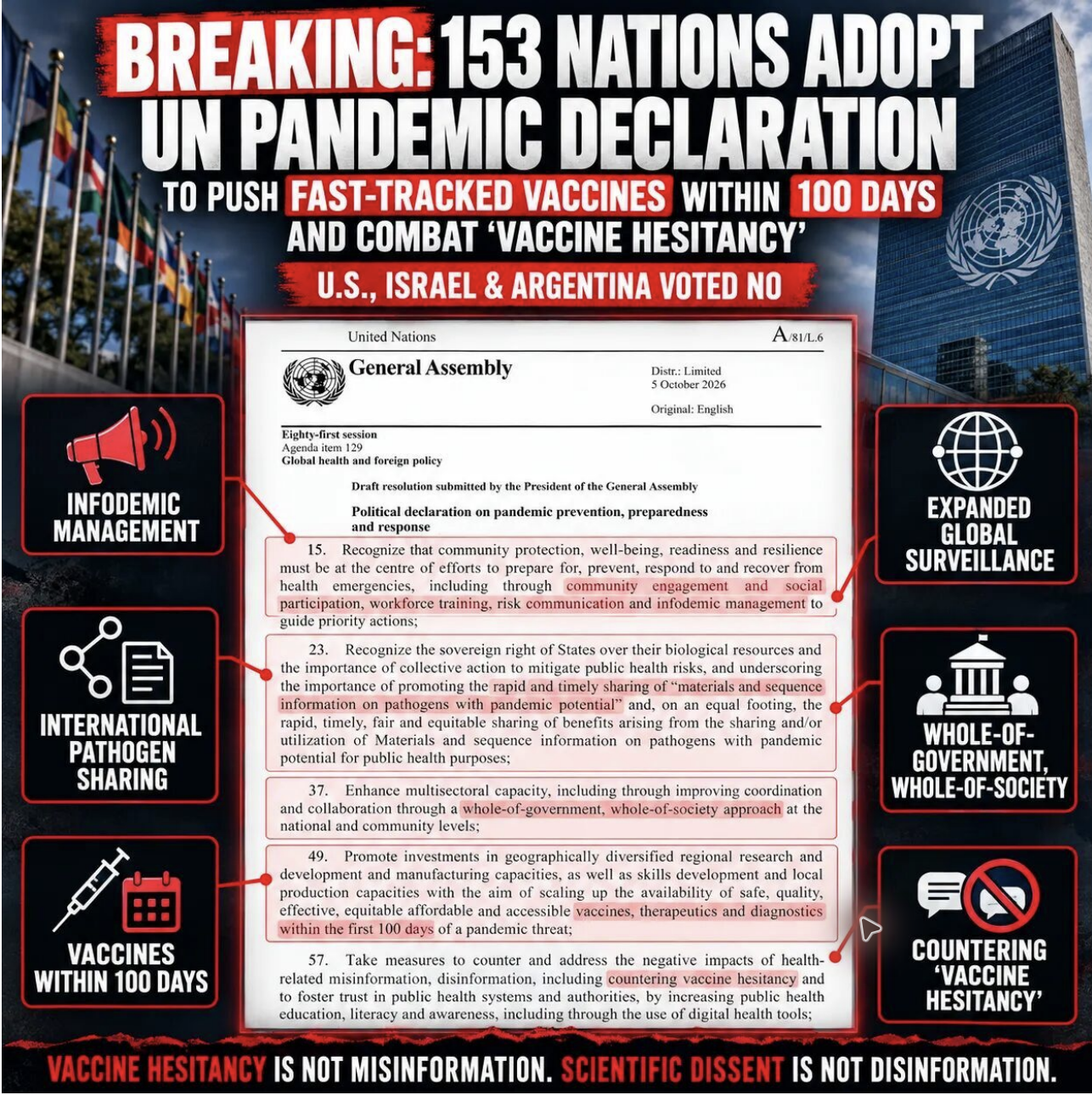
On 12 October 2026, the UN General Assembly adopted the political declaration on pandemic prevention, preparedness and response by 153 votes to three, with two abstentions. Argentina, Israel and the United States voted against; New Zealand and Paraguay abstained. This is a new October 2026 decision, following September’s high-level meeting. Draft A/81/L.6 became resolution 81/5. (UN meeting record; UN News)
The 100-day provision deserves careful reading. Paragraph 49 calls for investment in regional research, manufacturing, skills and local production, aiming to expand the availability of safe, effective, high-quality, affordable and accessible vaccines, treatments and diagnostics during the first 100 days of a pandemic threat. It does not order approval of a particular vaccine within that period or instruct regulators to abandon safety requirements. The International Pandemic Preparedness Secretariat describes the goal as depending on investments made before a crisis. (Declaration, paragraph 49; IPPS statement)
Paragraph 57 addresses health misinformation, disinformation and vaccine hesitancy, specifying public-health education, literacy, awareness and digital tools as ways to build trust. Paragraph 15 also refers to “infodemic management.” Describing this as a “crackdown” is an interpretation: the text does not set out content-removal requirements or penalties for questioning vaccination. It also expressly recognizes human rights, fundamental freedoms and national sovereignty. (Declaration, paragraphs 4, 9, 15 and 57)
The declaration is a non-binding political commitment, distinct from the WHO Pandemic Agreement. It does not itself impose a worldwide vaccination mandate. Its practical effect will depend on subsequent funding, laws and policies. (UN News)
The accountability questions are concrete: Will research findings and safety uncertainties be communicated openly? Will independent scrutiny remain protected? Will faster production translate into fair access? And will officials earn confidence by answering people’s concerns? Those are important tests for implementation. The vote establishes a political direction; it does not establish that censorship, compulsory vaccination or weakened safety standards will follow.
