Historical comparisons carry a responsibility to describe the original events accurately. When Nazi medical crimes enter a debate about healthcare today, the people who were murdered must not disappear behind a convenient political analogy.
The United States Holocaust Memorial Museum documents the Nazi programme that targeted people with disabilities for systematic murder. It describes planning in 1939 and the leadership roles of Karl Brandt and Philipp Bouhler. This was a deliberate programme of persecution, not an ordinary disagreement about how to organise healthcare.
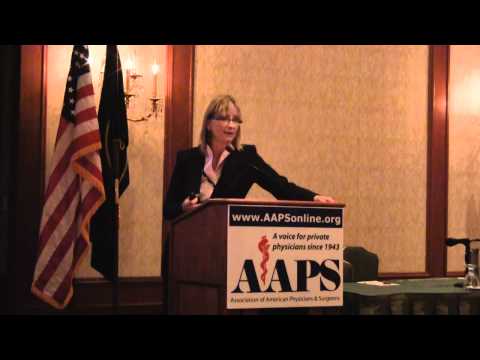
The accompanying lecture uses Brandt's history to argue for the primacy of the individual patient. AAPS's contemporary 2011 account identifies the speaker as Lee Hieb. Her conclusions about government and medicine are an argument to assess, not a finding established simply by showing that Nazi crimes occurred.

For present-day care, the ethical questions can be made concrete: has the patient received an understandable explanation, can they ask questions, and are their interests being protected? Those questions can be discussed directly. A historical analogy should sharpen that discussion without substituting accusation for evidence.
References
- United States Holocaust Memorial Museum: the Nazi euthanasia programme and Aktion T4
- AAPS, 24 March 2011: contemporary account identifying Lee Hieb and linking the lecture
- Original AAPS lecture
