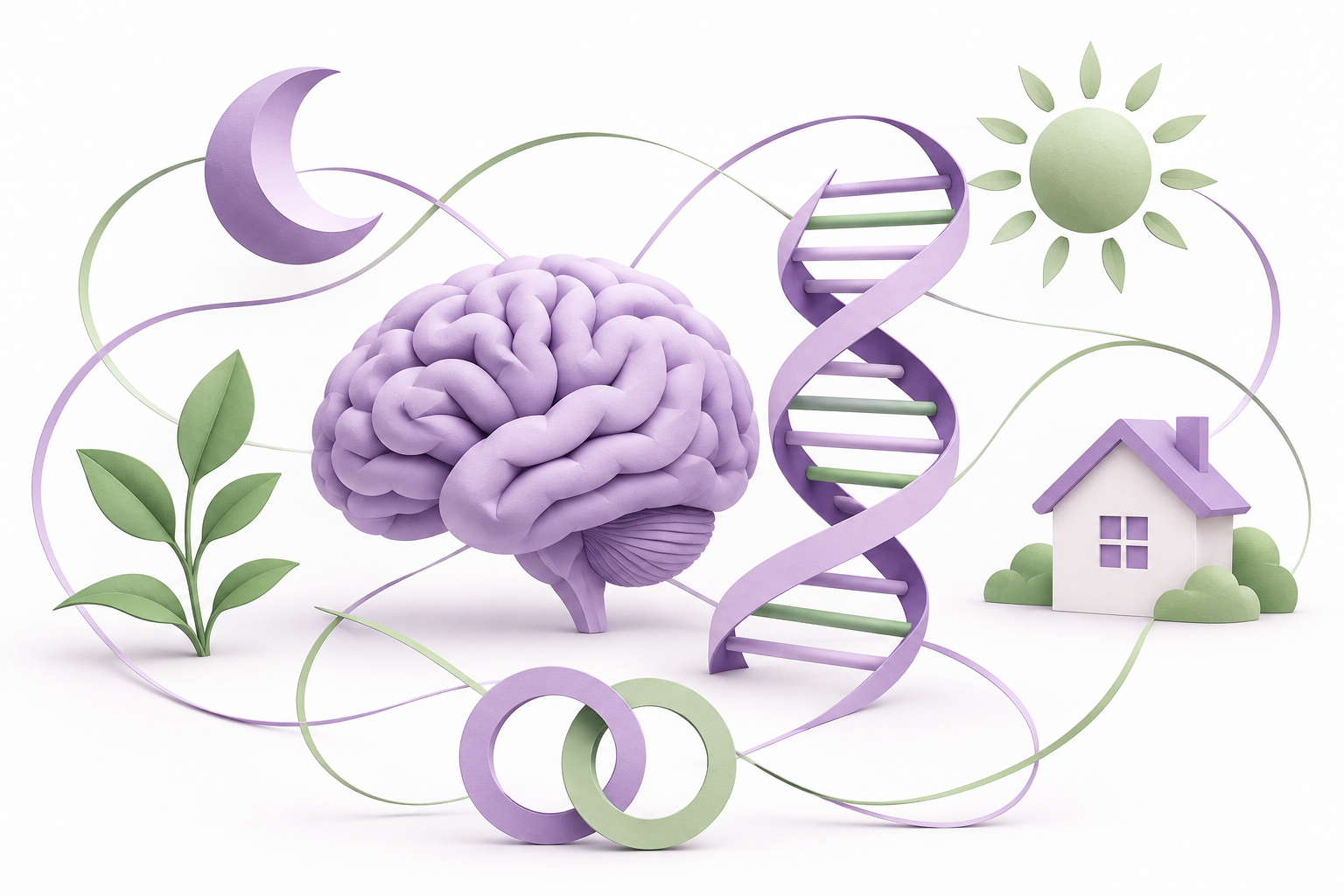
When depression affects several people in a family, it is natural to wonder whether it is inherited. Research shows that genetic differences can influence risk. They work alongside life experiences, physical health and social circumstances, rather than determining a person’s future on their own.
Depression can affect mood, thinking, energy and the ability to manage everyday life. It can happen with or without an obvious trigger and with or without a known family history. MedlinePlus Genetics: Depression
What depression can feel like
Common symptoms include persistent sadness, emptiness or irritability, and losing interest or pleasure in activities. A person may also notice:
- Low energy or a sense of being slowed down.
- Changes in sleep, appetite or weight.
- Difficulty concentrating, remembering or making decisions.
- Guilt, hopelessness or feeling worthless.
- Thoughts about death or suicide.
A major depressive episode involves a combination of symptoms present most of the day, nearly every day, for at least two weeks, with significant distress or difficulty functioning. A clinician makes the diagnosis; people can benefit from help even before they meet that threshold. NIMH: Depression
There is no single depression gene
Many genetic variants contribute small amounts to risk. Depression does not usually follow a simple inheritance pattern in which one parent passes on one gene that guarantees the condition.
Having a close biological relative with depression can increase risk, but many people with that family history never develop it. Others develop depression without an affected relative. Families may also share experiences and environments, so family history reflects more than DNA alone. MedlinePlus Genetics: Causes and inheritance
Commercial genetic reports cannot reliably tell an individual whether they will develop depression. A family history is useful information to discuss with a clinician, but it does not replace an assessment of current symptoms. If a family has an identified rare genetic condition, a genetic counselor can explain that specific situation. NIMH: Genes and Mental Health
Assessment looks beyond the label
Thyroid disorders, medication effects and other medical problems can resemble or worsen depression. Clinicians also ask about previous periods of unusually high energy, reduced need for sleep or impulsive behavior, because depressive episodes can occur in bipolar disorder and treatment differs. NIMH: Diagnosing depression
What can help
Effective treatment includes psychological therapies, such as cognitive behavioral therapy, behavioral activation and interpersonal therapy. Antidepressant medication may be appropriate depending on symptoms, severity and personal circumstances. Treatment decisions should include a discussion of expected benefits, side effects and follow-up.
Regular meals, manageable activity, a consistent sleep routine and contact with supportive people can help alongside treatment. Start with what is achievable. Difficulty doing these things can itself be part of depression. WHO: Depression treatment and self-care
Seek professional help when symptoms persist or affect daily life. If suicidal thoughts are present, contact a health professional or local crisis service promptly. If someone may act on those thoughts or cannot stay safe, contact local emergency services or go to an emergency department, and ask a trusted person to stay with them if possible.
Family history can encourage earlier attention and support. It should never be used to assign blame or to assume recovery is out of reach.
This article provides general health information and does not replace an individual assessment or treatment plan.
#Depression #MentalHealthGenetics #FamilyHistory #MentalHealthAwareness #EYI
