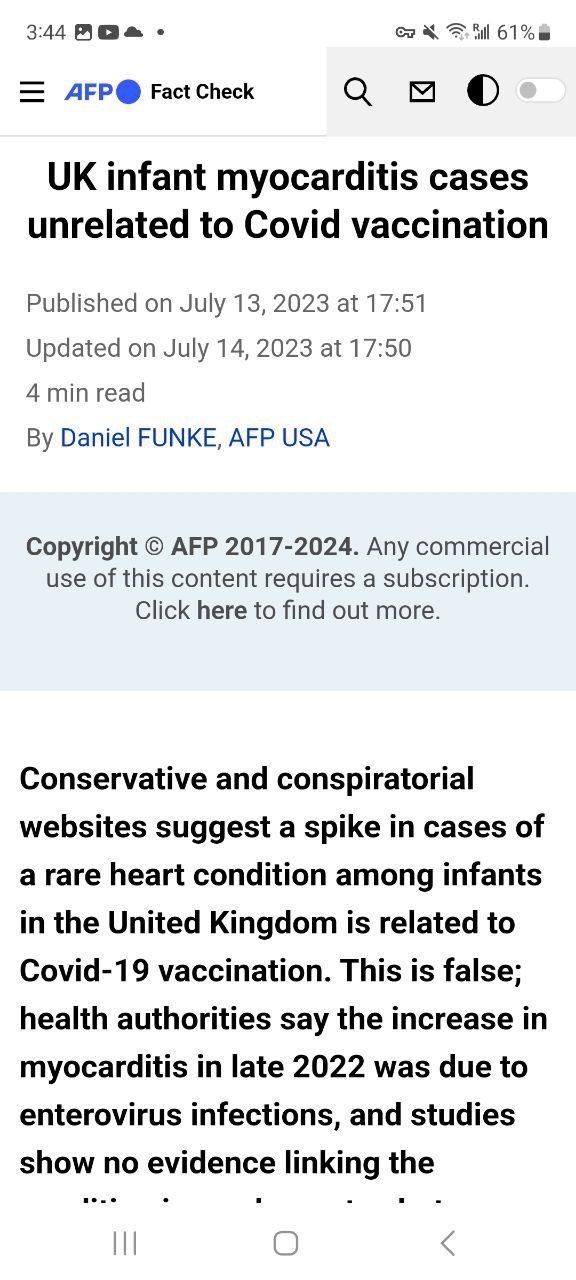
Evidence update: The newborn myocarditis cluster described in the original post was investigated as an enterovirus-associated outbreak. The reported cases do not establish that parental COVID-19 vaccination caused heart defects. Several details in the original description also differ from the World Health Organization’s account, including the time period, the earlier case count and the description of myocarditis as a birth defect.

Original screenshot: AFP Fact Check, Daniel Funke, July 2023. The screenshot’s credit and copyright notice remain visible in the image.
What investigators reported
WHO’s May 2023 update described ten babies younger than 28 days who developed a clinical picture consistent with myocarditis in Wales between June 2022 and April 2023. All ten had a positive enterovirus PCR test. Further testing identified coxsackie B3 or B4 in seven. Seven babies required intensive care, and one died. The report compared the cluster with two similar cases identified at the regional tertiary centre during the previous six years, rather than the single case asserted in the post.
These findings warranted urgent investigation. They were evidence of serious illness in a vulnerable age group, not evidence that the babies had been born with a vaccine-induced malformation. Myocarditis is inflammation of heart muscle. Its appearance in a newborn does not, by itself, make it a congenital structural defect.
Why timing cannot identify the cause
The original text places the cluster after the introduction of COVID-19 vaccination and assumes the parents were vaccinated. WHO’s outbreak account does not establish that parental exposure or compare vaccinated and unvaccinated pregnancies. Without those individual-level data, a calendar comparison cannot measure the effect of parental vaccination.
There is also a specific competing explanation supported by testing: enterovirus infection. The clinical case report cited by WHO describes neonatal enteroviral myocarditis and emphasizes recognition of cardiac involvement in sick newborns. This is stronger evidence for the investigation’s focus than the simple observation that both vaccination and illness occurred in the same broad period. It does not mean that every possible contributing factor has been settled.
To evaluate a vaccine hypothesis responsibly, researchers would need reliable exposure histories, appropriate comparison groups, consistent diagnostic criteria and assessment of infections and other risks. Changes in referrals, testing or circulating viruses can also affect the number of cases recorded by a hospital. A small historical comparison cannot separate those explanations on its own.
The useful lesson
The cluster should be understood as a serious neonatal infection investigation. The accompanying AFP screenshot is preserved as part of the original post’s source history; the primary outbreak report and clinical publication are linked below. For families, poor feeding or other concerning changes in a newborn need prompt medical advice. Difficulty breathing, inability to wake normally, or signs of serious illness require immediate emergency help. An online argument about the cause should never delay care.
References
- WHO, myocarditis outbreak in the United Kingdom, updated May 17, 2023
- Ng et al., Remember the heart: neonatal myocarditis (2023)
- NHS, urgent medical help for babies and children under 5
