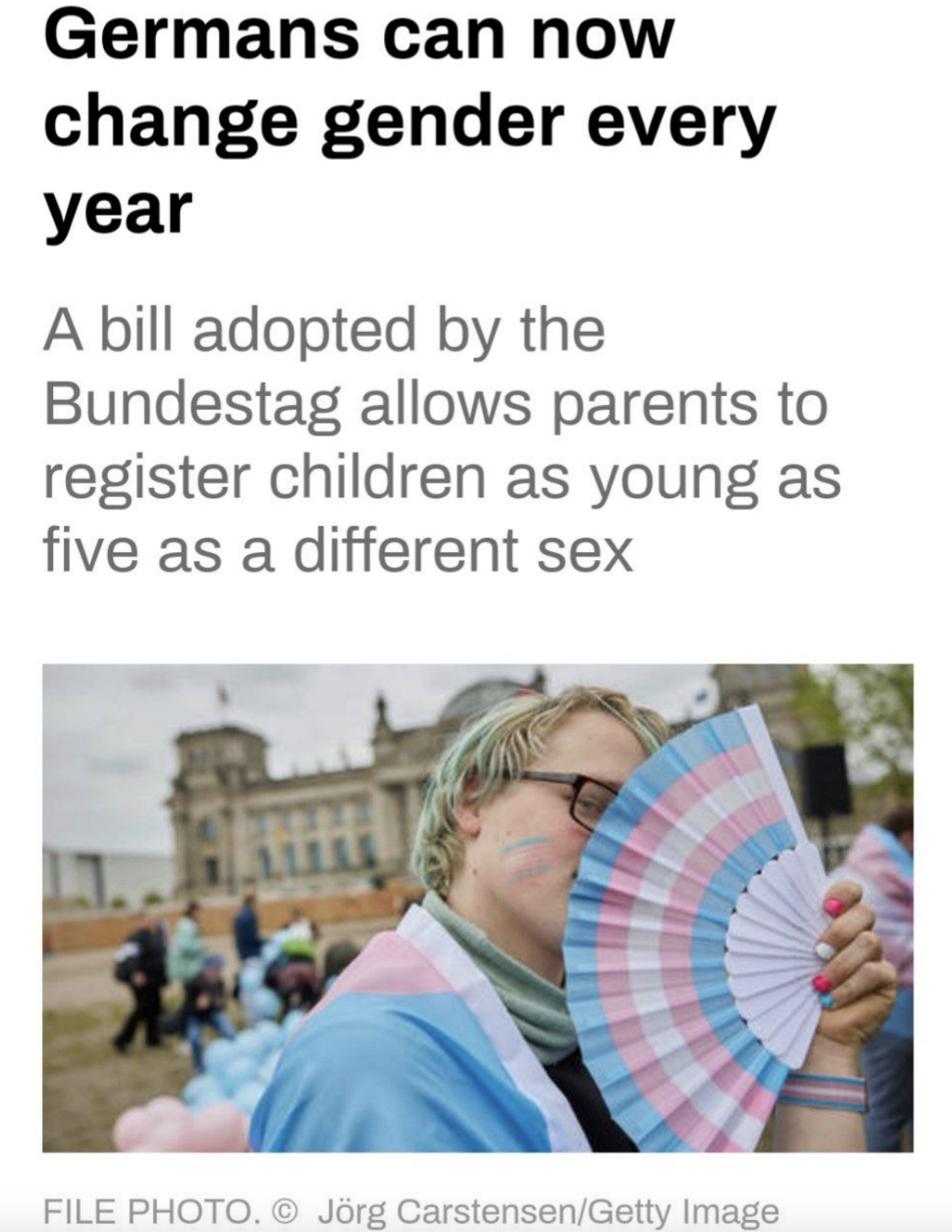
Germany’s Self-Determination Act concerns a person’s registered gender entry and first names. It does not authorise an annual medical procedure or make a declaration change someone’s physical characteristics. Section 1 expressly leaves medical measures outside the law’s scope. That distinction is essential when reading the original headline and news clipping.
What changed in November 2024?
The law, commonly abbreviated SBGG, took full effect on 1 November 2024. It introduced a declaration-based route through a civil registry office for people whose gender identity differs from their existing entry. The administrative process replaced the previous requirement for expert assessments and court proceedings under the former Transsexuals Act. Registration of an intended declaration became possible in August 2024.
Berlin’s registry guidance explains that applicants must notify the registry at least three months before making the declaration. If no declaration follows within six months, the notification expires. At the declaration stage, the person affirms that the chosen entry best corresponds to their identity and that they understand the consequences.
What the one-year rule actually means
For adults covered by the ordinary procedure, another declaration is generally barred for one year after the previous one. This is a minimum interval, rather than a requirement or recommendation to make annual changes. Section 5 also contains an exception for the cases governed by section 3, including minors; describing the interval as universal would miss that qualification.
The clipping’s reference to young children also needs context. A child does not simply submit an adult declaration independently. Under the statutory framework, the rules distinguish people aged 14 and above from younger children, provide roles for legal representatives, and include consent, advice and, in specified circumstances, court safeguards. These are rules for civil-status records, not permission for medical treatment.
Questions about healthcare, access to facilities, sport or other settings must be checked against the provisions governing that particular issue. A changed registry entry does not by itself answer every question involving sex or gender.
For readers assessing the reform, the useful questions are concrete: what documents change, what safeguards apply, and which separate laws remain relevant? Discussion is clearer when it accurately describes both the administrative reform and its limits.
Source credit: the original post consisted of the news clipping preserved below. Its visible photograph credit is Jörg Carstensen/Getty Images; the clipping does not identify a complete article URL.

References
- German federal law: Self-Determination Act (SBGG), sections 1–6
- Berlin registry office: SBGG information and process
- Federal Ministry of Justice: Self-Determination Act overview
