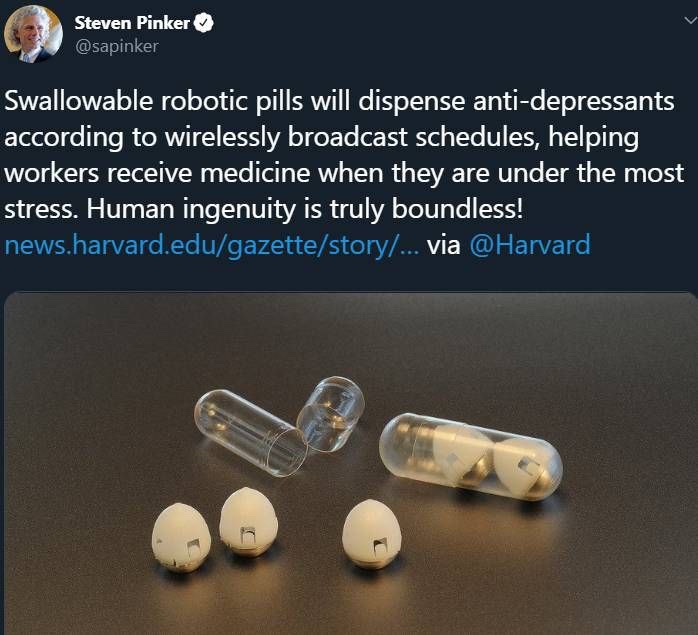
The screenshot in this post is not reliable evidence of a programme to give workers wirelessly scheduled antidepressants. It shows a purported social-media statement, but supplies no verified original post, clinical study or implementation plan supporting that claim. The relevant Harvard report describes a substantially different medical experiment.

What the Harvard research involved
A Harvard Gazette article published on 7 February 2019 described a pea-sized device designed to deliver insulin through the stomach lining. Researchers from Harvard-affiliated Brigham and Women’s Hospital, MIT and Novo Nordisk tested it in pigs.
The device’s shape helped it orient itself inside the stomach. Moisture dissolved a small sugar component, releasing a spring that pushed an insulin microneedle into the lining. This mechanism was not a wireless instruction to release antidepressants at stressful moments.
The experiment addressed a genuine drug-delivery problem: some medicines are difficult to deliver effectively through ordinary swallowed tablets. Its results were preclinical. The device worked in fasted animals, and the researchers said longer-term effects of repeated use needed further investigation. These findings did not establish a workplace treatment system or demonstrate safety for unrestricted human use.
Depression treatment is more than a timed dose
Most conventional antidepressants do not produce an immediate change in mood whenever a dose is delivered. The National Institute of Mental Health says they usually take several weeks to work, with different symptoms sometimes improving at different times. Treatment choices depend on the person’s condition, response, side effects and preferences.
Depression involves a combination of biological, psychological and environmental influences. Better working conditions, adequate sleep, activity and supportive relationships can matter greatly. A wish for a less stressful life, however, does not establish that someone can safely replace treatment with lifestyle changes alone. Psychotherapy, medication or both may be appropriate.
Questions that still deserve scrutiny
Any proposed connected medication device should be evaluated for clinical benefit, reliability, informed consent, privacy and who controls dosing. Those are reasonable questions to ask of an actual product or trial. They should be based on its documented design, rather than an unverified screenshot.
The retained image is part of the original post’s record, not confirmation that the attributed statement is authentic. Anyone considering a treatment change should discuss it with their prescriber rather than changing or abruptly stopping medication because of this claim.
References
- Harvard Gazette: Microneedle pill takes the sting out of insulin, 7 February 2019
- National Institute of Mental Health: Mental Health Medications
- National Institute of Mental Health: Depression
