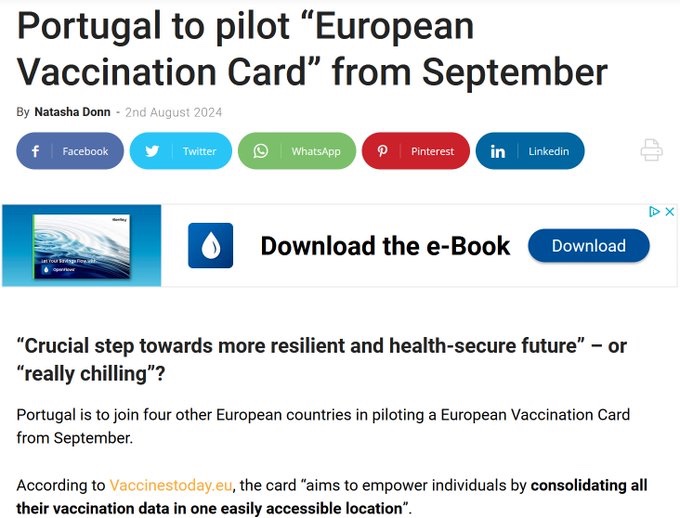
The European Vaccination Card proposal raises understandable questions about health records, privacy and personal choice. The original post reported plans for a pilot involving Portugal and other European countries. The essential distinction is that the project describes a voluntary personal vaccination record, rather than a new requirement for entering the European Union.

What was being tested?
EUVABECO, the European Vaccination Beyond COVID-19 project, began in January 2024 with EU4Health support. Its programme covers several tools, including a vaccination card, clinical decision support and forecasting. Pilot work was intended to test how implementation plans function in different national settings.
The project’s own questions-and-answers page describes the card as a way for people to keep vaccination information available across healthcare settings. It distinguishes that purpose from the EU Digital COVID Certificate and explicitly says travellers do not need to apply for this card to travel in the EU. It also describes participation as voluntary.
The original announcement should therefore be read as a report about a particular development programme. It is not evidence that every European resident has been enrolled or that a card automatically determines access to services.
Privacy still deserves scrutiny
Technical verification and access to medical information are different functions. WHO says its Global Digital Health Certification Network allows participating authorities to check the authenticity of health documents through shared trust infrastructure. WHO also states that it does not receive the underlying personal information contained in individual certificates.
That does not remove the need to examine local implementation. Useful questions include who issues a record, who can read it, whether consent is meaningful, how errors are corrected, and what options exist for people without smartphones. A promise of portability should be tested against those practical details.
For patients, a clear vaccination history can help avoid missing information when care moves between providers. For governments, a pilot is an opportunity to identify limitations before wider use. Neither benefit should be assumed merely because a project is digital, and concerns should be directed at documented rules and designs rather than imagined restrictions.
References
- EUVABECO: project launch and planned pilots
- EUVABECO: questions and answers about the vaccination card
- WHO: Global Digital Health Certification Network FAQs
