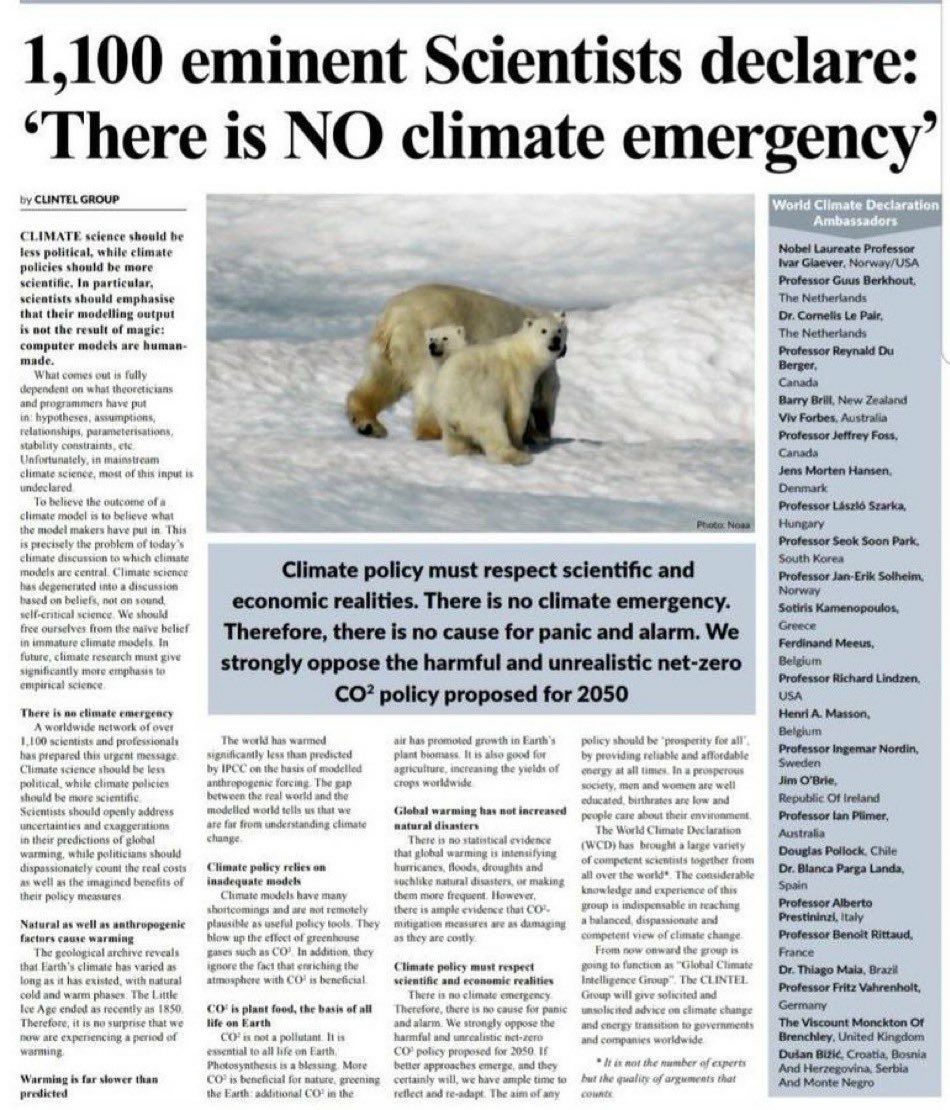
The newspaper-style image below presents the CLINTEL World Climate Declaration as a breakthrough: a large group of signatories rejecting the idea of a climate emergency. The declaration exists. Its existence, however, does not overturn the evidence that human activities are warming the planet.
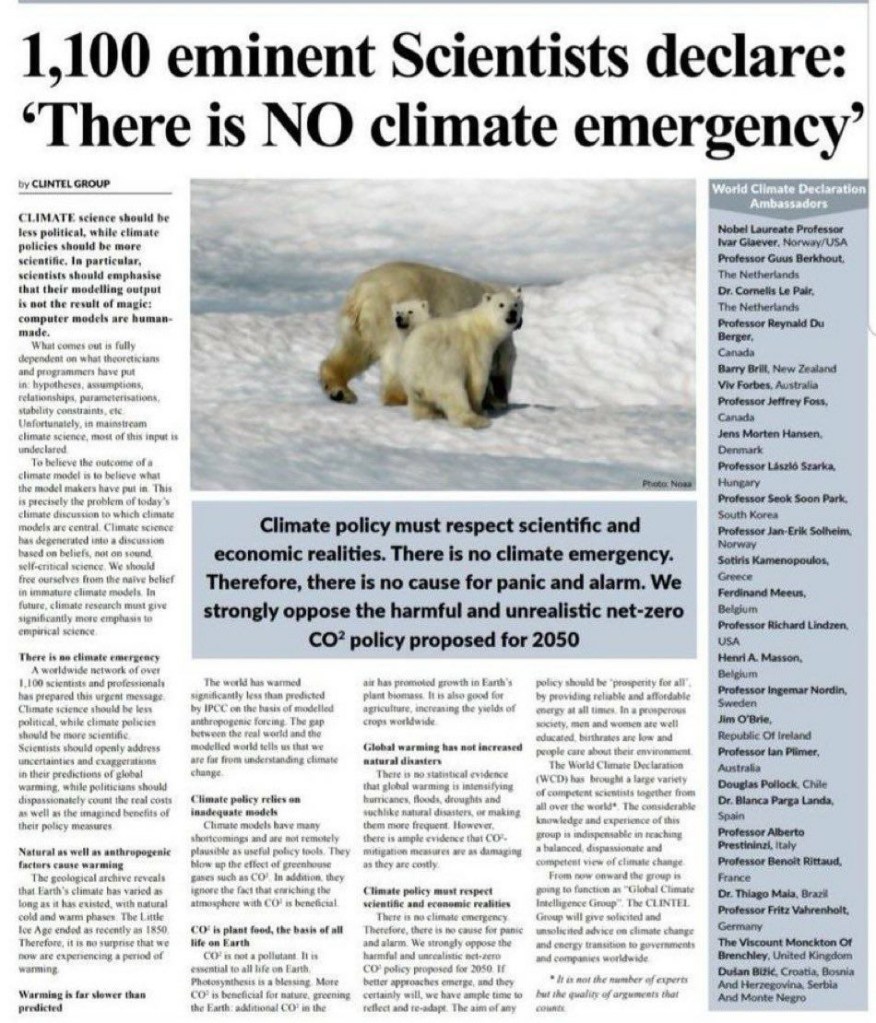
A declaration is not a scientific test
CLINTEL promotes the declaration as a statement of its position on climate science and policy. The image’s figure of 1,100 signatories belongs to a particular version circulating at the time; it should not be presented as a current count or as a representative vote among climate researchers.
A signature list can show agreement with an argument. It cannot, by itself, establish whether the argument explains measured temperatures, ocean changes or greenhouse-gas physics. Qualifications also need to be relevant to the question being assessed. Scientific conclusions depend on methods, observations, reproducibility and how competing explanations perform.
What the wider assessment finds
The Intergovernmental Panel on Climate Change’s 2023 synthesis concludes that human activities, principally greenhouse-gas emissions, have caused global warming. It reports that global surface temperature in 2011–2020 was about 1.1°C above the 1850–1900 average. Those dates matter: this is a defined historical comparison, not a claim about the temperature in every place or every year.
The IPCC also finds that human-caused climate change is already affecting weather and climate extremes across the world. Its physical-science material explains why changes in solar activity and volcanic eruptions do not account for the recent long-term warming trend. Climate models are assessed alongside observations and physical understanding, rather than accepted merely because a computer produced them.
Keep policy questions open and evidence clear
People can disagree about the language of “emergency,” the pace of policy changes or how costs should be shared. Those are worthwhile debates. They become less useful when an advocacy declaration is presented as proof that the underlying physical problem has disappeared.
The original image is retained for context. Readers should compare its specific claims with the primary declaration and the assessment evidence, rather than deciding credibility from the original approving headline or a large number alone.
References
- CLINTEL: organisation and World Climate Declaration
- CLINTEL: World Climate Declaration
- IPCC: AR6 synthesis headline statements
- IPCC: climate change in data
