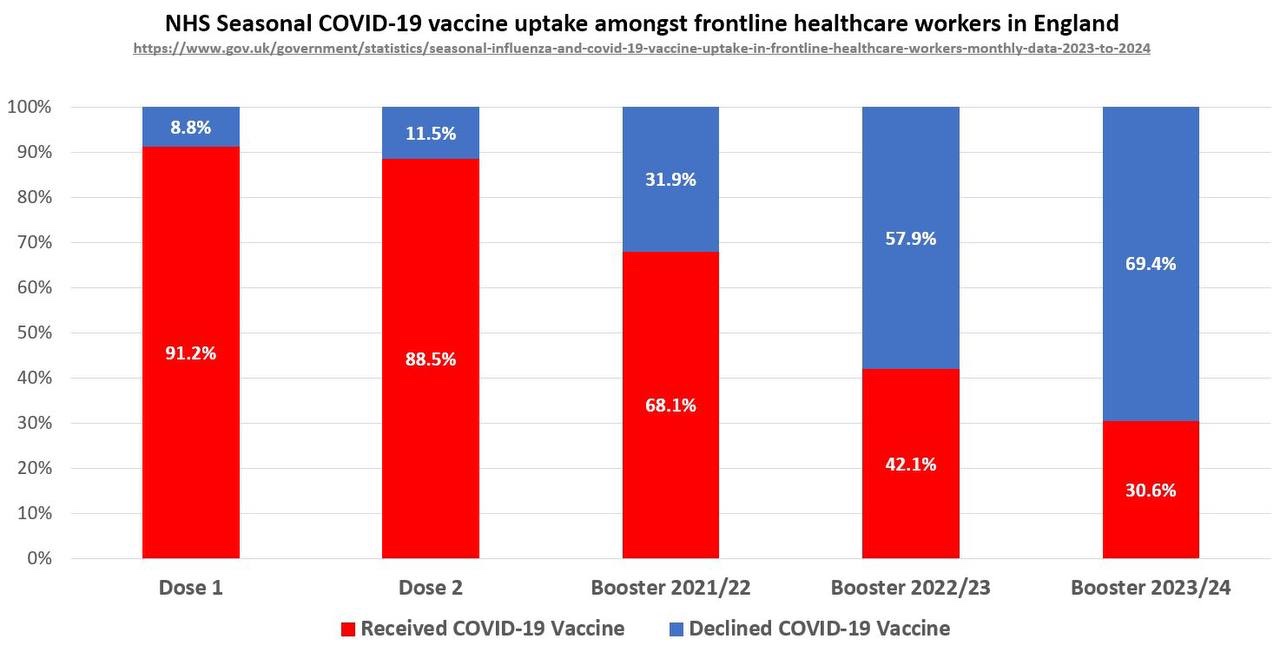
What the figures show: The approximately 70% figure in the original headline describes the proportion without a recorded seasonal COVID-19 vaccination in one English frontline-healthcare-worker dataset. It does not measure how many NHS staff oppose vaccination. Calling that entire group anti-vaxxers turns an administrative uptake statistic into an unsupported claim about people’s beliefs.

Original graphic and attribution retained: @therustler83 on X; the original post also credited T.me/childcovidvaccineinjuriesuk. The graphic’s declined label is not established by the uptake data.
Checking the denominator and date
UKHSA’s January 2024 return reported 262,843 vaccinated workers among 859,728 frontline workers in the COVID-19 calculation, giving uptake of 30.6%. Subtracting the vaccinated count leaves 596,885, or approximately 69.4%, without a recorded dose for that campaign. This explains the original headline’s rounded number, but the subtraction does not identify why any individual was unvaccinated.
The same return recorded responses from 148 of 233 organisations, or 63.5%. The vaccination denominator therefore should not be confused with every person employed by the NHS. These were England data for the 2023–24 seasonal programme, not a survey of the entire UK health service and not a current count of staff attitudes.
Non-uptake is not a reason for non-uptake
A record showing no seasonal dose cannot distinguish a firm refusal from a delayed appointment, a vaccination missing from the employer’s records, or another circumstance. Nor does skipping one booster establish that a person has never been vaccinated or rejects other vaccines. Those are different questions requiring different information.
UKHSA explains that this collection uses monthly submissions from healthcare organisations. It excludes organisations that do not submit data and certain staff absent from direct patient contact during the survey period. Missing vaccination records can make uptake appear lower than it really is. A separate NHS England monitoring system has a different purpose and method; UKHSA cautions against treating its figures as directly comparable.
The original graphic labels the complement of uptake as declined. That label goes beyond the measurement. Its comparisons across initial doses and later seasonal campaigns also need matching eligibility rules, reporting dates and populations before they can support a precise trend calculation. Even a genuine fall in uptake would not, by itself, explain the reasons behind it.
A better question to ask
Low seasonal uptake can justify investigating access, confidence, perceived benefits, concerns and workplace arrangements. An anonymous staff survey or carefully conducted interviews could help distinguish those explanations. The data can support a discussion about improving a vaccination programme; they cannot assign an ideological identity to nearly 600,000 individuals. Reporting the date, location, denominator and actual outcome makes the finding more useful than turning it into a label.
References
- UKHSA, monthly frontline healthcare worker vaccination data, 2023–24
- UKHSA, January 2024 data workbook, National_Trust table2
- UKHSA, explanation of healthcare-worker uptake datasets
