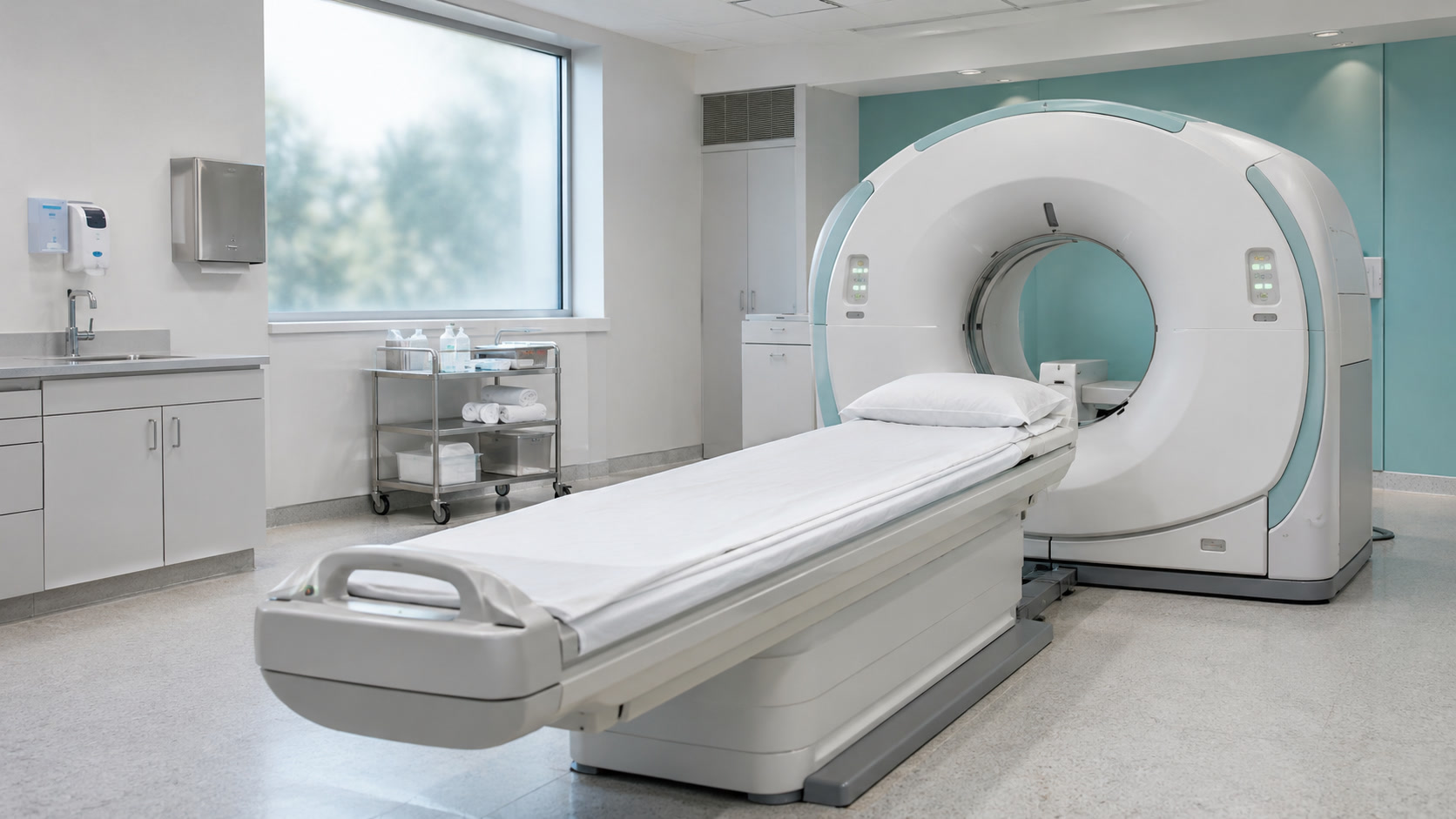
Image: AI-generated illustrative image of a CT scanner room; not a photograph of a specific facility or patient.
When a doctor recommends checking the heart’s arteries, many people picture a tube passed through the wrist or groin. For selected patients, CT coronary angiography (CCTA, also called CTCA) offers another route: detailed CT pictures after contrast is injected into an arm vein.
It is sometimes described as a “newer alternative,” but it is an established test, not a brand-new invention. It does not replace catheter angiography for everyone, particularly when urgent treatment may be needed.
What is done during CCTA?
CCTA uses X-rays, iodine-containing contrast and computer reconstruction to show the coronary arteries. Unlike catheter angiography, no catheter is advanced through an artery to the heart. However, it still requires an IV needle and carries contrast and radiation risks.
The appointment usually follows these steps:
- Safety checks. Staff review symptoms, medical history, medicines and previous contrast reactions. Tell them about kidney problems, possible pregnancy, asthma and any recent illness. Kidney-function testing may be needed.
- Individual preparation. Follow the scanning centre’s instructions about food, caffeine and medicines. Do not stop medicines yourself. Mention sildenafil, tadalafil or similar medicines because they can interact dangerously with nitrates.
- Heart-rate monitoring. ECG stickers on the chest let the scanner coordinate images with the heartbeat, called ECG gating. A beta blocker may slow the heart, and a nitrate may widen the coronary arteries, but only if suitable for you.
- The scan. You lie on a table moving through a short, ring-shaped scanner. Contrast enters the arm vein, sometimes causing a brief warm feeling. Staff ask you to hold still and briefly hold your breath. Image acquisition is quick; preparation and observation take longer.
- Afterwards. Staff explain when you can leave and any precautions after medicines. Ask when and how you will receive the report.
How are the pictures evaluated?
A trained cardiac imaging specialist examines the artery images, not just the colourful 3D reconstruction. They assess plaque, narrowing, its location and whether every important segment is clear enough to interpret.
Movement, an irregular heartbeat and heavy calcium can obscure the artery opening. Calcium can make a narrowing appear worse than it really is. An uncertain scan may need another test rather than a confident numerical label.
What does CAD-RADS mean?
CAD-RADS standardises CCTA reporting. The main category generally reflects the most severe narrowing found, not an average across the heart.
On a smaller screen, swipe or scroll sideways within the table to see every column.
| Category | Meaning |
|---|---|
| 0 | No plaque or narrowing. |
| 1 | Minimal narrowing: 1–24%. |
| 2 | Mild narrowing: 25–49%. |
| 3 | Moderate narrowing: 50–69%. |
| 4A | Severe narrowing: 70–99% in one or two vessels. |
| 4B | Left main narrowing of at least 50%, or three-vessel disease with at least 70% narrowing. |
| 5 | A completely blocked artery: 100% occlusion. |
| N | Nondiagnostic: important segments cannot be assessed reliably. N may accompany another category. |
These percentages describe reduction in an artery’s internal diameter. They do not mean “this percentage of the whole heart is blocked.”
P1–P4, when reliably assessed, describe overall plaque burden: mild, moderate, severe and extensive. Plaque burden and the worst individual narrowing answer different questions.
The full report and symptoms matter. Findings may lead to prevention, medicines, functional testing or invasive angiography; a category alone never automatically means a stent.
Is this the same as a calcium score?
No. A coronary calcium score, often called an Agatston score, is a separate measure of calcified plaque, usually obtained with a non-contrast CT scan. It is not a direct measurement of how narrow an artery is. A calcium score of zero also does not exclude non-calcified plaque.
If your report contains several numbers, ask which test produced each one. Do not compare an Agatston score of 100 with a CAD-RADS category or a percentage narrowing.
What if the report includes FFR-CT?
FFR-CT uses additional computer analysis of suitable CCTA images to estimate whether disease causes a significant pressure drop affecting blood supply. It is a functional assessment, not another percentage-blockage score, and it is not included in every scan.
A value above 0.80 is generally reassuring for the assessed lesion. Values at or below 0.80 can suggest a flow-limiting problem, but 0.76–0.80 is a borderline range requiring careful interpretation; values at or below 0.75 are more clearly abnormal. The measurement location, artery findings and symptoms matter. A low number alone neither proves an emergency nor determines treatment.
What should you ask at your follow-up?
- Were all important arteries clearly seen?
- Which artery is affected, and does it explain my symptoms?
- What prevention or treatment do I need now?
- Is another test needed, and how soon?
- Which symptoms should make me seek urgent help?
CCTA provides a diagnostic picture; it cannot open a blocked artery during the scan. Catheter angiography can allow treatment in the same session when appropriate.
Do not wait for a scheduled scan if you develop new or severe chest pressure, especially with breathlessness, sweating, faintness or pain spreading to the arm, jaw or back. Call your local emergency number. An old reassuring scan or low score is not a reason to ignore new symptoms.
This article provides general education, not a personal diagnosis or treatment plan. Discuss your complete report with the clinician who ordered the test.
Sources and further reading
- SCCT/ACC/ACR/NASCI: CAD-RADS 2.0 expert consensus (2022)
- RadiologyInfo: Coronary CTA
- RadiologyInfo: Cardiac CT for calcium scoring
- Cambridge University Hospitals: Cardiac CT angiogram
- Mayo Clinic: CT coronary angiogram
- FFR-CT interpretation and reporting recommendations
#CTCoronaryAngiography #CCTA #CADRADS #HeartHealth #UnderstandYourReport #EndYourIllness
