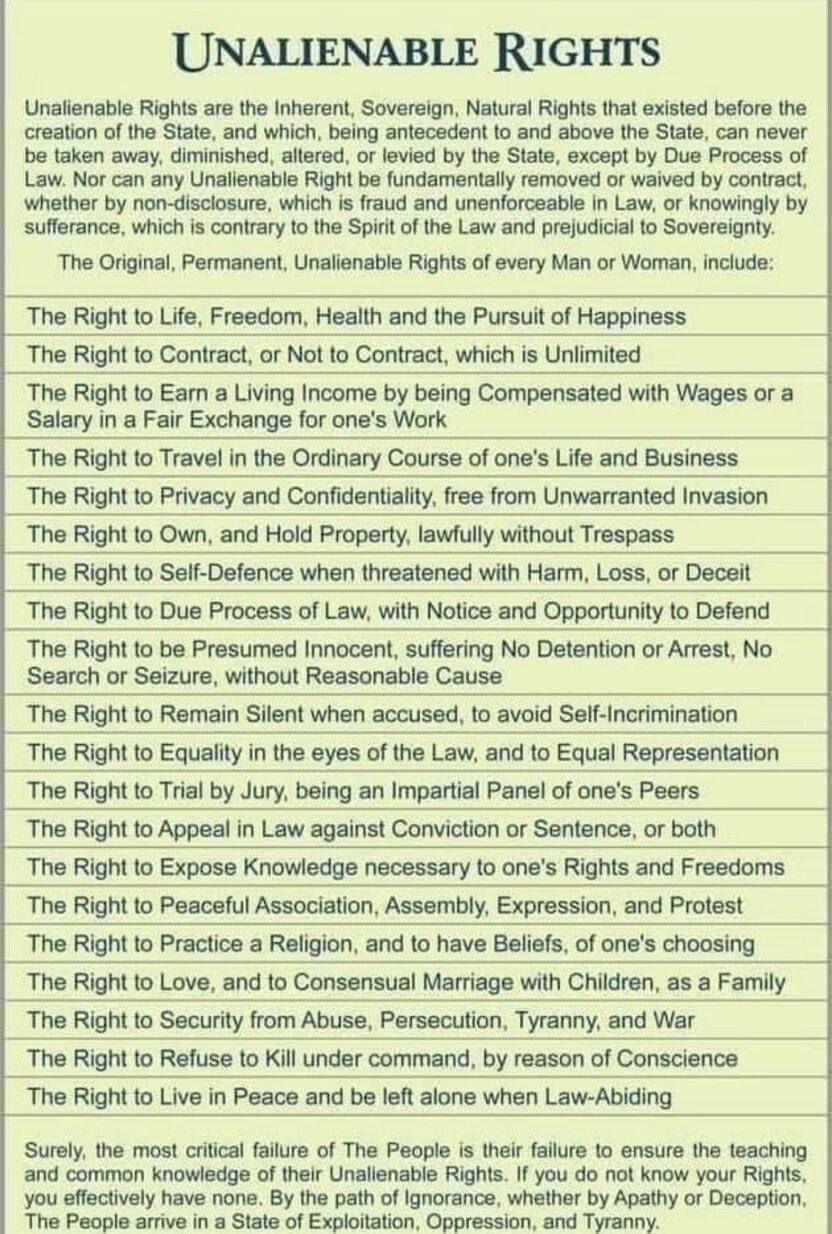
Knowing your rights can help you challenge unfair treatment. However, the poster accompanying this article is a statement of beliefs about rights, not a legal instrument. Displaying it on a window or door does not establish an exemption from applicable law, invalidate a court order or settle a dispute over an official’s powers.
Rights exist even when people cannot assert them
The original headline’s final sentence should not be understood literally. The United Nations human-rights framework treats fundamental rights as belonging to people because they are human. A person does not lose their dignity or basic rights because they are unaware of them, frightened, unable to speak or prevented from protesting. Learning about rights can improve a person’s ability to defend them, but knowledge is not a condition of possessing them.
The Universal Declaration of Human Rights sets out protections involving liberty, privacy, fair hearings, expression, religion and peaceful assembly. It also addresses work, education and an adequate standard of living. These principles provide a much firmer starting point than an unattributed list that blends moral claims with legal terminology.
A poster cannot explain every legal qualification
Several statements in the image are too absolute to serve as reliable legal guidance. For example, an “unlimited” right to contract and a universal entitlement to jury trial in every dispute cannot be assumed. The applicable protections depend on the country, the legal issue and the proceedings involved. Rights to movement, property and protest also need to be understood alongside other people’s rights and the lawful limits that apply.
Article 29 of the Declaration recognises carefully defined legal limitations intended to protect other people’s rights and legitimate community interests. That does not give governments unrestricted power. It means that the source, purpose and justification of a restriction matter.
A useful rights checklist therefore starts with the relevant constitution, legislation, treaty obligations and court decisions. Identify the decision being challenged, preserve documents, and check the proper complaint or review route. Where a real dispute or deadline is involved, qualified advice in the relevant jurisdiction is more dependable than a circulating notice. This article provides general information, not advice about an individual case.
Source credit: the original post supplied the “Unalienable Rights” image reproduced below, without an identifiable author or legal jurisdiction. It is retained as the material being discussed, not endorsed as a statement of governing law.

References
- United Nations: Universal Declaration of Human Rights
- UN Human Rights: What are human rights?
- OHCHR: The International Covenants
