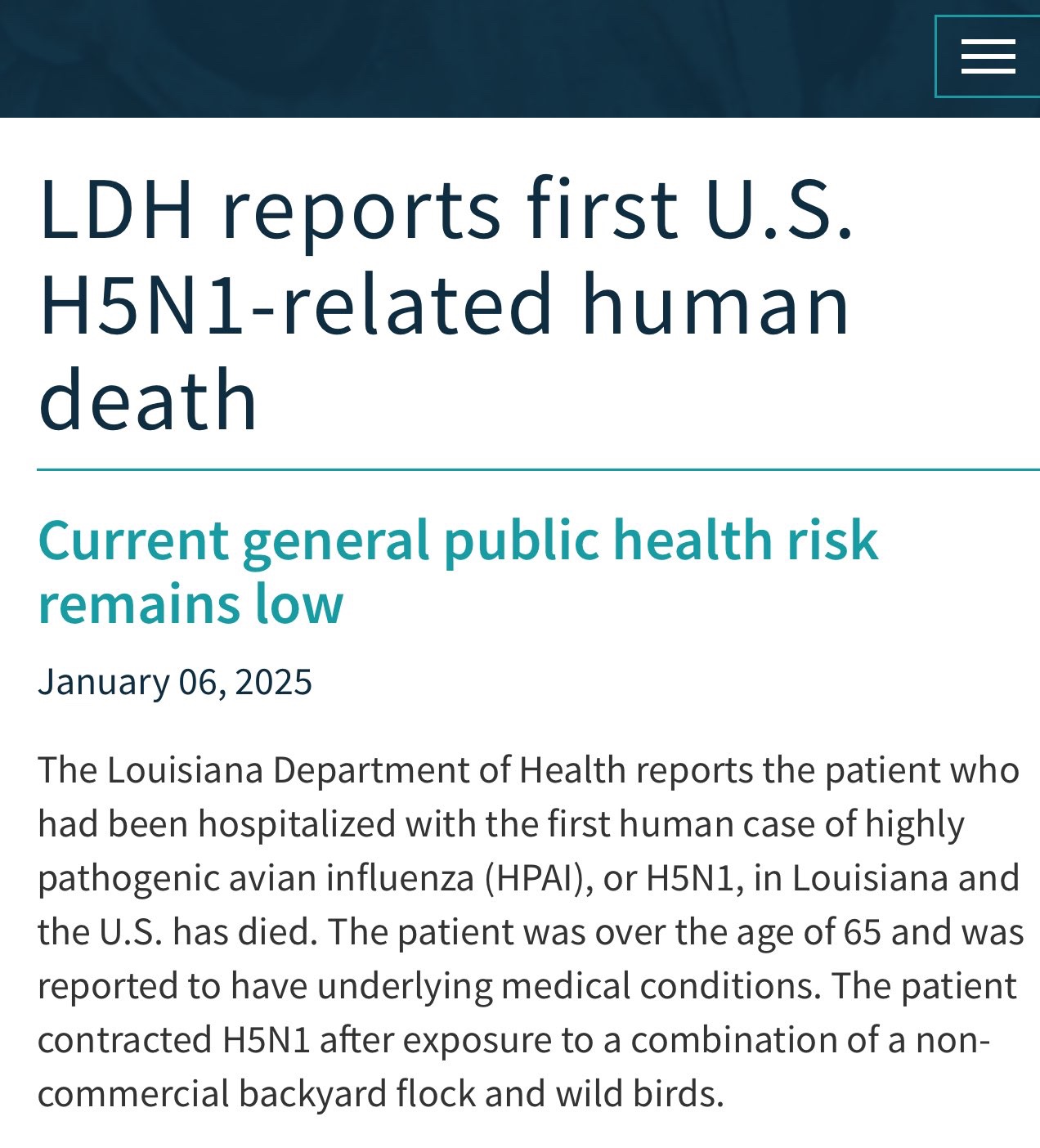
The image accompanying this post reports a real and serious event: Louisiana announced the first US human death associated with H5N1 bird flu on 6 January 2025. That report does not establish that ordinary pigeon feeding caused the infection, or that everyone must permanently stop feeding garden birds.

What the Louisiana case showed
The person had been hospitalized with severe illness after exposure to a backyard flock and wild birds. In its announcement of the death, the CDC said that it had found no person-to-person spread and that the risk to the general public remained low at that time. Those statements describe the January 2025 assessment, not a guarantee about every later outbreak.
The important distinction is exposure. Handling infected birds, their remains or contaminated environments creates different risks from watching birds at a distance. The original headline about “birds and Pigeons” does not explain those differences, and the original screenshot does not identify pigeons as the source.
Practical precautions around birds
The CDC advises avoiding direct contact with sick or dead wild birds and poultry. Infection can also involve apparently healthy wild birds and contaminated material, so do not rely only on how an animal looks.
- Watch wild birds from a distance and keep children and pets away from sick or dead animals.
- Report unusual illness or deaths to the appropriate local wildlife or animal-health authority rather than attempting a rescue with bare hands.
- If occupational or other necessary duties involve potentially infected animals, follow the recommended protective-equipment and hygiene guidance.
- If you become ill after a relevant exposure, promptly tell a healthcare professional about the contact.
Should a garden feeder come down?
Cornell’s Lab of Ornithology, in guidance updated in January 2026, reports relatively few detections among typical songbird feeder visitors. It does not recommend a universal feeder shutdown for households without domestic poultry. It does recommend regular cleaning and following state guidance, including when local advice is more restrictive.
People keeping chickens or other poultry need stricter separation from wild birds, including protecting feed and water. Local outbreak conditions can change, so check current wildlife and public-health advice before deciding what to do. A sensible response is to reduce the relevant contact and contamination risks, rather than treat this historical report as proof that all bird feeding is equally dangerous.
References
- CDC: First H5 bird flu death reported in the United States, 6 January 2025
- CDC: About Bird Flu
- Cornell Lab of Ornithology: Avian influenza and bird feeders, updated January 2026
