If you suspect a heart attack, call 112 in India now and request emergency medical help. Give your location and describe the symptoms. Do not wait for severe pain, a relative’s opinion or a home remedy to work. India’s 112 service handles emergencies including requests for ambulance assistance.
Warning signs can be subtle
A heart attack occurs when the heart muscle does not receive enough blood, often because a coronary artery is blocked. Symptoms may be sudden, or start mildly and return after easing. The amount of pain does not reliably show how serious the problem is.
Possible warning signs include:
- Pressure, squeezing, heaviness or discomfort in the chest.
- Pain or discomfort in the arms, shoulders, back, jaw, neck or upper abdomen.
- Breathlessness, with or without chest discomfort.
- Cold sweating, nausea, dizziness or unusual tiredness.
Chest discomfort is common in both women and men. Women may also have symptoms such as nausea or unusual fatigue. Older adults and people with diabetes can have mild symptoms or a heart attack with no obvious symptoms. Looking fit or feeling only a little discomfort does not make a possible attack safe to ignore.
Do not label it “gas” yourself
A heart attack can resemble indigestion. You cannot reliably distinguish the two from symptoms at home, and temporary relief does not prove that the danger has passed. Hospital assessment commonly includes an ECG and blood tests. If you suspect an attack, seek emergency help even when you are uncertain.
While help is coming
Stop activity and rest in a comfortable position. Do not drive yourself. Follow the emergency operator’s instructions about immediate care and transport. If you are helping someone, stay nearby and keep checking whether they are responding and breathing normally.
Call before searching for medicines. Take aspirin for a suspected attack only if the emergency operator or a healthcare professional advises it. Allergy and bleeding risks matter; taking aspirin and waiting for improvement can delay lifesaving care.
If someone collapses
If the person is unresponsive and is not breathing normally, including only gasping, call 112 or tell a bystander to call. Begin CPR and follow the operator’s guidance; use an automated external defibrillator if one is available, following its prompts. A heart attack can trigger cardiac arrest, but the two are different conditions.
Knowing the warning signs helps reduce treatment delay. It does not prevent every attack. Learn CPR before an emergency and share the 112 number with your household.
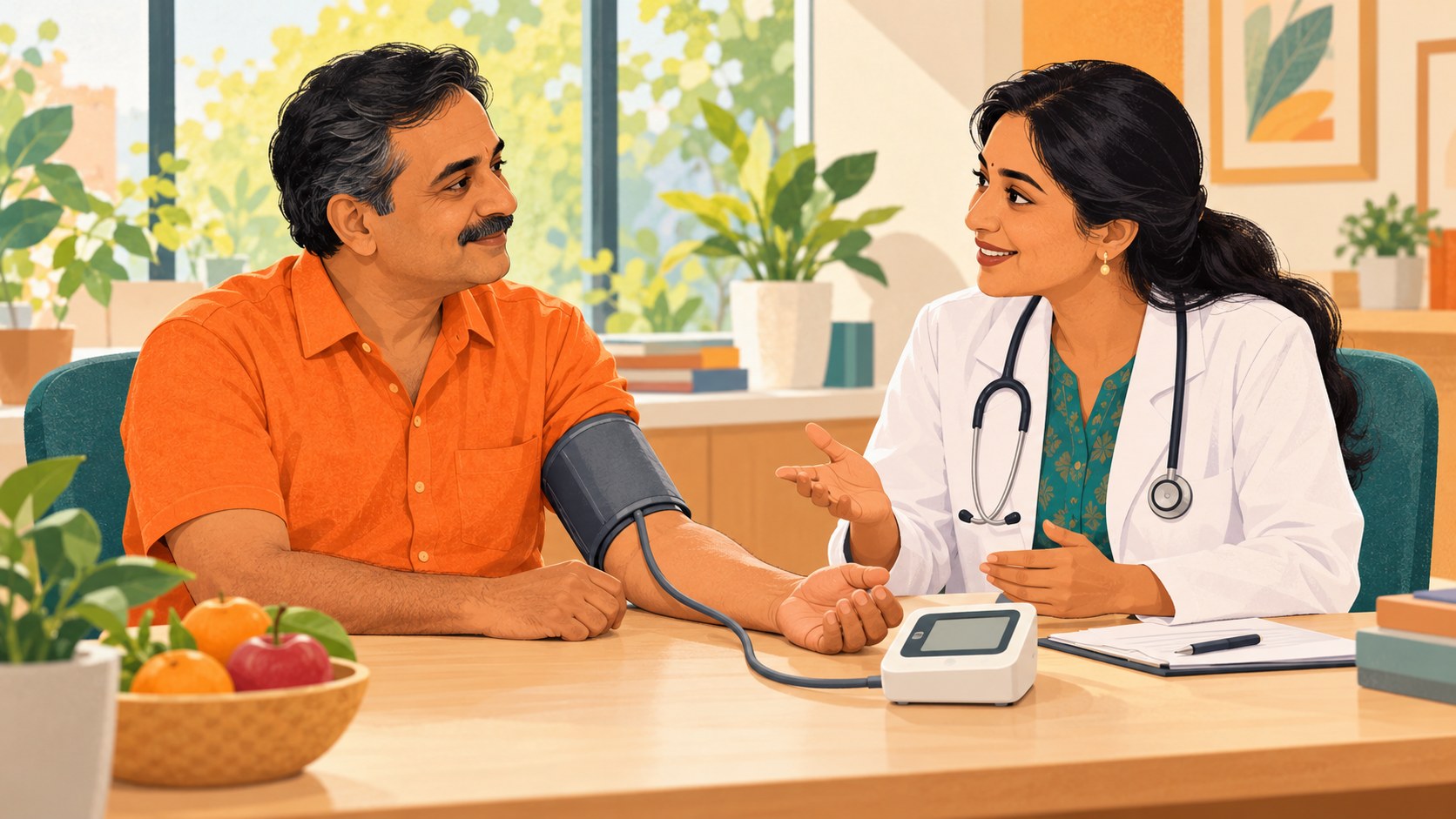
Editorial disclosure: General health education, not a personal diagnosis or treatment plan. References checked on 20 October 2026; no clinician-review claim is made. The retained featured image is an illustrative AI-generated image.
References
- Government of India, Emergency Response Support System: Frequently Asked Questions: 112
- NHLBI: Heart Attack: Symptoms
- American Heart Association: Warning Signs of a Heart Attack
- NHS: Heart Attack
- American Heart Association: Aspirin and Dual Antiplatelet Therapy
- American Heart Association: Hands-Only CPR
- American Heart Association: What Is Cardiac Arrest?
- Government of India: Emergency Response Support System (112)
