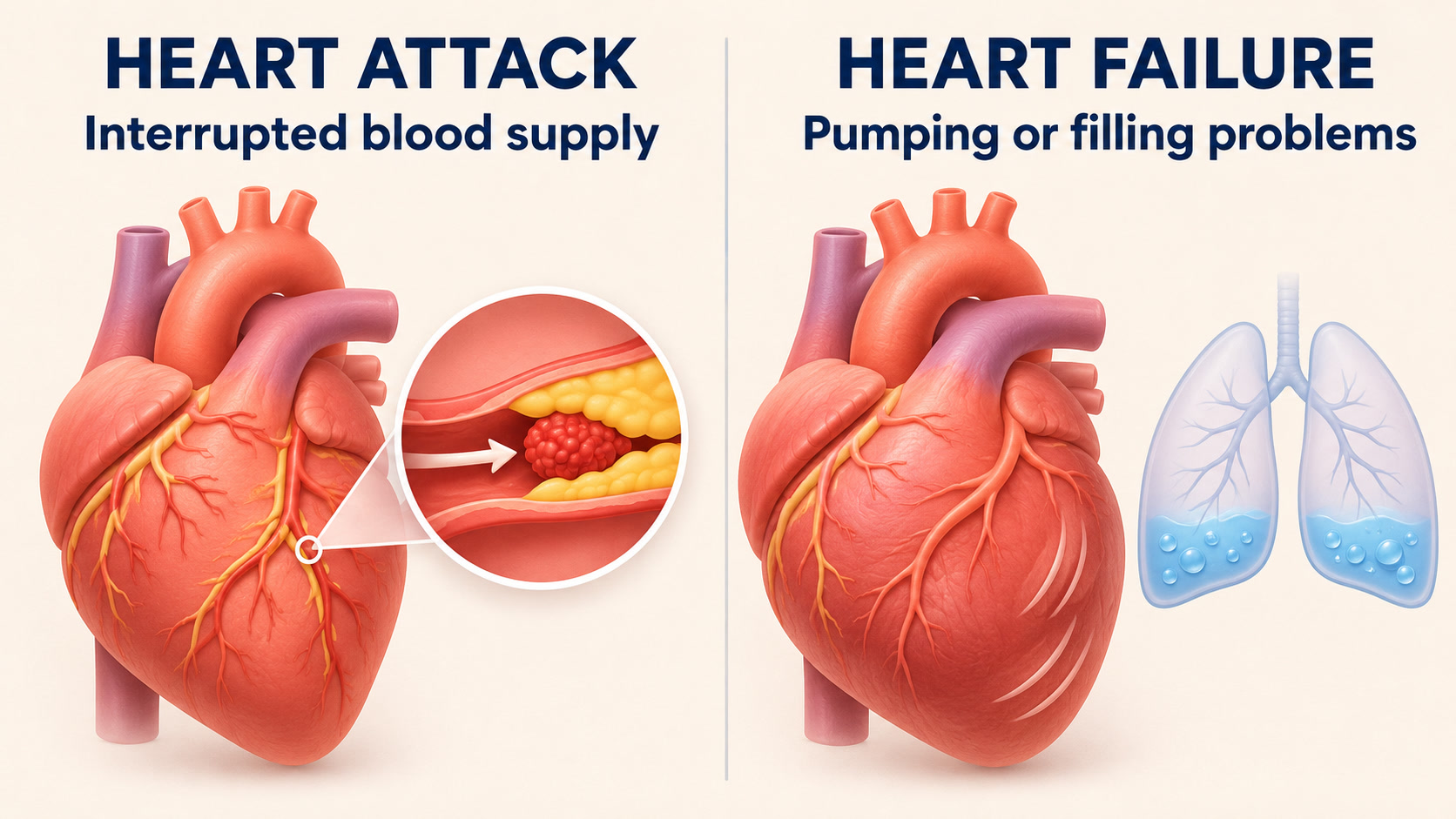
A heart attack and heart failure affect the heart in different ways. A heart attack damages heart muscle when its oxygen supply is cut off or severely reduced. Heart failure means the heart has difficulty pumping blood or filling properly. Both are serious, and they can occur together. American Heart Association: heart attack; NHLBI: heart failure
Get emergency help now: If you suspect a heart attack, or someone develops sudden, severe breathlessness, call your local emergency number immediately, such as 911 in the US or 999 in the UK. Do not drive yourself. Do not wait for every symptom to appear or for symptoms to become severe. Follow the emergency dispatcher’s instructions. AHA: warning signs; NHS: heart attack; NHS: heart failure
What is a heart attack?
A heart attack, also called a myocardial infarction, happens when part of the heart muscle does not receive enough oxygen-rich blood and begins to die. Treatment is urgent because restoring blood flow quickly can limit damage. The heart usually continues beating during a heart attack. AHA: heart attack explained
What causes it?
The most common cause is coronary artery disease. Fatty deposits called plaque build up inside the arteries that supply the heart. If a plaque breaks open, a blood clot can form and block blood flow.
Less common causes include a severe coronary artery spasm or a tear in the artery wall, called spontaneous coronary artery dissection (SCAD). Smoking, high blood pressure, high cholesterol, diabetes and a family history of early heart disease can increase risk. NHLBI: heart attack causes and risk factors
What symptoms should you recognise?
Possible warning signs include:
- Pressure, squeezing, fullness or pain in the centre of the chest.
- Discomfort in one or both arms, the back, neck, jaw or upper abdomen.
- Breathlessness, with or without chest discomfort.
- A cold sweat, nausea, light-headedness or unusual tiredness.
Symptoms can start suddenly or gradually and may come and go. Some heart attacks cause mild symptoms or no obvious chest pain. Chest pain or discomfort remains the most common symptom in both women and men. Call emergency services if you suspect a heart attack, even if you are unsure. AHA: warning signs; AHA: heart attack explained
What is heart failure?
Heart failure means the heart cannot meet the body’s needs effectively because it is too weak to pump well, too stiff to fill properly, or both. It does not mean the heart has stopped. It often develops over time, but it can also begin suddenly. NHLBI: what is heart failure?; NHLBI: causes
You can have heart failure even when the heart’s ejection fraction is preserved. Ejection fraction is the percentage of blood pumped out of the main pumping chamber with each beat. In heart failure with preserved ejection fraction (HFpEF), the heart may squeeze well but have difficulty relaxing and filling. A normal-looking ejection fraction alone does not rule out heart failure. AHA: ejection fraction
What causes it?
Common causes and contributors include:
- Coronary artery disease and damage from a previous heart attack.
- Long-standing high blood pressure.
- Diseases of the heart muscle, known as cardiomyopathies.
- Heart valve problems or certain abnormal heart rhythms.
Diabetes and other conditions can also contribute. More than one problem may be involved. NHLBI: heart failure causes and risk factors; NHS: heart failure
What symptoms can it cause?
Possible symptoms include:
- Breathlessness during everyday activity, at rest or when lying flat.
- Waking at night short of breath.
- Swelling in the ankles, feet, legs or abdomen.
- Rapid weight gain from fluid retention.
- Persistent tiredness or reduced ability to manage usual activities.
- A persistent cough or wheeze.
Fluid can build up in the lungs and other tissues. These symptoms also have other possible causes, so they need medical assessment rather than self-diagnosis. AHA: heart failure signs and symptoms
Seek prompt medical advice for new or worsening breathlessness, swelling or rapid weight gain. If symptoms are sudden and severe, particularly severe difficulty breathing, call emergency services immediately. People already diagnosed with heart failure should follow their care team’s symptom action plan. NHS: heart failure
How are the two connected?
A heart attack can damage the heart muscle enough to cause heart failure, either soon afterwards or later. However, not everyone who has a heart attack develops heart failure, and heart failure can occur without a previous heart attack. NHLBI: heart failure causes
Breathlessness and fatigue can occur in either condition. A symptom checklist cannot reliably tell them apart. Clinicians use the history, examination and tests. Suspected heart attacks are assessed with an ECG and blood tests, including troponin. Heart failure assessment commonly includes blood tests and an echocardiogram, an ultrasound of the heart. NHLBI: heart attack diagnosis; NHLBI: heart failure diagnosis
Where does cardiac arrest fit in?
Cardiac arrest is a separate emergency in which the heart suddenly stops pumping blood effectively, often because of a dangerous electrical rhythm. The person becomes unresponsive and is not breathing normally, or is only gasping. A heart attack can trigger cardiac arrest, but they are not the same event.
If someone is unresponsive and not breathing normally, call emergency services, start CPR and use an automated external defibrillator (AED) as soon as one is available. Follow the dispatcher’s instructions and the AED’s prompts. AHA: what is cardiac arrest?
The key difference to remember
- Heart attack: an interruption of blood supply damages heart muscle.
- Heart failure: a problem with pumping or filling affects the heart’s ability to meet the body’s needs.
- Cardiac arrest: effective circulation stops and immediate resuscitation is needed.
Knowing the difference is useful, but getting help matters more than naming the condition yourself.
This article provides general health information, not a diagnosis or a substitute for individual medical care.
Sources and further reading
- American Heart Association: Heart Attack Explained
- American Heart Association: Warning Signs of a Heart Attack
- NHLBI: Heart Attack Causes and Risk Factors
- NHLBI: What Is Heart Failure?
- NHLBI: Heart Failure Causes and Risk Factors
- American Heart Association: Heart Failure Signs and Symptoms
- American Heart Association: Ejection Fraction and Heart Failure
- NHLBI: Heart Attack Diagnosis
- NHLBI: Heart Failure Diagnosis
- NHS: Heart Attack
- NHS: Heart Failure
- American Heart Association: What Is Cardiac Arrest?
#HeartHealth #HeartAttack #HeartFailure #KnowTheSymptoms #CardiovascularHealth #EndYourIllness
