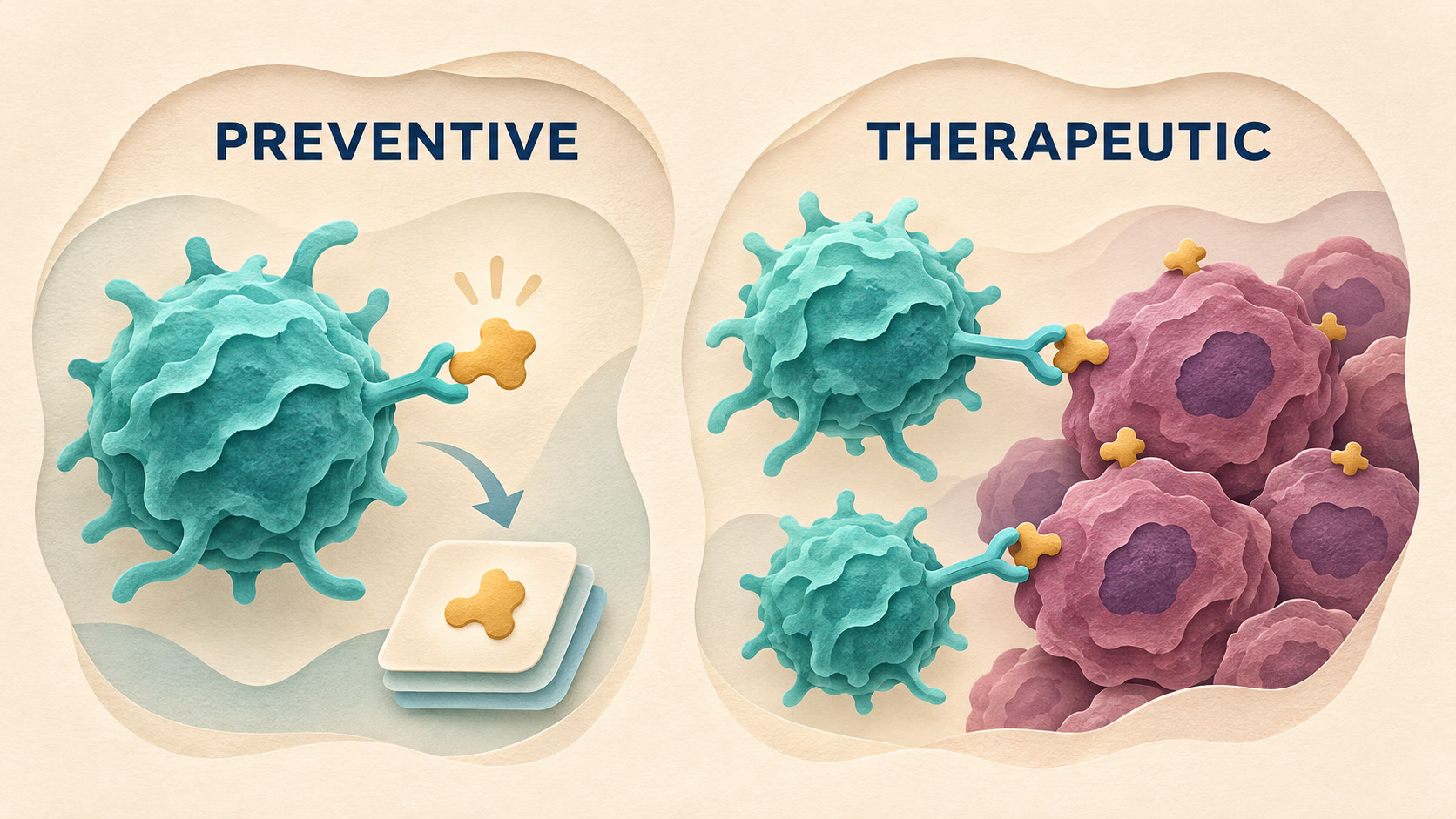
Most people know vaccines as something you receive to help prevent an illness. That is their most familiar role, but some vaccines are designed to help treat a disease that has already developed.
The key difference is their purpose: preventive vaccines reduce the risk of a future illness; therapeutic vaccines help the immune system respond to an existing disease. They are not interchangeable.
How vaccines teach the immune system
The immune system recognizes particular features called antigens. These can be parts of a virus or bacterium, or features found on abnormal cells.
A vaccine presents a target to the immune system, or provides instructions for making that target. Depending on the vaccine, this may involve a weakened or inactivated germ, a purified component, or genetic instructions such as mRNA. Not every vaccine contains a whole germ.
The response can involve antibodies and immune cells. Some cells retain a memory of the target, allowing a quicker response when it is encountered again. This is immune memory. The aim is a response to a particular target, rather than a general enhancement of every immune function.
Protection takes time to develop. Some vaccines need several doses, boosters or updated doses to maintain useful protection.
Preventive vaccines: preparing before disease develops
Preventive vaccines are also called prophylactic vaccines. They are generally given before someone encounters the infection they protect against.
Familiar examples include:
- Childhood vaccines, such as those against measles and polio, which help prevent serious infections and their complications.
- Influenza vaccines, which reduce the risk of flu and can reduce severe outcomes if infection occurs.
- HPV vaccines, which prevent new infections with certain types of human papillomavirus and help prevent the cancers those infections can cause.
No vaccine provides 100% protection. Effectiveness varies with the vaccine, the infection, the person’s immune response and time since vaccination. Becoming infected after vaccination does not necessarily mean there was no benefit: protection against severe illness can still matter.
HPV vaccination prevents disease; it does not treat it
The HPV vaccine does not clear an existing HPV infection, treat genital warts or remove precancerous lesions or an established cancer. Someone previously exposed to HPV may still benefit from protection against vaccine-covered types they have not acquired, depending on their eligibility.
Vaccinated people should still follow the cervical screening recommendations that apply to them. Vaccination does not cover every cancer-causing HPV type or replace follow-up of an abnormal screening result.
Therapeutic vaccines: treating disease already present
Therapeutic vaccines are designed for people who already have a particular disease. Cancer treatment vaccines, for example, aim to help immune cells recognize targets on cancer cells and respond to them.
They are one form of immunotherapy, meaning treatment that uses the immune system against disease. They are not routine vaccines for everyone, and a vaccine suitable for one cancer may have no role in another.
An approved example: sipuleucel-T
Sipuleucel-T (Provenge) is an FDA-approved treatment for selected people with prostate cancer that has spread and continues to progress despite treatment that lowers testosterone. Its approved use is for patients with no symptoms or only minimal symptoms from this cancer.
Technically, it is an autologous cellular immunotherapy: it uses the patient’s own immune cells, which are processed outside the body and then returned by infusion. It is often described as a cancer treatment vaccine.
It is not a preventive prostate cancer shot, is not appropriate for every person with prostate cancer and is not a guaranteed cure. An oncology team must assess whether it fits the person’s cancer and overall treatment plan.
What about personalized mRNA cancer vaccines?
Researchers are testing vaccines designed around features of an individual patient’s tumor. Some use mRNA to provide instructions for making cancer-related targets that the immune system can learn to recognize.
Personalized mRNA cancer vaccines remain largely investigational. Encouraging trial results do not automatically mean a treatment is approved or available as routine care. Approval and access depend on the particular product, cancer and country.
A vaccine studied after surgery to reduce the chance of cancer returning is still part of cancer treatment. It is different from giving an HPV vaccine to prevent a cancer-causing infection in the first place.
Side effects and suitability depend on the vaccine
Many routine preventive vaccines can cause short-lived soreness, tiredness or fever. Serious allergic reactions are rare, but possible. Cancer treatment vaccines have their own risks, including infusion reactions and potentially serious adverse effects, and require specialist supervision.
Before vaccination or treatment, discuss:
- Your age, vaccination history and the schedule recommended where you live.
- Pregnancy, allergies, immune-system conditions and medicines that affect immunity.
- The expected benefit, common side effects and symptoms that need urgent attention.
- For a therapeutic vaccine, whether it is approved for your situation or offered through a clinical trial, and how it fits with other treatment.
Remember: prevention aims to stop disease developing; therapy aims to treat disease that is already present. Neither is a promise of complete protection or cure.
This article provides general health information, not a personal vaccination or cancer treatment plan. A qualified healthcare professional can help you choose the appropriate next step.
Sources and further reading
- World Health Organization: How do vaccines work?
- World Health Organization: What is vaccination?
- CDC: Explaining how vaccines work
- CDC: Benefits of flu vaccination
- World Health Organization: Vaccine safety
- CDC: HPV vaccine recommendations
- National Cancer Institute: HPV vaccine fact sheet
- National Cancer Institute: Cancer treatment vaccines
- FDA: Questions and answers about Provenge
- National Cancer Institute: Fiscal year 2026 annual plan, including personalized cancer vaccine research
#Vaccines #PreventiveVaccines #TherapeuticVaccines #Immunisation #CancerImmunotherapy #HPVPrevention #HealthEducation
