A small injection under the skin can lower LDL cholesterol for months. Here is who may benefit, how the schedule works, and why many people still need their tablets.
Evidence checked: 7 November 2026
An injection just twice a year sounds appealing when you are used to remembering a cholesterol tablet every day. Inclisiran offers twice-yearly maintenance treatment after its starting doses. But whether it can replace any tablets depends on your medical history, treatment goals and local prescribing rules.
For many patients, inclisiran is an extra tool alongside their existing medicines. Do not stop a prescribed statin or other cholesterol treatment because you have heard about this injection.
Why high cholesterol deserves attention
Hypercholesterolaemia means high blood cholesterol. The main treatment target is usually LDL cholesterol, often called “bad” cholesterol. Excess LDL contributes to fatty deposits in arteries and increases the risk of heart attack and stroke. Dyslipidaemia is a broader term for abnormal blood fats, which can include cholesterol and triglycerides. Inclisiran is primarily an LDL-lowering treatment. CDC: LDL, HDL and triglycerides
Some people inherit familial hypercholesterolaemia (FH), which causes high LDL from a young age and raises the risk of early heart disease. Very high cholesterol or a family history of early heart attacks deserves a medical assessment; healthy eating alone may not bring inherited high LDL under control. CDC: familial hypercholesterolaemia
Meet inclisiran: helping the liver clear LDL
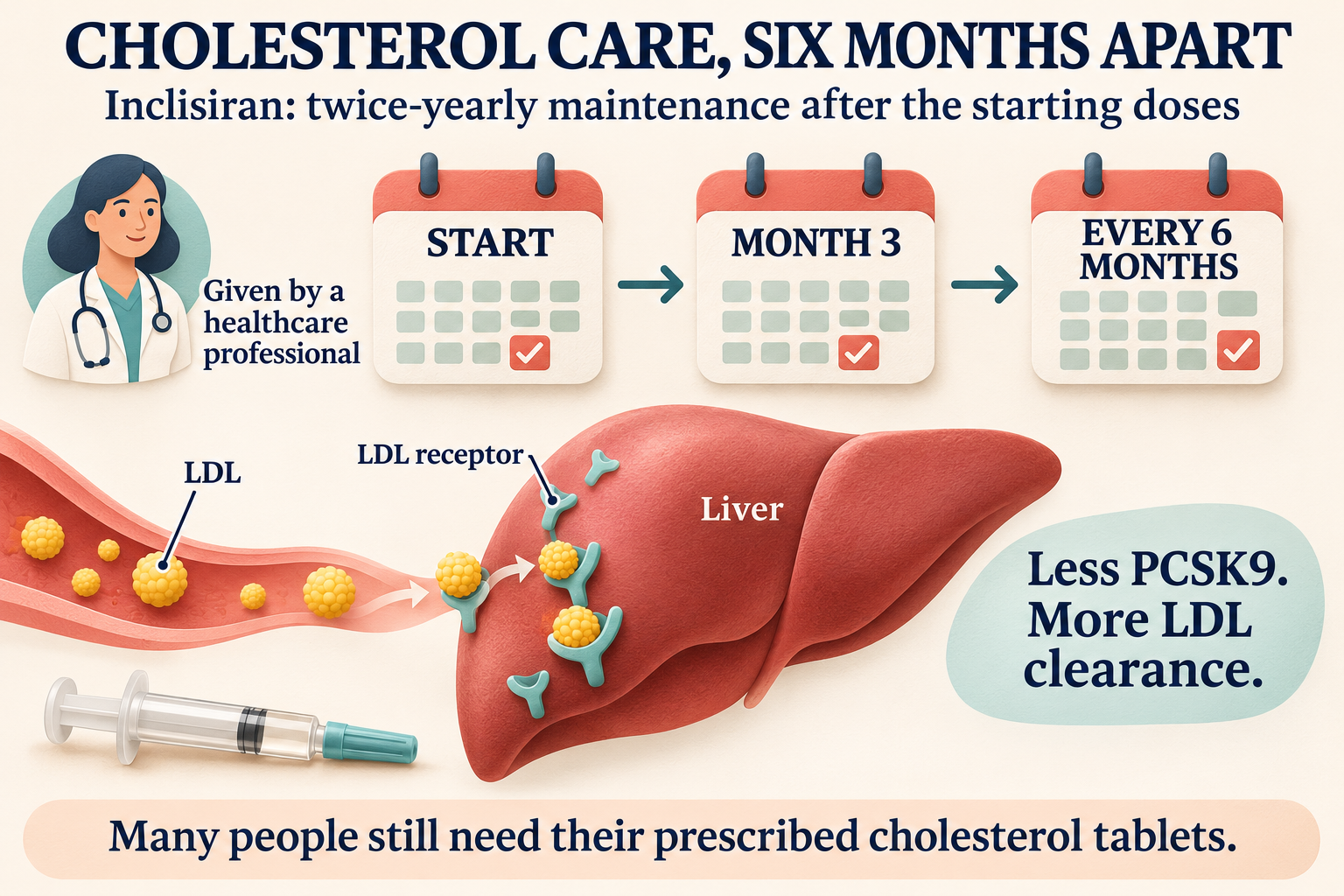
Inclisiran is a small interfering RNA, or siRNA, medicine. It reduces the liver’s production of a protein called PCSK9.
PCSK9 normally promotes the breakdown of LDL receptors, the structures that help liver cells remove LDL from the blood. With less PCSK9, more receptors can be reused, so the liver can clear more LDL. This is RNA interference, not an edit to your DNA. UK prescribing information, mechanism of action
Think of it as helping the liver keep more cholesterol-collection points working.
The calendar matters: first, three months, then every six
The standard schedule is:
- First injection: when treatment begins.
- Second injection: three months later.
- Maintenance: every six months after that.
That usually means appointments at months 0, 3, 9, 15 and 21. There are three injections during the first 12 months, followed by the twice-yearly maintenance pattern. European Medicines Agency: how inclisiran is used
The prescribed dose is 284 mg in a 1.5 mL injection under the skin, administered by a healthcare professional. It is not a do-it-yourself home injection. US prescribing information
Can you really say goodbye to a daily pill?
Some patients may use inclisiran without a statin, but this is not a promise that everyone can stop tablets. It is often considered when LDL remains above the treatment goal despite the highest statin dose a person can tolerate, sometimes with other medicines such as ezetimibe. People who cannot take statins need a separate discussion about suitable alternatives. Most participants in the original pivotal trials were already receiving cholesterol-lowering medicines. EMA overview
Eligibility differs by country:
- India: CDSCO’s 2023 approval list includes inclisiran for adults with primary hypercholesterolaemia or mixed dyslipidaemia, with a statin when goals are not reached, or alone/with other treatment when statins are not tolerated or are contraindicated. This approval does not establish your local stock, price or insurance cover. CDSCO approval list, entry 23
- UK: adult prescribing follows a similar add-on or statin-intolerance approach. NHS eligibility is narrower than the medicine’s licence and depends on the applicable local funding criteria. UK prescribing information · NICE guidance
- US: current adult labeling allows LDL lowering alongside diet and exercise without requiring concurrent statin treatment. The label also includes specified familial conditions from age 12. A broader licence still does not make it the best choice for every patient or guarantee coverage. US prescribing information
How much can it lower cholesterol?
In the ORION-10 and ORION-11 trials, inclisiran produced about a 50% LDL reduction relative to placebo at day 510, on top of background care. The exact average placebo-adjusted reductions were 52.3% and 49.9%. Individual results vary. ORION-10 and ORION-11, New England Journal of Medicine
That is a cholesterol result, not a claim that heart attacks are reduced by 50%.
Lower LDL and fewer heart attacks are different claims
Lowering LDL is an established part of cardiovascular prevention. However, the amount by which inclisiran itself reduces heart attacks, strokes or cardiovascular deaths still requires dedicated outcome evidence.
As of 7 November 2026, definitive results from the large inclisiran outcome trials had not been identified in the sources checked. The latest sponsor update continued to list ORION-4 and VICTORION-2 PREVENT results as forthcoming. The UK product information also states that cardiovascular morbidity and mortality effects have not yet been determined. October 2026 trial update · UK prescribing information
The August 2026 US label added a cardiovascular statement referring to evidence from statins and PCSK9 antibody medicines. It should not be mistaken for a completed inclisiran outcomes trial. US prescribing information
What about side effects and pregnancy?
Injection-site pain, redness or rash can occur. In the adult trials summarized in US labeling, injection-site reactions occurred in about 8% of inclisiran recipients versus 2% with placebo. Joint pain and bronchitis were also reported more often with treatment.
Serious allergic reactions, including anaphylaxis and angioedema, have been reported. Seek emergency help for breathing difficulty or swelling of the face, lips, tongue or throat. A previous serious reaction to inclisiran or an ingredient must be discussed before treatment. US prescribing information: safety
Tell your clinician if you are pregnant, planning pregnancy or breastfeeding. Human pregnancy data are limited, and UK guidance advises avoiding use during pregnancy as a precaution. Breastfeeding decisions require an individual assessment. UK prescribing information: pregnancy and breastfeeding
A useful question for your next appointment
Ask: “Is my LDL at the right level for my risk, and would inclisiran improve my treatment plan?”
Discuss which medicines would continue, follow-up blood tests, appointment dates, side effects and the full ongoing cost. Keep working on heart-healthy eating, activity and other risk factors.
Inclisiran can make the dosing schedule much less frequent. The goal remains a treatment plan that fits your health needs, not simply fewer pills.
This article is general health education, not an individual prescription. Treatment decisions should be made with a qualified clinician using current local guidance.
Hashtags
#Inclisiran #HighCholesterol #Hypercholesterolaemia #LDLCholesterol #Dyslipidaemia #HeartHealth #FamilialHypercholesterolaemia #CholesterolManagement #PatientEducation #EndYourIllness
Sources and further reading
- CDC: LDL, HDL and triglycerides
- CDC: familial hypercholesterolaemia
- UK prescribing information, mechanism of action
- European Medicines Agency: how inclisiran is used
- US prescribing information
- CDSCO approval list, entry 23
- NICE guidance
- ORION-10 and ORION-11, New England Journal of Medicine
- October 2026 trial update
