A lipid report can look like a page full of abbreviations. What is LDL? Is higher HDL always better? Are triglycerides another name for cholesterol?
These results describe different parts of the way your body carries and uses fats. Reading them together helps you and your healthcare professional understand your risk and decide what to do next.
What are lipids?
Lipids are a broad group of fats and fat-like substances. Two familiar examples are cholesterol and triglycerides, but they have different jobs:
- Cholesterol helps build cells and is used to make certain hormones, vitamin D and bile acids involved in digestion. Your body makes the cholesterol it needs.
- Triglycerides store energy. They come from food and are also made from calories your body does not use straight away.
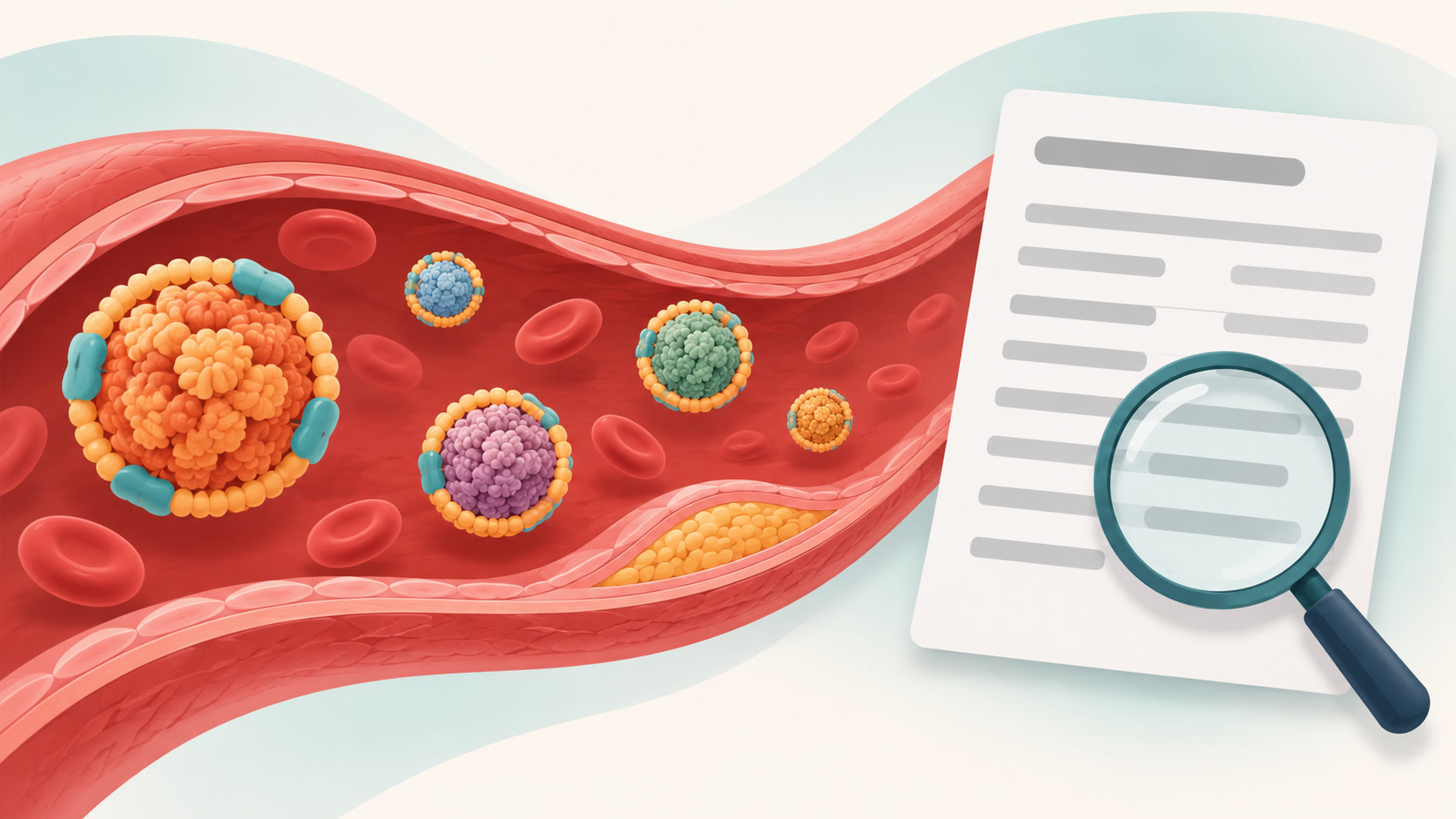
Lipids do not mix easily with the watery part of blood. They travel inside packages called lipoproteins, which contain fats and proteins. LDL, HDL and VLDL are different kinds of these packages.
So, “good” and “bad” cholesterol are convenient nicknames, not two chemically different kinds of cholesterol. The carrier and the amount circulating matter. Blood lipids also should not be confused with body-fat percentage or with the amount of fat in one meal. MedlinePlus: cholesterol; NHLBI: triglycerides.
What does a lipid profile measure?
A lipid profile, lipid panel or cholesterol test usually reports total cholesterol, LDL cholesterol, HDL cholesterol and triglycerides. Non-HDL cholesterol and sometimes VLDL cholesterol or a ratio may also appear. The “C” in LDL-C or HDL-C means cholesterol.
Total cholesterol: the overall amount
Total cholesterol includes cholesterol carried in HDL, LDL and other lipoproteins. It is a useful starting point, but it cannot show the whole picture on its own.
Two people can have the same total cholesterol and very different LDL and HDL results. A total within the laboratory range also does not necessarily mean that someone at high cardiovascular risk has reached their treatment goal. American Heart Association: understanding cholesterol and lipids.
LDL-C: a key target for reducing risk
LDL means low-density lipoprotein. LDL particles carry cholesterol to tissues. Excess cholesterol carried by these particles contributes to plaque in artery walls, a process called atherosclerosis.
Over time, plaque can narrow arteries. A plaque can also break open and trigger a blood clot, causing a heart attack or stroke. Lowering LDL when indicated reduces cardiovascular risk.
High LDL usually causes no warning symptoms. Feeling well does not tell you whether your LDL is high. MedlinePlus: cholesterol testing and cardiovascular risk.
HDL-C: helpful information, not a guarantee
HDL means high-density lipoprotein. HDL participates in moving cholesterol from tissues back toward the liver for processing and removal.
Low HDL is associated with higher cardiovascular risk, but a high HDL result does not cancel out high LDL, smoking, diabetes or other risks. Very high HDL is not necessarily better, and the blood level does not fully describe how well HDL particles work.
Doctors do not generally prescribe treatment simply to push the HDL number upward. The aim is to reduce overall risk, particularly by managing LDL and other established risk factors. Do not start drinking alcohol to raise HDL. HEART UK: current understanding of HDL; American Heart Association: HDL and treatment targets.
Triglycerides: the energy-storage fat
Triglycerides, often shortened to TG, are not cholesterol. They are carried in lipoproteins and provide stored energy.
A high triglyceride result can accompany insulin resistance, diabetes or other metabolic problems. Persistent elevation can signal increased cardiovascular risk. Triglycerides often rise after eating, so fasting status matters when interpreting the result.
Very high triglycerides can also cause pancreatitis, a potentially serious inflammation of the pancreas. NHLBI: high blood triglycerides.
Non-HDL-C: a broader view
Non-HDL cholesterol = total cholesterol minus HDL cholesterol.
It captures cholesterol in LDL and other particles that can contribute to atherosclerosis. This can be especially useful when triglycerides are elevated. It is not an additional substance floating in the blood; it is a calculated summary.
For an arithmetic example only, a total cholesterol of 210 mg/dL and HDL of 50 mg/dL gives non-HDL cholesterol of 160 mg/dL. That example is not a target or a diagnosis. MedlinePlus: interpreting cholesterol levels.
VLDL-C and cholesterol ratios
VLDL means very-low-density lipoprotein. These particles mainly transport triglycerides made by the liver. VLDL and the particles left after its triglycerides are removed can contribute to artery disease. When a report lists VLDL-C, it refers to the cholesterol carried in VLDL, often estimated from other measurements. It is not the same result as triglycerides. MedlinePlus: VLDL cholesterol.
Some reports also show a total cholesterol-to-HDL ratio. A ratio can contribute to risk assessment, but should not distract from the actual LDL, non-HDL and triglyceride values. A reassuring-looking ratio is not permission to ignore an elevated LDL. HEART UK: understanding test results.
Common adult guide values
These are general adult guide values, not universal “normal” ranges or personal prescriptions. Laboratories and national guidelines differ. Children, pregnancy and specific medical conditions need separate interpretation. Conversions below are rounded.
On a smaller screen, swipe or scroll sideways within the table to see every column.
| Measurement | Common adult guide | What to remember |
|---|---|---|
| Total cholesterol | Below 200 mg/dL, about 5.2 mmol/L | A screening guide, not a stand-alone treatment target. |
| LDL-C | Below 100 mg/dL, about 2.6 mmol/L, is a common benchmark | Higher-risk people may need substantially lower LDL. |
| Non-HDL-C | Below 130 mg/dL, about 3.4 mmol/L, is a common benchmark | Personal targets depend on cardiovascular risk. |
| HDL-C | Below 40 mg/dL, about 1.0 mmol/L, in men or below 50 mg/dL, about 1.3 mmol/L, in women is commonly considered low | Higher is not always better; HDL is not a stand-alone treatment target. |
| Fasting triglycerides | Below 150 mg/dL, about 1.7 mmol/L | A nonfasting result needs the appropriate interpretation. |
Common fasting triglyceride categories are 150–199 mg/dL (about 1.7–2.2 mmol/L), borderline high; 200–499 mg/dL (about 2.3–5.6 mmol/L), high; and 500 mg/dL or above (about 5.7 mmol/L or above), very high or severe. Nonfasting triglycerides of 175 mg/dL or above (about 2.0 mmol/L) may warrant assessment. MedlinePlus: adult guide values; NHLBI: interpreting a lipid panel; ACC: triglyceride categories.
Why your personal LDL goal may be lower
Your clinician considers more than a laboratory flag: previous heart attack or stroke, diabetes, kidney disease, blood pressure, smoking, age, family history and other findings all matter.
Depending on risk, an LDL goal may be below 100, 70 or 55 mg/dL (approximately 2.6, 1.8 or 1.4 mmol/L). Someone with established cardiovascular disease may need treatment even when the lab has not flagged the result as high. An LDL of 190 mg/dL or higher (about 4.9 mmol/L) deserves clinician assessment, including consideration of inherited high cholesterol. ACC: 2026 lipid-management guidance.
Do I need to fast? Why is LDL sometimes “calculated”?
Many routine lipid panels can be taken without fasting. A fasting test may be requested when triglycerides are high or a particular lipid disorder is suspected. Follow your clinician’s and laboratory’s instructions, including advice about medicines.
LDL is often calculated from other results rather than measured directly. Different laboratories use different equations. The older Friedewald calculation becomes unreliable as triglycerides rise and is generally not reported at triglycerides of 400 mg/dL or above (about 4.5 mmol/L).
Newer equations can perform better, but still have limits. High triglycerides or an unexpected result may lead to a repeat fasting test or a different laboratory method. A missing calculated LDL does not mean your LDL is zero. 2026 ACC/AHA dyslipidemia guideline.
Why might lipid levels be abnormal?
Possible contributors include inherited conditions, insulin resistance or poorly controlled diabetes, an underactive thyroid, kidney or liver disease, excess alcohol, dietary patterns, reduced physical activity and some medicines.
High cholesterol can occur in someone who is slim and active, particularly when genes play a strong role. An abnormal result is a reason to investigate, not a reason to blame yourself.
Bring a list of prescribed medicines and supplements to your appointment. Do not stop a medicine because you think it affects your lipids. NHLBI: causes of high triglycerides; MedlinePlus: cholesterol risk factors.
What about ApoB and lipoprotein(a)?
These are additional tests, usually ordered separately from a standard lipid panel:
- ApoB helps estimate the number of particles that can promote plaque buildup. It can clarify risk in selected people, including some with high triglycerides or diabetes, even when LDL looks satisfactory.
- Lipoprotein(a), or Lp(a), is a largely inherited LDL-like particle associated with additional cardiovascular risk. The 2026 ACC/AHA guideline recommends measuring it at least once in adulthood. Discuss testing and interpretation with your clinician, taking local guidance into account.
These tests do not replace the ordinary lipid panel. An elevated result may change how strongly other risk factors are treated; it does not mean that a heart attack is inevitable. American Heart Association: 2026 guideline highlights.
What can help?
Start with changes you can keep doing:
- Replace some saturated fats with unsaturated fats from foods such as nuts, seeds, fish and suitable vegetable oils.
- Eat more vegetables, beans, lentils, fruit, whole grains and fibre-rich foods.
- Reduce sugary drinks and excess refined carbohydrates, particularly when triglycerides are high.
- Be physically active at a level suitable for you. Many adults work toward 150 minutes of moderate activity each week.
- Avoid tobacco and seek support for stopping.
- Discuss weight management if relevant, and manage diabetes and blood pressure.
- Limit alcohol. Severe triglyceride elevation generally calls for avoiding alcohol.
For very high triglycerides, an ordinary “heart-healthy” diet may not be enough: a clinician or dietitian may prescribe a specific low-fat or very-low-fat plan. American Heart Association: prevention and treatment; ACC: management of high triglycerides.
Medicines may be needed as well as lifestyle changes. Statins are commonly used to lower LDL and cardiovascular risk; other medicines can be added or used when appropriate. Selected people with severe triglyceride elevation may need triglyceride-lowering treatment. Prescription omega-3 treatment is not interchangeable with an over-the-counter fish-oil supplement.
Do not start, stop or change cholesterol medicines or supplements on the basis of this article. Review benefits, side effects, interactions and follow-up testing with your healthcare professional. American Heart Association: cholesterol-lowering medicines.
When should I seek medical help?
Arrange clinician follow-up for an abnormal lipid report rather than trying to diagnose yourself from one number.
Contact your healthcare team promptly if triglycerides are 500 mg/dL or above (about 5.7 mmol/L), particularly at 1,000 mg/dL or above (about 11.3 mmol/L). Pancreatitis risk increases substantially at very high levels. Do not wait for symptoms before seeking advice. ACC: severe triglyceride elevation.
Seek urgent medical care for severe or worsening upper-abdominal pain, especially if it spreads to your back or comes with vomiting, fever or feeling very unwell. These symptoms need assessment regardless of your lipid result. NIDDK: pancreatitis symptoms.
Take these questions to your next appointment
- What do my LDL, non-HDL and triglycerides mean together?
- What is my personal cardiovascular risk and treatment goal?
- Was my test fasting or nonfasting, and do I need a repeat?
- Could another condition or medicine be affecting the result?
- Would ApoB or Lp(a) add useful information for me?
- What changes or treatment should we agree on, and when should we recheck?
The most useful lipid report is one turned into a clear, personal plan. Focus on the whole pattern and your long-term health, not just whether each number has a red flag.
This article provides general adult health information and does not replace individual medical advice. Sources checked November 2026.
Sources and further reading
- MedlinePlus: Cholesterol
- MedlinePlus: Cholesterol Blood Test
- MedlinePlus: Cholesterol Levels, What You Need to Know
- MedlinePlus: VLDL Cholesterol
- American Heart Association: Understanding Cholesterol and Lipids
- American Heart Association: Prevention and Treatment of High Cholesterol
- American Heart Association: Cholesterol-Lowering Medications
- HEART UK: HDL Cholesterol
- HEART UK: Understanding Cholesterol Test Results
- NHLBI: Lipid Panels and Diagnosis
- NHLBI: High Blood Triglycerides
- ACC: Hypertriglyceridemia Consensus Key Points
- 2026 ACC/AHA Guideline on the Management of Dyslipidemia
- American Heart Association: 2026 Guideline Highlights
- NIDDK: Symptoms and Causes of Pancreatitis
#Lipids #LipidProfile #Cholesterol #LDL #HDL #Triglycerides #HeartHealth #CardiovascularHealth #HealthEducation #EndYourIllness
