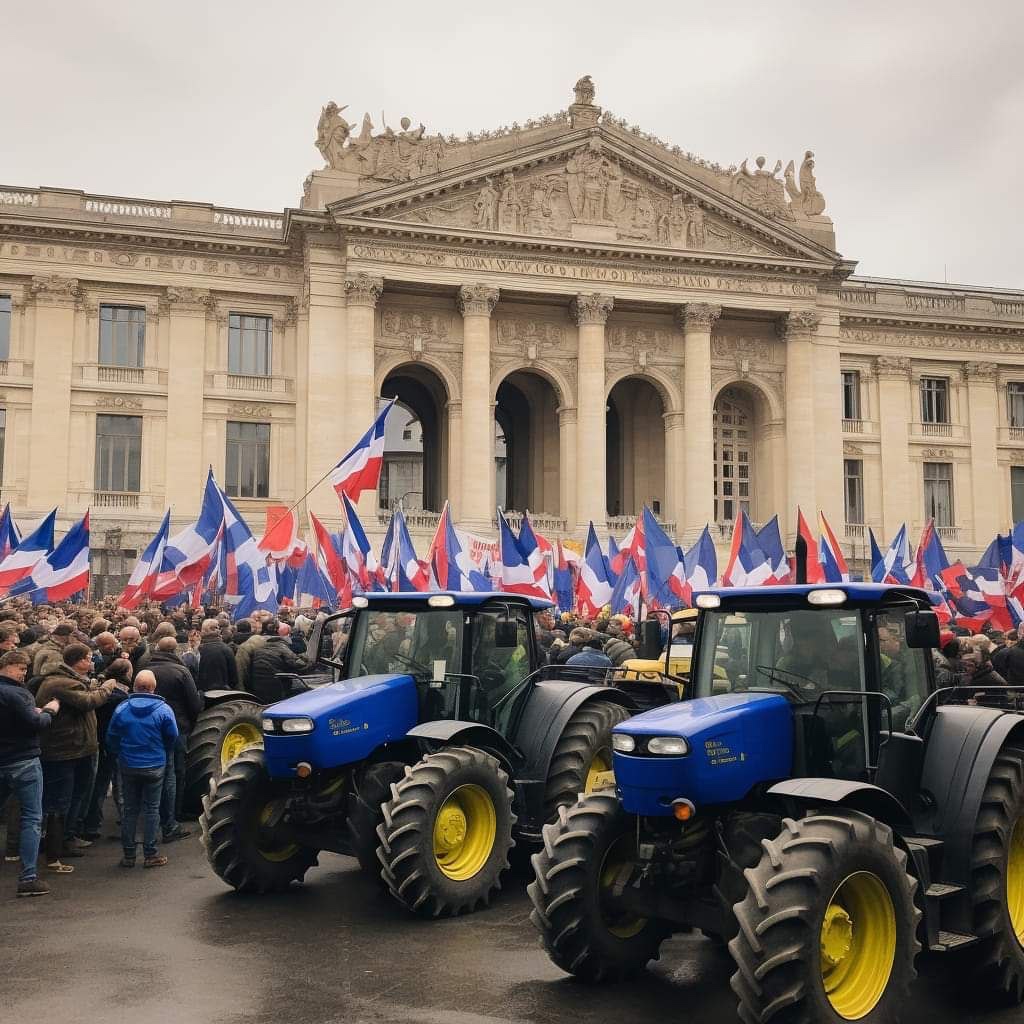
This February 2024 post expressed support for farmers during a wave of European protests. The demonstrations reflected real pressures on agricultural livelihoods. Understanding those pressures requires more than a list of flags or the assumption that every protest had the same demands.
What farmers were challenging
The European Commission’s subsequent analysis described concerns about fair payment, bargaining power and how value is shared through the food supply chain. Farmers can face concentrated buyers while having limited control over selling prices. Administrative requirements and the practical cost of complying with policy were also central to the debate.
These concerns can overlap without being identical. A small livestock business, a large crop producer and a farmer competing with imported goods may experience different problems. Support for farmers does not require treating all agricultural interests as one group.
A correction to the original count
The original text said farmers in 18 European countries had joined the protests. Its list, however, counted Scotland, Wales and Britain separately. Those labels overlap, so that list cannot establish a count of 18 separate countries. It also supplied no dated source for each entry.
This counting problem does not negate the wider protests. It means the precise number should not be repeated as verified. A reliable update would identify the country, date, organisers, specific demands and source for each event.
What changed in policy?
In May 2024, the Council of the European Union approved a targeted revision of the Common Agricultural Policy. The changes addressed administrative burdens and flexibility in meeting certain requirements. The Council explicitly linked the review to concerns voiced by farmers.
The Commission also convened a Strategic Dialogue on the future of EU agriculture, whose report was presented in September 2024. These are identifiable responses that can be evaluated, rather than assuming either that nothing changed or that every concern was resolved.
Support that asks practical questions
A useful discussion asks whether proposed measures improve farm income, distribute support fairly, protect workers and animal welfare, and sustain the soil and water on which future production depends. It also asks who pays for a transition and whether smaller producers can participate.
Food security depends on viable farms and functioning supply chains. Taking farmers seriously means listening closely to their actual circumstances and judging policies by their effects, not only by the slogans surrounding them.
Original accompanying image retained for context; its assertions should be assessed against the explanation above.

References
- European Commission: Analysis of fair remuneration and bargaining power in the food chain.
- Council of the EU: Targeted CAP review approved, 13 May 2024.
- European Commission: Strategic Dialogue on the future of EU agriculture.
