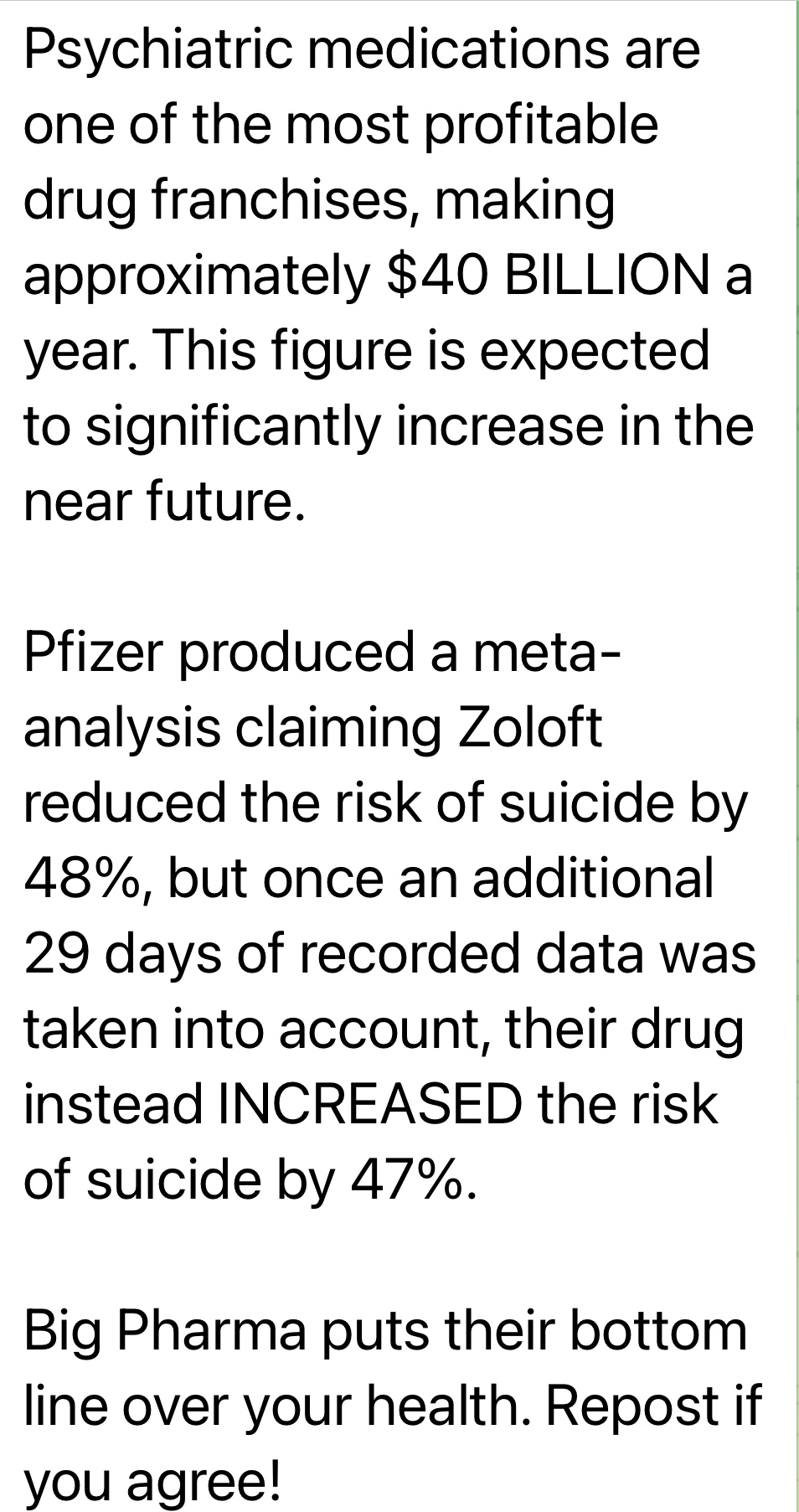
Choosing an antidepressant should involve a clear discussion of expected benefits, possible harms and follow-up. The graphic in this post raises a legitimate subject: how suicide-related events are counted in medicine trials. Its numerical claims, however, are not a complete guide to the safety of sertraline, sold under the brand name Zoloft.
What the official warning says
The manufacturer’s safety information warns that antidepressants can increase suicidal thoughts or actions in some people aged 24 or younger, particularly early in treatment or after a dose change. It also explains that depression and other serious mental illnesses are themselves major causes of these symptoms.
Both points matter. Recognising a treatment-related risk does not mean that leaving an illness untreated is harmless. Equally, a medicine’s potential benefit does not remove the need to take new or worsening symptoms seriously.
Why two percentages are not enough
The original image claims that changing a study’s follow-up window turned a reduction in risk into an increase. It does not identify the underlying table, event counts, confidence intervals or precise outcome. The linked safety page does not substantiate those particular percentages, so they should not be treated as verified estimates of an individual patient’s risk.
A suicide death, a suicide attempt and suicidal thoughts are different outcomes. Combining them under one heading can be useful for safety surveillance, but the result must be labelled accurately. Follow-up after stopping treatment, participants’ ages and the number of events can materially change an analysis.
An FDA analysis of 372 placebo-controlled antidepressant trials found that suicide-related risk varied substantially by age. That is a stronger reason for age-sensitive monitoring than for a blanket claim that every antidepressant either prevents or causes suicide in every patient.
Make a monitoring plan
Before treatment, discuss the diagnosis, other options, previous reactions and all medicines or supplements. Agree what improvement to look for and how side effects will be reviewed. NICE recommends an early review, usually within two weeks, or after one week for adults aged 18–25 or when suicide risk is a particular concern.
Contact the prescriber promptly about new suicidal thoughts, marked agitation, unusual impulsivity or worsening mood. If there is immediate danger or someone cannot stay safe, seek emergency help. Do not abruptly stop sertraline or change its dose because of a graphic; withdrawal and relapse need a clinician-guided plan.
Financial incentives and research quality deserve scrutiny. They do not replace an individual assessment of whether a treatment is helping and what safeguards are needed.
Original accompanying image retained for context; its assertions should be assessed against the explanation above.

References
- Original linked Zoloft safety information.
- FDA investigators: Age-dependent suicidality findings in adult antidepressant trials, BMJ 2009.
- NICE: Depression in adults, treatment review and stopping antidepressants.
