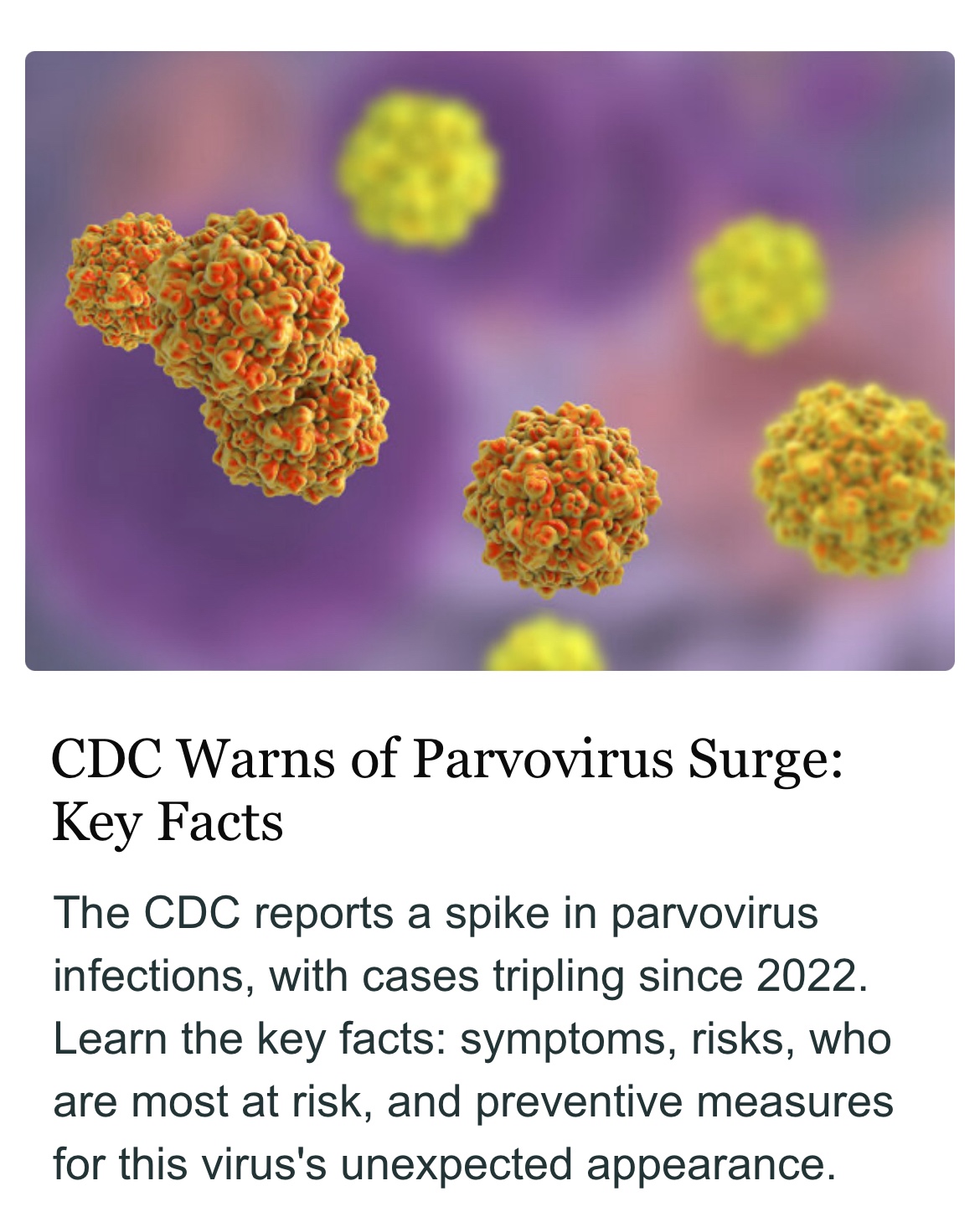
The virus discussed here is parvovirus B19. Human parvovirus B19 commonly causes a mild illness, but pregnancy, certain blood disorders and a weakened immune system change the advice about exposure and follow-up.

What infection can look like
Some people have no symptoms. Others first develop fever, headache or general discomfort. Children may later develop the familiar red “slapped-cheek” rash, sometimes followed by a lacy rash elsewhere. Adults may have joint pain or swelling, with or without a prominent rash. A rash alone does not identify every infection, so uncertain or troublesome symptoms deserve clinical assessment.
The virus temporarily interferes with production of red blood cells. Most otherwise healthy people recover without specific treatment. People with sickle cell disease or another chronic haemolytic blood disorder can develop a sudden, serious fall in blood count. An impaired immune system can make infection persist and cause longer-lasting anaemia.
Pregnancy needs a separate conversation
Exposure does not automatically mean infection or harm to a baby. Many adults already have immunity, and most infections during pregnancy do not cause an adverse outcome. Nevertheless, infection, particularly in the first half of pregnancy, can cause severe fetal anaemia and sometimes pregnancy loss.
If you are pregnant and have been exposed to someone with parvovirus B19, or develop a new rash or joint pain, contact your maternity clinician. Antibody testing can help assess immunity or recent infection. Confirmed infection may lead to additional ultrasound and blood-test monitoring; specialist treatment is available for some complications.
Spread and sensible precautions
B19 spreads through respiratory particles, blood products and, during pregnancy, from mother to fetus. People are often most infectious before the characteristic rash appears. Those with significant anaemia or immune suppression may remain infectious longer, so return-to-work or school advice should be individualized when these conditions apply.
Handwashing, cough etiquette, cleaner indoor air and staying away from others while acutely unwell help reduce respiratory spread. There is no vaccine to prevent human B19 infection. It is also different from the parvoviruses that cause illness in dogs and cats: pets do not transmit human B19. Seek prompt medical care for substantial breathlessness, fainting or severe weakness, especially with a known blood disorder.
