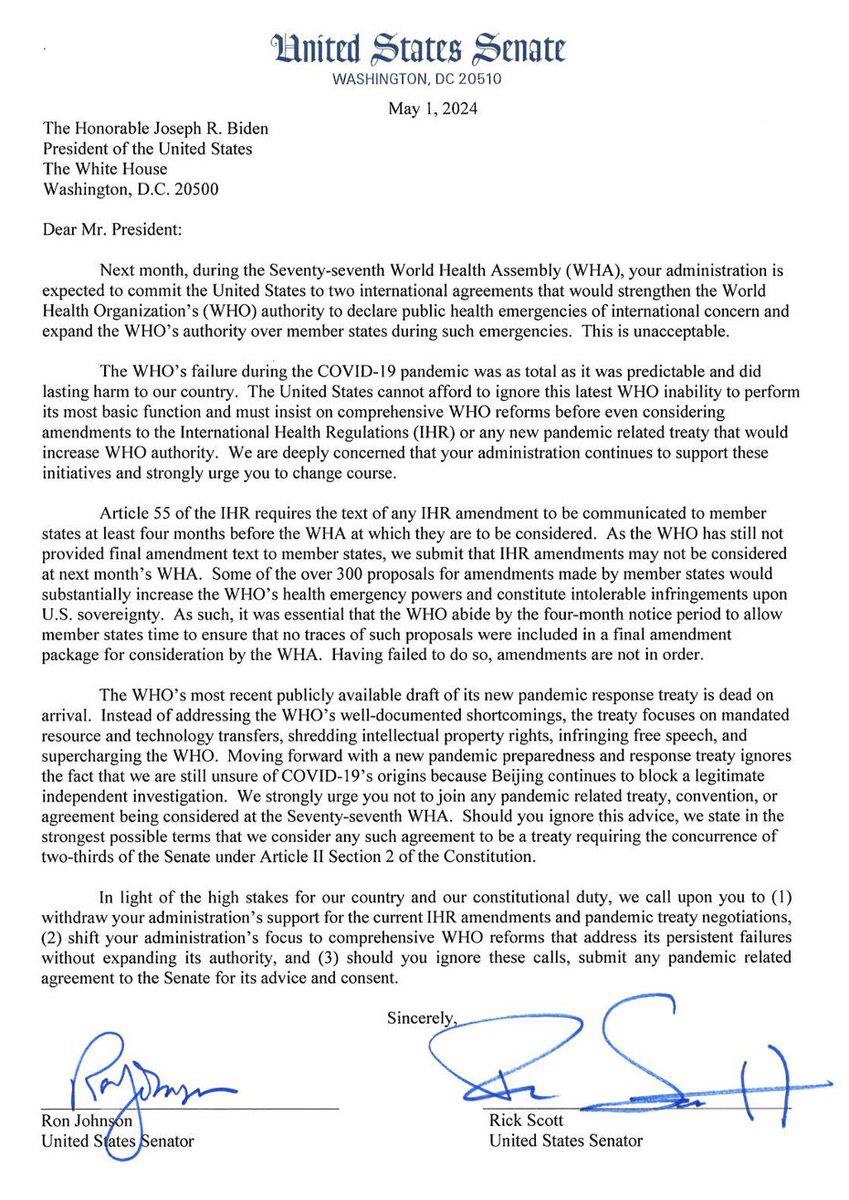
On 1 May 2024, the Senate Republican Conference sent President Joe Biden a letter opposing the proposed WHO Pandemic Agreement and amendments to the International Health Regulations. The original post captured a real political intervention, but the senators’ warnings were arguments about draft instruments, not a judicial determination of their legal effect.
What the senators requested
The letter urged the administration to withdraw support, prioritise reform of the World Health Organization and submit any resulting pandemic agreement to the Senate for advice and consent. Its concerns included sovereignty, emergency powers, intellectual property, freedom of speech and the negotiation timetable.
The Constitution’s Article II treaty process requires the concurrence of two-thirds of senators present. However, stating that rule does not by itself settle the legal classification or approval procedure for every international arrangement. The letter expressly advanced the signatories’ position that the proposed agreements should receive treaty treatment. It was neither Senate ratification nor legislation rejecting a completed treaty.
The documents followed different paths
The IHR amendments were adopted in June 2024 and entered into force for many participating states on 19 September 2025. They address matters such as a pandemic-emergency alert, coordination and access to health products. Under the IHR, WHO recommendations and states’ binding obligations must be distinguished; WHO’s own account says it cannot compel countries to take domestic action.
The separate Pandemic Agreement was adopted by the World Health Assembly on 20 May 2025. Adoption did not automatically bind every country. Its Article 22 expressly excludes WHO authority to prescribe domestic laws or impose measures such as lockdowns and vaccination mandates. Work on its pathogen-access and benefit-sharing annex remained ongoing in WHO’s September 2026 update.
The U.S. position subsequently changed
On 18 July 2025, U.S. health and foreign-affairs officials publicly announced rejection of the 2024 IHR amendments. On 22 January 2026, they announced completion of U.S. withdrawal from WHO. WHO separately acknowledged the withdrawal notification and identified issues for its governing bodies to consider. These dated developments should replace any impression that Biden’s 2024 position remains the current administration’s policy.
Debate about international health cooperation should examine the final wording, a country’s own participation and domestic approval rules. A historical letter is valuable evidence of its authors’ concerns, but cannot substitute for that analysis.
Source credit: the original image reproduces the first page of the senators’ 1 May 2024 letter. The update distinguishes that political document from the later adopted texts and official announcements.

References
- Senate letter to President Biden, 1 May 2024
- Senator Hagerty: official announcement of Senate Republican Conference letter
- U.S. Senate: Advice and consent for treaties
- WHO: amended IHR enter into force, 19 September 2025
- WHO: Pandemic Agreement, WHA78.1, including Article 22
- WHO: PABS negotiations update, 18 September 2026
- HHS and State: U.S. rejection of IHR amendments, 18 July 2025
- HHS: U.S. withdrawal announcement, 22 January 2026
- WHO: statement on U.S. withdrawal notification, 24 January 2026
