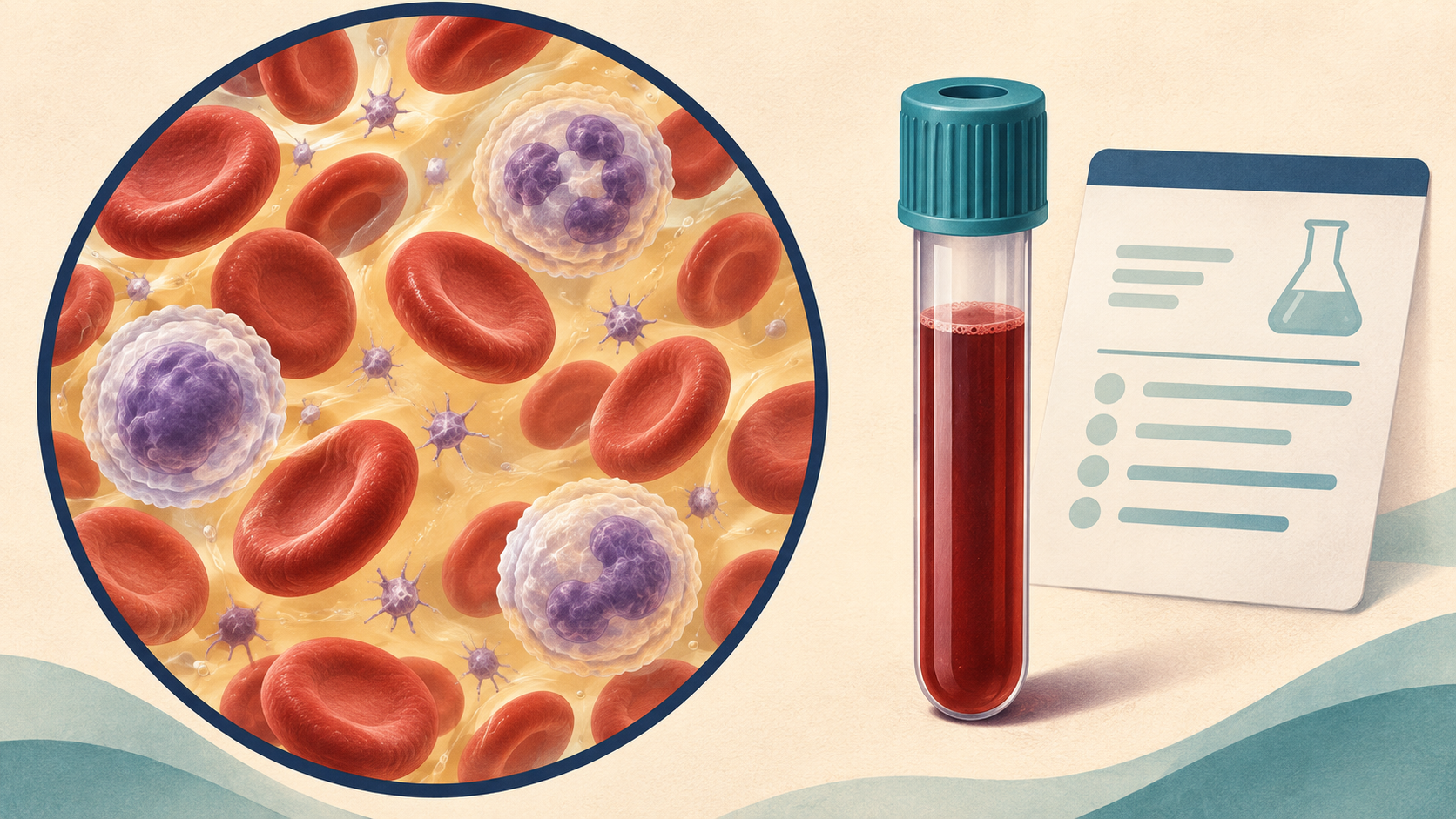
Blood carries oxygen and nutrients, helps fight infection and helps stop bleeding. A blood test can offer useful clues about your health, but one number rarely tells the whole story.
The four main parts of blood
- Red blood cells (RBCs) carry oxygen using a protein called hemoglobin. Most blood cells are made in bone marrow, the soft tissue inside certain bones.
- White blood cells (WBCs) help defend the body. Different types have different jobs. Neutrophils are particularly important in fighting many bacterial and fungal infections. Lymphocytes include B cells, T cells and natural killer cells.
- Platelets are small cell fragments that gather at an injured blood vessel and help form a clot.
- Plasma is the liquid that carries these cells, nutrients, hormones, waste products and proteins, including clotting proteins.
These components work together. Platelets start a plug, while clotting proteins help strengthen it. American Society of Hematology: Blood Basics
Plasma and serum: what is the difference?
Plasma is obtained from blood that has been kept from clotting. It contains fibrinogen, an important clotting protein. Serum is the liquid left after blood has clotted; fibrinogen has been used to form the clot, and some other components have changed during clotting. Serum is not simply “blood without cells.” Laboratories choose whole blood, plasma or serum according to the test. NCI SEER: Serum
Water and proteins: what may appear on your report?
Plasma is mostly water. It carries proteins, salts, nutrients, hormones and waste products. Your report may list total protein, albumin and globulin, which is often calculated by subtracting albumin from total protein. Albumin helps keep fluid in blood vessels and carries various substances. Globulins include antibodies and other proteins. High or low protein results can have several explanations, including hydration, liver or kidney conditions, inflammation and other causes. They need to be interpreted alongside your symptoms and other findings.
What a complete blood count tells you
A complete blood count (CBC), also called a full blood count, measures red cells, white cells and platelets. It includes hemoglobin, hematocrit (the proportion of blood made up of red cells) and MCV (average red-cell size). A differential gives more detail about the different white-cell types. MedlinePlus: Complete Blood Count
Common findings include:
- Low hemoglobin: anemia. Possible causes include blood loss, iron or vitamin deficiency, kidney disease, inflammation and bone-marrow disorders. Finding the cause matters before choosing treatment.
- High white-cell count: may occur with infection, inflammation, some medicines or a blood disorder. It does not, by itself, mean leukemia.
- Low white-cell or neutrophil count: may occur with medicines, infections, immune conditions or marrow problems. Infection risk depends on which cells are low, how low they are and for how long.
- Low platelets: may increase bleeding risk, especially when very low. High platelets can be a response to inflammation or iron deficiency, or sometimes reflect a marrow disorder.
These are examples, not a diagnosis checklist. NHLBI: Blood Tests
Other tests answer other questions
A blood smear lets a specialist examine cell appearance. Chemistry tests assess substances related to organs and body processes. Clotting tests assess parts of the clotting system. Tumor-marker tests have specific uses, but most are not suitable as a stand-alone test to screen everyone for cancer. MedlinePlus: Blood Smear and Tumor Marker Tests
Read the result in context
Use the reference range and units printed on your own report. Ranges differ between laboratories and may vary with age, pregnancy and other factors. A flagged result is not automatically dangerous, and a result within range does not rule out every illness. Trends and symptoms matter. Ask: “What could explain this result? Does it need repeating? What should I watch for?” MedlinePlus: Understanding Lab Results
If you are receiving cancer treatment and develop fever or feel suddenly unwell, follow your team’s urgent-contact instructions rather than waiting for a routine appointment.
This article is for general education. It does not diagnose a condition or replace advice from your healthcare team. Your symptoms, examination and test results need to be considered together.
#EYI #BloodHealth #BloodTests #HealthLiteracy #PatientEducation
