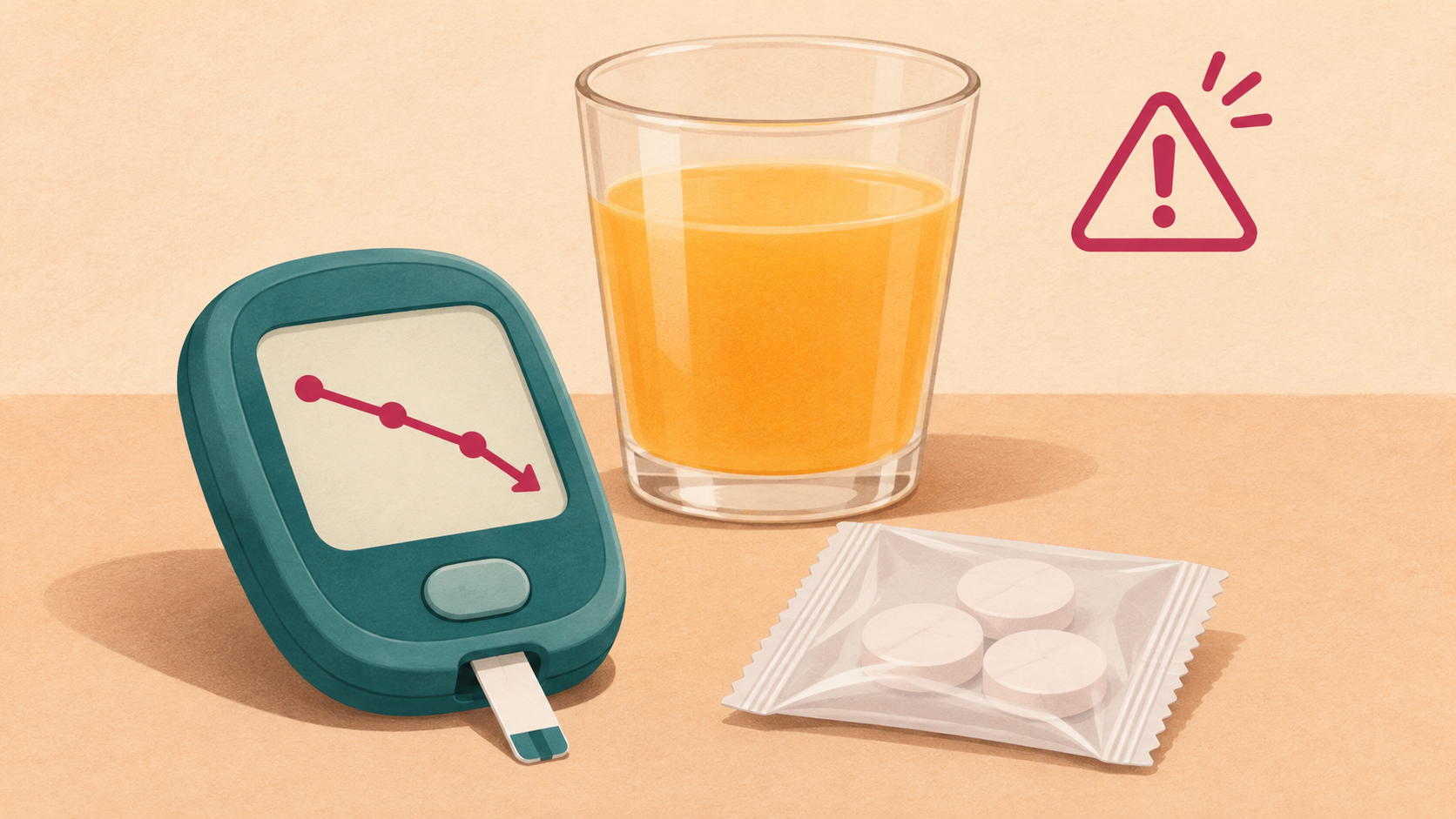
Feeling shaky, sweaty or suddenly weak? Low blood sugar can come on quickly. Knowing the warning signs and keeping a measured source of glucose nearby can help you act safely.
What counts as low blood sugar?
Hypoglycaemia means blood glucose has fallen too low. Below 70 mg/dL (3.9 mmol/L) needs action, even if you feel well. Below 54 mg/dL (3.0 mmol/L) is a particularly serious low. Treat it immediately and get help.
A severe episode means the person needs someone else’s help because they cannot manage it safely themselves. It can be an emergency regardless of the meter reading. ADA guidance
Know the warning signs
- Shaking, sweating or a racing heartbeat
- Sudden hunger, dizziness or headache
- Weakness, irritability or blurred vision
- Confusion, unusual behaviour or difficulty concentrating
Some people have little or no warning. Seizures, collapse or reduced consciousness need emergency help. If you have diabetes and notice symptoms, check your glucose if possible. If you cannot check promptly and suspect a low, start treatment rather than waiting. ADA symptoms and treatment
Awake, alert and able to swallow? Use the 15–15 rule
- Take 15 grams of fast-acting carbohydrate. Glucose tablets or glucose gel are convenient options. Use the amount on the pack that supplies 15 grams.
- Wait 15 minutes, then check again.
- Still below 70 mg/dL? Repeat with another 15 grams, then recheck after 15 minutes.
- Once your glucose is above 70 mg/dL and symptoms improve, eat your meal if it is due. If your next meal is not soon, have a carbohydrate-and-protein snack, such as a small sandwich or chapati with plain curd.
If repeated treatment is not working, the low returns or you are getting worse, seek urgent medical help. Do not manage a worsening episode alone. CDC treatment advice
Check Indian product labels, not just the pack size
Fruit juice or a regular sugary soft drink can also supply fast carbohydrate. Choose a portion containing about 15 grams of carbohydrate, checking the label. For example, a drink with 10 grams per 100 mL supplies 15 grams in 150 mL. This is a label-reading example, not a standard amount for every drink.
Diet drinks and artificial sweeteners do not treat a low. Chocolate and fatty sweets work more slowly and are not the first choice. CDC food examples
Taking acarbose? Treat a low with pure glucose/dextrose, rather than table sugar or sweets containing sucrose. Acarbose delays sucrose breakdown. Ask your pharmacist to identify a suitable glucose product. ADA medication-specific advice
Unconscious, having a seizure or unable to swallow safely?
This is an emergency. In India, call 112. Ask for medical help. India’s emergency service
- Give nothing by mouth. Do not force in juice, food, sugar, honey or glucose gel.
- If unconscious but breathing normally, place the person on their side in the recovery position. If breathing is not normal, follow the emergency dispatcher’s CPR instructions.
- Give their prescribed glucagon if available and you know how to use it. Follow the product instructions. Glucagon is different from insulin. Do not give insulin to treat a low.
- Stay with them. Emergency assessment is still needed after glucagon, even if they wake up. Give oral carbohydrate only once they are fully alert and swallowing safely.
NHS emergency guidance and CDC glucagon advice
Why it happens and how to reduce the risk
Lows are most common with insulin and medicines such as glimepiride or gliclazide, especially after missed meals, extra activity or alcohol. Carry glucose, check as advised and teach family members what to do. Do not drive while low or immediately after recovery; NHS advice is to wait at least 45 minutes after glucose returns to normal. NHS prevention and driving advice
Some medicines, especially sulfonylureas and long-acting insulin, can cause lows to return after initial treatment. Seek urgent advice for repeated lows or a suspected extra dose. NHS guidance on prolonged risk
Tell your diabetes team about repeated lows, night-time episodes, absent warning signs or any episode needing help. Do not stop or change medication on your own. Follow your agreed treatment plan. People without diabetes who have recurrent symptoms or confirmed lows also need medical assessment. NHS follow-up advice
Remember: 15 grams, 15 minutes, recheck. Nothing by mouth if swallowing is unsafe.
This is general adult education, not an individual treatment plan. Children often need smaller amounts. Insulin-pump users may have different instructions. Follow the plan agreed with your diabetes team.
#EYI #Hypoglycaemia #LowBloodSugar #DiabetesAwareness #DiabetesCare #PatientEducation #KnowTheSigns
Sources and further reading
- ADA guidance
- ADA symptoms and treatment
- CDC treatment advice
- India’s emergency service
- NHS emergency guidance
- NHS guidance on prolonged risk
