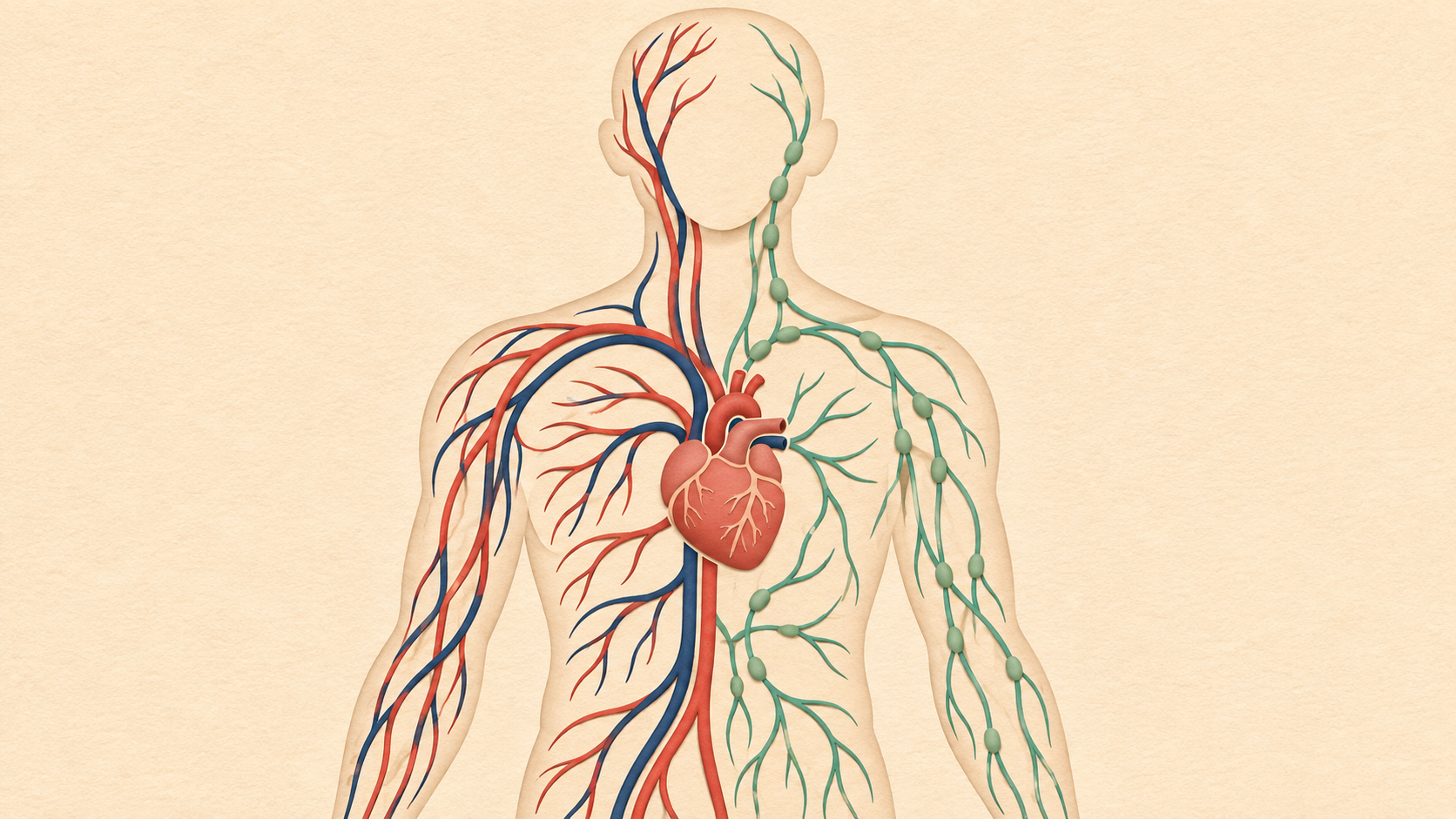
Your circulatory and lymphatic systems are closely connected. Together, they deliver supplies, return fluid to the bloodstream and support the body’s defenses.
The circulatory system: a continuous route
The heart pumps blood through blood vessels. Arteries carry blood away from the heart; veins carry it back. Tiny capillaries allow oxygen, nutrients and waste products to move between blood and tissues.
The right side of the heart sends blood to the lungs to release carbon dioxide and take up oxygen. The left side sends oxygen-rich blood around the body. Arteries and veins are named for their direction of flow, not their oxygen level: the pulmonary artery carries oxygen-poor blood to the lungs, while pulmonary veins return oxygen-rich blood to the heart. NHLBI: How the Heart Works
The lymphatic system: fluid return and immune support
Some fluid moves from small blood vessels into surrounding tissue. Lymphatic vessels collect excess tissue fluid. Once inside these vessels, it is called lymph. It passes through lymph nodes and eventually returns to large veins near the heart.
Lymph nodes contain immune cells that help respond to infections and other threats. The system also helps absorb dietary fats through specialized vessels in the intestine. The spleen, thymus and other lymphatic tissues support immune function. Unlike the heart-driven blood circuit, lymph flow depends on several forces, including muscle movement, breathing and contractions of lymphatic vessels, with valves helping keep it moving forward. Johns Hopkins Medicine: Overview of the Vascular System
What can swollen nodes or limbs mean?
Lymph nodes often swell during infections. Other causes include inflammation and, less commonly, cancer. A swollen node alone cannot tell you which cause applies. Nodes that persist, enlarge or occur with unexplained fever, drenching night sweats or weight loss deserve medical assessment. MedlinePlus: Swollen Lymph Nodes
Lymphedema is swelling from impaired lymph drainage. It can occur after lymph-node surgery or radiation, because of cancer itself, or for other reasons. New swelling should be assessed because blood clots, infection and other conditions can look similar. NCI: Lymphedema
What a diagnostic examination may include
The clinician usually starts by asking when symptoms began, how they have changed, and about medicines, infections and previous treatment. An examination may include blood pressure, pulse, heart and lung sounds, skin changes, swelling and lymph nodes.
Tests are selected for the question being investigated:
- ECG/EKG: records the heart’s electrical activity.
- Echocardiogram: uses ultrasound to show the heart’s structure and pumping.
- Doppler ultrasound: examines blood flow and can help investigate a suspected clot.
- Blood tests: provide clues about blood cells, inflammation or organ function.
- Ultrasound, CT or MRI: may examine a lump, lymph nodes or deeper tissues.
- Biopsy: may be needed to identify the cause of an unexplained node or mass.
Not everyone needs every test. A scan can show an abnormal area, but it may not establish its exact cause. NHLBI: Heart Tests, MedlinePlus: Doppler Ultrasound and NCI: Diagnosing Cancer
When not to wait
Sudden chest pain, severe breathlessness, fainting or signs of stroke need emergency assessment. A suddenly swollen, painful limb needs urgent medical advice, especially if there is breathlessness. Red, hot swelling with fever may indicate infection. Use your local emergency service when symptoms are severe.
This article is for general education. It does not diagnose a condition or replace advice from your healthcare team. Your symptoms, examination and test results need to be considered together.
#EYI #HeartHealth #LymphaticSystem #LymphNodes #HealthLiteracy
