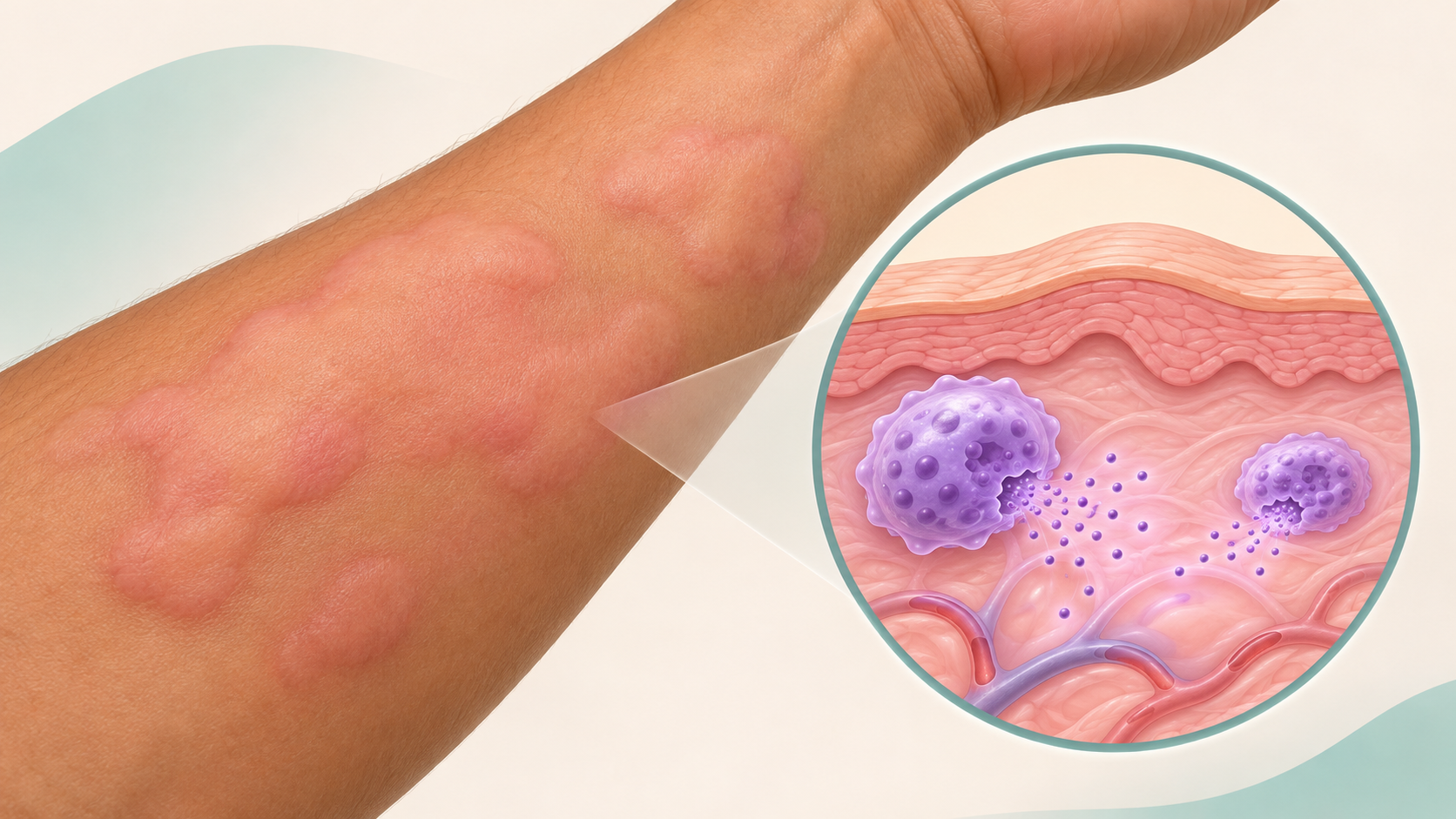
An itchy patch appears on your arm, fades, and then another turns up on your leg. That shifting pattern is typical of urticaria, the medical name for hives. The two terms describe the same condition.
Hives can be distressing, particularly when they interrupt sleep or keep returning. Understanding their pattern helps you know when simple treatment may help, when to arrange an appointment, and when to seek emergency care.
First, know the emergency signs
Call your local emergency number immediately if a rash occurs with difficulty breathing, wheezing, a tight throat, trouble swallowing, sudden swelling of the lips, mouth or tongue, faintness, collapse, or rapidly worsening symptoms. These may indicate anaphylaxis, a serious allergic reaction. Anaphylaxis can also happen without hives.
If you have a prescribed adrenaline (epinephrine) auto-injector, use it immediately as directed and call an ambulance. Do not wait for an antihistamine to work or drive yourself to hospital. Follow the emergency operator’s instructions. NHS: Anaphylaxis
What do hives look and feel like?
Hives are raised patches called wheals, which can be small, large, round, or irregular. Several may join together. They usually itch, although stinging or burning can occur. On lighter skin, they often look pink or red. On darker skin, the colour change can be less obvious, so raised texture may be easier to notice. NHS: Hives
A useful clue is how quickly an individual patch changes. A typical wheal disappears within 24 hours, often much sooner, while fresh ones may appear elsewhere. That means a person can have an outbreak lasting several days without any single wheal lasting that long. British Association of Dermatologists: Urticaria and angioedema
What is happening beneath the skin?
Immune cells called mast cells release histamine and other chemical messengers. These chemicals stimulate itch nerves and allow fluid to move from small blood vessels into surrounding tissue, creating the raised swelling. An allergy can activate this process, but it is only one possible route. Hives do not automatically mean someone has a food allergy. DermNet: Urticaria overview
Acute and chronic hives: the six-week distinction
Acute urticaria is a short-term episode lasting less than six weeks. Chronic urticaria means wheals, associated swelling, or both keep recurring for more than six weeks. They need not be present every moment of every day. This describes the overall course, not one patch. ASCIA: Acute and chronic urticaria
Chronic hives may be:
- Spontaneous: symptoms appear without a consistent external trigger.
- Inducible: a reproducible stimulus brings them on, such as scratching, pressure, cold, heat, sunlight, or a rise in body temperature with exercise or sweating. Some people have both forms.
Dermographism is the form in which rubbing or scratching produces raised lines. Cold urticaria deserves particular caution because swimming in cold water can provoke a widespread reaction. Do not deliberately test suspected triggers yourself. DermNet: Classification and physical triggers
What can trigger an outbreak?
Possible triggers include infections, certain medicines, insect stings, and, in some people, foods to which they are allergic. Heat, sweating, pressure, and emotional stress can also provoke or worsen symptoms. Anti-inflammatory painkillers such as ibuprofen or aspirin may aggravate hives in susceptible people. Discuss suspected medicine reactions with a clinician rather than making unsupported changes to prescribed treatment. NHS: Hives British Association of Dermatologists: Causes and aggravating factors
With chronic spontaneous urticaria, an external cause is frequently never found. Immune-system processes, including autoimmune mechanisms in some people, may contribute. Food allergy is not the explanation for most chronic spontaneous cases. Broad food avoidance can create unnecessary restrictions, so a suspected food link should be assessed rather than assumed. American College of Allergy, Asthma and Immunology: Chronic hives
How is angioedema different?
Hives affect the more superficial skin. Angioedema is deeper swelling, often around the eyelids or lips, or in the hands or feet. It may feel tight or painful and can take longer to settle. It can occur alongside hives or on its own. British Association of Dermatologists: Urticaria and angioedema
Recurrent swelling without itchy wheals needs medical assessment because some forms have different causes and treatments. Swelling involving the mouth, tongue, or throat must be treated urgently, especially if breathing or swallowing changes. NHS: Angioedema
What will a clinician investigate?
Diagnosis usually starts with your history and the rash’s behaviour. Photographs are useful because the skin may look normal by appointment time. A short diary can record when patches appear, how long each lasts, medicines taken, possible triggers, and any swelling or other symptoms.
Tests should follow the clues. Some people need selected blood tests, while allergy testing is generally reserved for a history suggesting a specific allergic trigger. A large panel of allergy tests is not routinely helpful for chronic spontaneous hives. ASCIA: Chronic spontaneous urticaria
Arrange medical review if outbreaks keep returning, disturb sleep, or are not controlled. Also seek assessment if a patch stays in exactly the same place for more than 24 hours, is painful rather than mainly itchy, leaves bruising, or occurs with fever or joint symptoms. These features can point to another condition. CMAJ: Managing chronic spontaneous urticaria
What treatments can help?
A second-generation, less-sedating oral antihistamine is commonly the first treatment. A pharmacist or clinician can help choose an appropriate product, especially for children, pregnancy, or people taking other medicines. For persistent hives, a clinician may recommend regular treatment and adjust the dose. Do not exceed the label dose or combine medicines without professional advice. AAD: Urticaria guidelines
If symptoms remain troublesome, a dermatologist or allergy specialist can consider additional treatments, including targeted medicines such as omalizumab. Other options are available, and the choice depends on age, medical history, local approval, and response to earlier treatment. AAD: Hives diagnosis and treatment
Long-term oral steroids are not recommended for chronic urticaria. A clinician may occasionally use a short course for a severe flare. AAD: Urticaria guidelines
For comfort, try loose clothing, gentle skin care, and avoiding overheating. A cool compress may soothe itching, but avoid cold treatments if cold triggers your hives. AAD: At-home relief
The practical takeaway
Hives have many possible triggers, and chronic spontaneous hives often have no identifiable external cause. Effective treatment is still possible. Track the pattern, seek help when symptoms persist, and treat breathing difficulty, throat swelling, or collapse as an emergency.
This article provides general health information and does not replace individual medical assessment.
Hashtags
#EYI #Urticaria #Hives #SkinHealth #ChronicUrticaria #HealthEducation #KnowTheSigns
