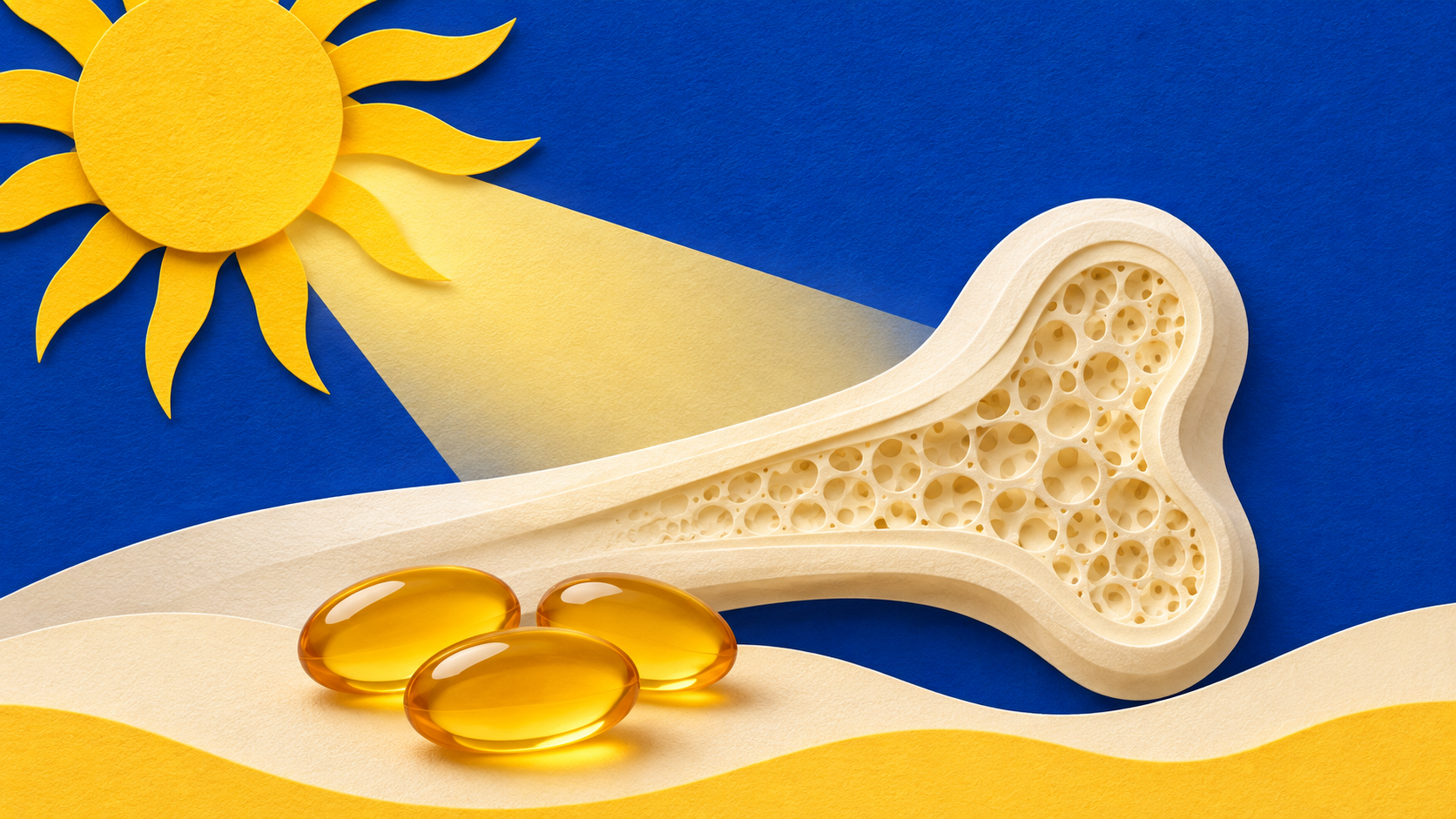
A supplement label can make a simple nutrient look complicated. D2 or D3? Add vitamin C? Choose a product with K2 MK-7? Before choosing a combination, it helps to separate what a vitamin does in the body from what taking extra has actually been shown to accomplish.
D2 and D3 both supply vitamin D
Vitamin D helps the body absorb calcium and supports bones, muscles and normal immune function. Supplements commonly contain either D2, called ergocalciferol, or D3, called cholecalciferol. Both increase vitamin D levels in the blood. D3 generally produces a larger, longer-lasting increase, but this does not make prescribed D2 ineffective. Vitamin D is fat-soluble, so taking it with a meal or snack containing some fat can help absorption. MedlinePlus: Vitamin D
D2 is found in mushrooms and is commonly made from yeast for supplements. D3 supplements can come from animal sources or lichen, so people who want a vegan product should check the source rather than assume all D3 is animal-derived. NIH Office of Dietary Supplements: Vitamin D
Does D3 need vitamin C?
Vitamin C has its own jobs, including collagen formation and helping the body absorb iron from plant foods. It is not an established requirement for vitamin D absorption. The NIH fact sheets do not establish a special benefit from routinely pairing C with D3. A combination product therefore needs the same scrutiny as separate bottles: why take each ingredient, and how much does it provide? NIH: Vitamin C and Vitamin D
More vitamin C is not automatically better. High doses can cause diarrhea, nausea or abdominal cramps. People with kidney disorders or a history of stones should discuss high-dose use with their clinician. Anyone receiving chemotherapy or radiation should check with their oncology team before taking vitamin C or other antioxidant supplements, particularly at high doses. Their effects during cancer treatment remain uncertain. NIH: Vitamin C
What about K2 MK-7?
Vitamin K is a family of nutrients involved in blood clotting and proteins associated with bone health. K1 is abundant in leafy greens. K2 includes several forms, including MK-4 and MK-7. MK-7 is a type of vitamin K2, not a form of vitamin D. NIH: Vitamin K
The biology is interesting, but it does not establish that everyone taking D3 needs a K2 supplement. Research on vitamin K supplements and bone outcomes is mixed. The Bone Health & Osteoporosis Foundation does not recommend them routinely to prevent osteoporosis or fractures. Bone Health & Osteoporosis Foundation: Nutrition and supplements
Claims that K2 reliably “directs calcium into bones and out of arteries” go further than current clinical evidence. Trials have not established a clear role for vitamin K supplementation in preventing vascular calcification. K2 should not be treated as protection against excessive vitamin D intake. NIH: Vitamin K
Important medication warning: Vitamin K, including K2 MK-7, can interfere with warfarin and similar vitamin K antagonist anticoagulants. If you use one, do not start, stop or change a vitamin K supplement without your anticoagulation team’s advice. Keep vitamin K intake consistent rather than avoiding all leafy vegetables. NIH: Vitamin K
Medicines that deserve a closer look
A supplement can affect a medicine, and a medicine can affect how the body handles a nutrient. Examples include:
- Thiazide and thiazide-like diuretics: These reduce calcium loss in urine. Combined with vitamin D, they can increase the risk of excessive blood calcium, especially with kidney impairment or other risk factors.
- Orlistat: This medicine can reduce vitamin D absorption.
- Corticosteroids, such as prednisone: These can reduce calcium absorption and affect vitamin D metabolism. NIH: Vitamin D medication interactions
- Digoxin: Excessive calcium can increase the risk of an abnormal heart rhythm, making vitamin D and calcium supplementation a matter for the prescriber to review.
- Some epilepsy medicines, including phenytoin and carbamazepine: They may change vitamin D needs.
- Cholestyramine and some laxatives: These can reduce vitamin D absorption. NHS: Taking colecalciferol with other medicines
This is not a complete interaction list. Bring the actual supplement labels, including combination products, to a pharmacist or clinician. Do not stop a prescribed medicine or increase a supplement dose on your own.
How much is sensible?
U.S. recommended daily vitamin D intake is 600 IU (15 micrograms) for adults through age 70 and 800 IU (20 micrograms) from age 71 onward. These amounts include food and supplements; they are not instructions to add that much on top of everything already consumed. National guidance varies, and treatment of a diagnosed deficiency is a separate situation. MedlinePlus: Recommended vitamin D amounts
For adults, 4,000 IU (100 micrograms) daily is an upper limit, not a target. Some medical conditions call for lower limits. Higher prescribed doses may be used under medical supervision, but copying a high-dose regimen without that supervision is unsafe. Too much vitamin D can cause excessive calcium buildup and damage the kidneys and heart. Adding K2 does not make an excessive dose safe. NHS: Vitamin D safety
Routine blood testing and doses above recommended intake are not advised for generally healthy adults under 75 solely to prevent disease. The Endocrine Society’s guidance makes separate recommendations for certain groups, including adults 75 and older, pregnancy and high-risk prediabetes. It does not replace individualized care for an established deficiency or another medical indication. Endocrine Society: Vitamin D guideline
A useful check before you buy
Ask: What problem am I trying to address? How much vitamin D is already in my multivitamin or other products? Is there evidence that I need the added C or K2? Could any ingredient affect my medicines?
The best choice is the one that fits your nutritional needs and medical history. A longer ingredient list is not proof of a better supplement.
This article provides general education, not a diagnosis or an individual treatment plan. Ask a pharmacist or qualified clinician about your own supplements and medicines.
#VitaminD #VitaminD3 #VitaminD2 #VitaminK2 #SupplementSafety #BoneHealth #EYI
