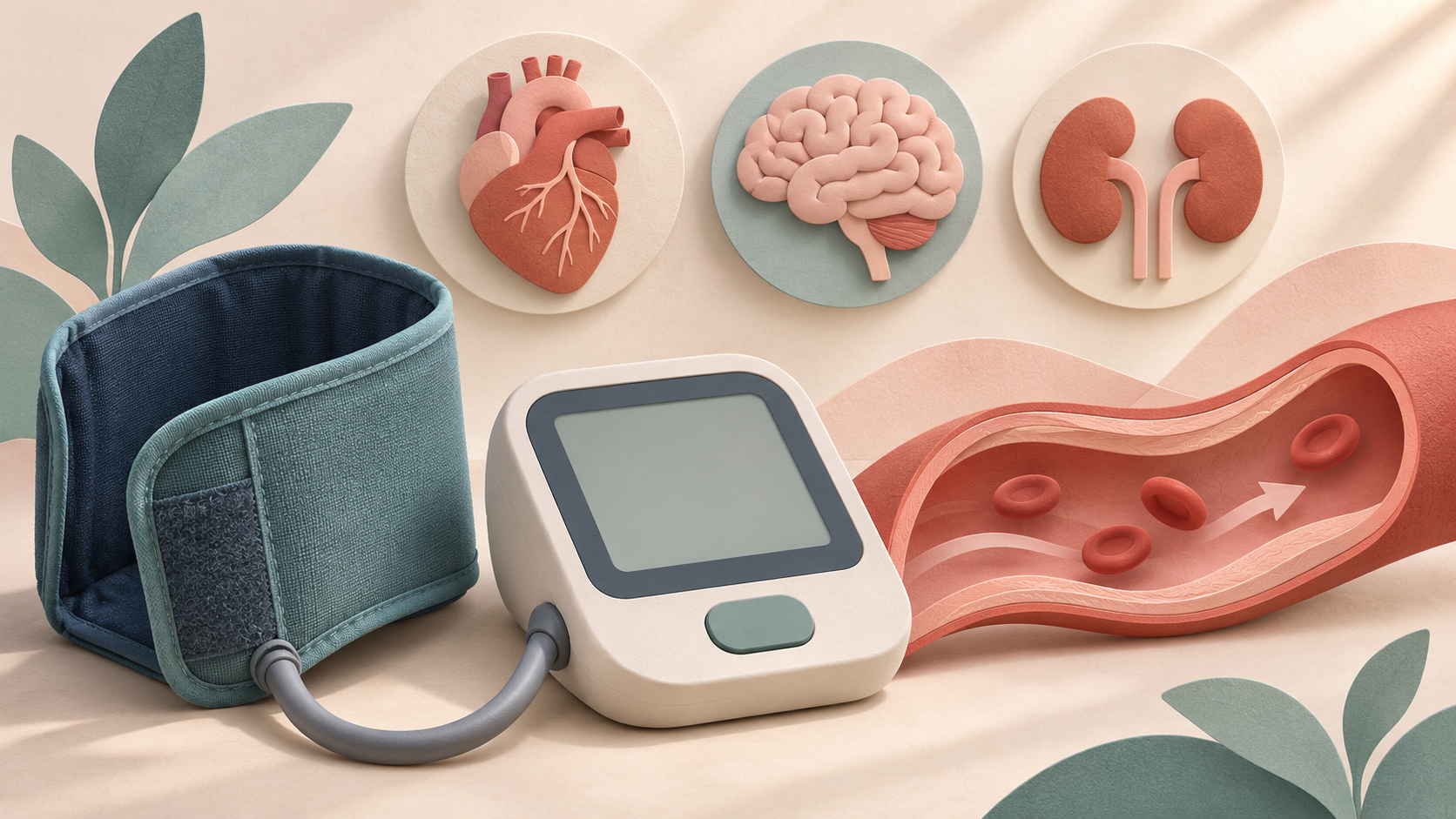
Blood pressure helps move oxygen-rich blood around your body. When it stays too high, it can quietly damage blood vessels and organs. When it falls too low, some people feel dizzy or faint. Understanding your readings, and measuring them correctly, helps you know when to seek advice.
What is blood pressure?
Blood pressure is the force of blood against the walls of your arteries. It is recorded as two numbers, measured in millimetres of mercury (mmHg):
- Systolic pressure, the top number, is the pressure when your heart contracts and pumps blood.
- Diastolic pressure, the bottom number, is the pressure while your heart relaxes between beats.
A reading of 120/80 mmHg means a systolic pressure of 120 and a diastolic pressure of 80. Either number can be too high. Blood pressure is different from your pulse, which counts heartbeats per minute. MedlinePlus: Blood pressure explained
What counts as high blood pressure?
Hypertension means persistently raised blood pressure. A single reading usually cannot establish the diagnosis. Activity, anxiety, pain, caffeine and measurement technique can affect the result.
You may see different thresholds because guidelines differ:
- WHO: hypertension is generally diagnosed when readings on two different days show systolic pressure of 140 or higher, or diastolic pressure of 90 or higher.
- UK NICE guidance: a clinic reading of 140/90 mmHg or higher is generally confirmed by an average home or daytime ambulatory reading of 135/85 mmHg or higher.
- US AHA/ACC guidance: stage 1 hypertension starts at systolic 130–139, or diastolic 80–89 mmHg. Stage 2 starts at systolic 140, or diastolic 90 mmHg.
These are classification and diagnostic thresholds, not instructions to start medication yourself. Your clinician considers repeated measurements, cardiovascular risk, other conditions and local guidance when deciding on treatment and targets. Children and pregnancy require separate assessment. WHO, NICE, AHA blood pressure categories
What are the types of hypertension?
Primary or essential hypertension
This is the most common type. It usually develops gradually without one identifiable cause. Genes, ageing and several lifestyle and environmental factors can contribute. MedlinePlus: Types of hypertension
Secondary hypertension
This has an identifiable contributor, such as kidney disease, narrowing of a kidney artery, obstructive sleep apnoea, or a hormone disorder. Some medicines and substances can also raise blood pressure. Treating the underlying problem may improve control, although blood pressure medication may still be needed. MedlinePlus: Causes of secondary hypertension
White-coat hypertension
This describes high readings in a clinic but readings below the hypertension threshold outside the clinic in someone not taking blood pressure medication. The stress of a medical visit can contribute.
It should be confirmed with home or ambulatory monitoring, rather than assumed from feeling nervous. It also needs follow-up because sustained hypertension can develop later. In someone already taking treatment, a similar clinic-related rise is often called a white-coat effect.
Masked hypertension
This is the opposite pattern: readings look normal in the clinic but are high at home or during everyday life. It can be missed without out-of-office measurements and is associated with increased cardiovascular risk. If this occurs despite treatment, it is called masked uncontrolled hypertension. Both patterns need clinician review and ongoing monitoring. AHA scientific statement on blood pressure measurement, 2025 AHA/ACC guideline
Other terms you may hear
- Isolated systolic hypertension: the top number is high while the bottom number is not. It is especially common in older adults as arteries stiffen, and still needs attention. National Institute on Aging
- Resistant hypertension: blood pressure remains above target despite three appropriate medicines at maximally tolerated doses, including a diuretic, or needs four or more medicines for control. Clinicians first check measurement accuracy, medication use, white-coat effects and possible secondary causes. American Heart Association
These labels describe different aspects of hypertension, so they can overlap.
Causes and risk factors
Risk increases with age and family history. Other contributors include excess dietary salt, excess body weight, little physical activity, heavy alcohol use, poor sleep and sleep apnoea. Stress can affect readings and health habits. Tobacco increases cardiovascular risk and can temporarily raise blood pressure.
Kidney disease, diabetes and some hormonal conditions also matter. Decongestants, certain anti-inflammatory painkillers, steroids, some hormonal contraceptives and stimulants can contribute. Ask a clinician or pharmacist to review medicines and supplements rather than stopping prescribed treatment yourself. WHO hypertension fact sheet, NHLBI causes and risk factors
What symptoms and effects can high blood pressure cause?
Most people with hypertension have no symptoms. Feeling well does not prove that blood pressure is safe. Headaches or dizziness are not reliable ways to diagnose it. WHO
Over time, uncontrolled hypertension can damage arteries and make the heart work harder. Possible consequences include:
- Heart attack, coronary heart disease and heart failure.
- Stroke and problems with thinking or memory, including vascular dementia.
- Chronic kidney disease or kidney failure.
- Damage to the small blood vessels in the eyes and loss of vision.
- Sexual difficulties and other complications of damaged circulation.
Treatment lowers the risk of serious complications, even when you feel no different day to day. AHA: Health threats from high blood pressure, National Institute on Aging
How to get a more accurate reading
Use a validated upper-arm monitor with the correct cuff size. Ask a pharmacist or clinician to check your device and technique.
- Avoid exercise, smoking and caffeine for 30 minutes beforehand, and empty your bladder.
- Rest quietly for at least five minutes.
- Sit with your back supported, feet flat and legs uncrossed. Support your bare arm at heart level.
- Stay still and do not talk during the measurement.
- Take two readings at least one minute apart and record both.
Follow the monitoring schedule your clinician gives you. For diagnostic home monitoring, NICE recommends morning and evening readings for at least four days, ideally seven, with the first day’s readings excluded from the average. Ambulatory blood pressure monitoring uses a portable device to take readings through the day and night, usually over 24 hours. These methods help distinguish sustained, white-coat and masked hypertension. AHA home monitoring guide, NICE recommendations
How is hypertension treated?
Treatment combines a plan suited to the person with regular checks. Helpful steps include:
- Eating a balanced, heart-healthy diet, such as a DASH-style pattern rich in vegetables, fruit, wholegrains and suitable protein sources.
- Reducing salt, especially from processed foods.
- Regular physical activity appropriate to your health and ability.
- Working towards a healthy weight when needed.
- Limiting or avoiding alcohol, stopping smoking, improving sleep and managing stress.
Lifestyle changes help whether or not you take medication. Check before using potassium supplements or potassium-based salt substitutes, particularly if you have kidney disease or take medicines that affect potassium. 2025 AHA/ACC guidance, NICE lifestyle advice
Common prescribed medicines include ACE inhibitors or angiotensin receptor blockers (ARBs), calcium-channel blockers, and thiazide or thiazide-like diuretics. Some people need a combination. The choice depends on factors such as kidney function, other conditions, side effects and pregnancy. Follow-up may include blood tests and checks for dizziness or falls. WHO treatment recommendations
Do not start, stop or change medication because of one reading. If side effects, costs or remembering doses make treatment difficult, tell your healthcare team so they can help. Home monitoring supports care but does not replace medical review. AHA home monitoring guide
What is low blood pressure?
Hypotension is commonly described as blood pressure below 90/60 mmHg. Some healthy people naturally have low readings without problems. Symptoms, a sudden change and the underlying cause matter more than the number alone.
Possible symptoms include dizziness, light-headedness, blurred vision, nausea, weakness, confusion and fainting. A drop after standing is called postural or orthostatic hypotension. Recurrent symptoms should be assessed. NHS: Low blood pressure
Causes include dehydration, blood loss, medication effects, pregnancy, heart problems and disorders affecting the nerves that regulate circulation. Treatment addresses the cause. A clinician may adjust medicines, recommend compression stockings, or occasionally prescribe medication. Getting up slowly and drinking adequate fluids may help, but follow any fluid restriction for heart or kidney disease. Do not increase salt or change medication without advice. NHLBI: Low blood pressure, NHS treatment advice
When to get urgent help
Very high blood pressure
Call your local emergency number immediately if a reading is 180 systolic or 120 diastolic, or higher, and you have chest pain, severe breathlessness, new weakness or numbness, trouble speaking, confusion or sudden vision changes. Either number matters. Do not delay emergency help to take more readings, and do not drive yourself.
If you feel well but get a reading in this severe range, sit quietly and repeat it after at least one minute. If it remains this high, contact a healthcare professional promptly, ideally the same day, for advice and assessment. Do not try to lower it rapidly with extra medication unless a clinician instructs you. AHA: When high blood pressure needs urgent help
Chest pain or stroke symptoms require emergency help even without a high reading.
Low blood pressure, collapse or fainting
Call emergency services for signs of shock, such as cold, clammy skin, rapid breathing, severe confusion or a weak, fast pulse. Also get emergency help if someone who faints is not breathing normally, cannot be woken within one minute, has not fully recovered, has chest pain or neurological symptoms, or has a serious injury. Fainting during exercise or while lying down also needs emergency assessment. NHLBI: Shock warning signs, NHS: Fainting
Pregnancy and the weeks after birth need special care. Contact your maternity team urgently for severe headache, visual changes, pain below the ribs or feeling very unwell. Do not wait for blood pressure to reach 180/120; pre-eclampsia needs its own assessment and treatment. NHS: Pre-eclampsia
Take-home message
Know your usual readings, measure carefully and discuss persistent changes with a healthcare professional. High blood pressure is often silent but treatable. Low blood pressure needs attention when it causes symptoms or signals an underlying illness. White-coat and masked hypertension show why both clinic and out-of-office readings can matter.
This article provides general health information, mainly for adults. It does not diagnose a condition or replace personalised medical advice.
Sources and further reading
- World Health Organization: Hypertension
- NICE NG136: Hypertension in adults, diagnosis and management
- American Heart Association: Understanding blood pressure readings
- AHA/ACC: 2025 high blood pressure guideline overview
- American Heart Association: Home blood pressure monitoring
- MedlinePlus: High blood pressure
- NHLBI: High blood pressure causes and risk factors
- American Heart Association: Health threats from high blood pressure
- NHS: Low blood pressure
- NHLBI: Low blood pressure
- American Heart Association: When to seek emergency help
- NHS: Fainting
- NHS: Pre-eclampsia
#BloodPressure #Hypertension #LowBloodPressure #WhiteCoatHypertension #HeartHealth #HealthEducation
