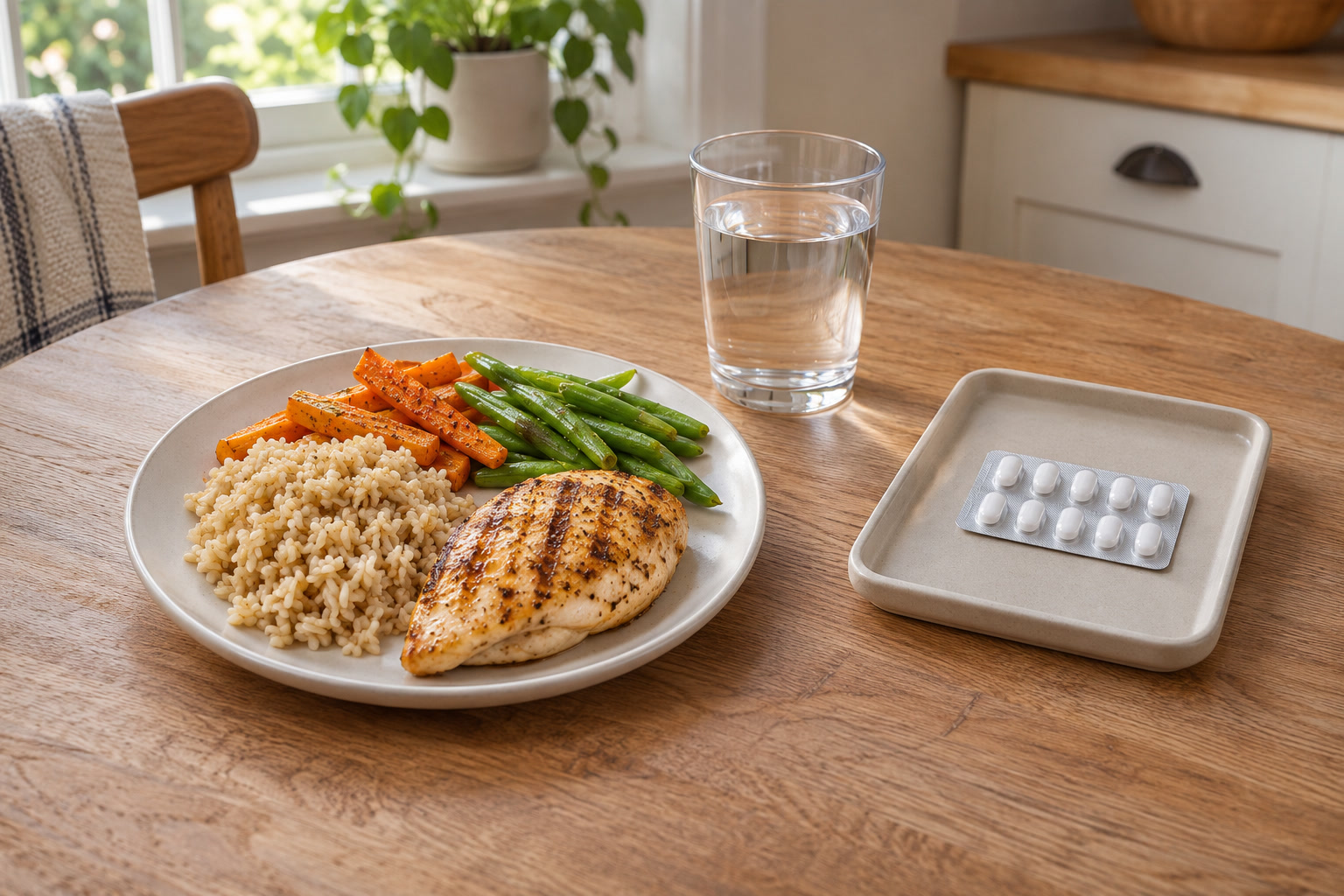
Image: Food instructions vary by medicine. Follow your own label and ask a pharmacist about meals, drinks and supplements. AI-generated illustrative image.
What you eat and drink can affect how a medicine works. Food may change how much medicine your body absorbs, how quickly it absorbs it, or how much reaches your blood. That can make treatment less effective or increase side effects.
You do not need to avoid every food mentioned in a medicine article. The right advice depends on your exact medicine, its form and your health. Start with the label and ask a pharmacist if anything is unclear.
Should you take medicine with food?
Some medicines need food to help absorption or reduce stomach upset. Others work best on an empty stomach.
- “With food” means follow the medicine’s instructions about meals. Ask whether a snack is enough.
- “On an empty stomach” means leave the gap stated on your label. There is no single timing rule for every medicine.
- “With or without food” means either may be suitable, but follow any instructions about keeping your routine consistent.
For tablets or capsules you swallow, plain water is usually a sensible choice unless the instructions say otherwise. Do not crush tablets or mix medicine into food without checking with a pharmacist.
Five food and medicine combinations worth checking
1. Grapefruit and certain medicines
Grapefruit can raise blood levels of some medicines, including simvastatin and atorvastatin, which treat high cholesterol. It can also reduce the absorption of some others, such as the allergy medicine fexofenadine.
This does not apply to every statin or every allergy medicine. Ask about your specific product. Taking grapefruit in the morning and medicine at night may not prevent an interaction because its effects can last beyond a few hours.
2. Leafy greens and warfarin
Vitamin K affects how warfarin works. Foods such as spinach, kale and broccoli contain vitamin K.
You do not normally need to give up these nutritious foods. Keep your vitamin K intake reasonably consistent, rather than suddenly eating much more or much less. Tell your anticoagulant clinic before a major diet change. This advice is specific to warfarin and should not be applied to all blood thinners.
3. Breakfast, supplements and levothyroxine
Food can reduce absorption of levothyroxine, a thyroid medicine. Many tablet labels advise taking it with water on an empty stomach, 30–60 minutes before breakfast, and keeping calcium and iron supplements at least four hours apart.
Follow your own product instructions and agreed treatment plan, as formulations and schedules vary. Keep the routine consistent and ask about coffee, antacids and supplements when planning your morning.
4. Dairy or mineral supplements and some antibiotics
Calcium, iron, magnesium and certain antacids can reduce absorption of some antibiotics. Oral ciprofloxacin is one example.
These rules do not apply to all antibiotics. With ciprofloxacin, dairy products and calcium-fortified drinks can be a problem when taken with the dose; some product labels distinguish between dairy taken alone and dairy within a full meal. Check your own leaflet and ask a pharmacist for the exact spacing needed for food, supplements and antacids.
5. Potassium-based salt substitutes and some heart medicines
Some reduced-sodium salts replace sodium with potassium. They can raise blood potassium too much when combined with medicines such as ACE inhibitors, including ramipril; ARBs, including losartan; or spironolactone.
Check with your doctor or pharmacist before using potassium salt substitutes or supplements. Do not cut out whole groups of healthy foods on your own. Any wider potassium restriction should be tailored to your health and blood-test results.
Diabetes medicines: skipped meals can matter
Skipping or delaying meals can cause low blood sugar, especially if you use insulin or a sulfonylurea. Fasting, eating much less than usual and alcohol can also increase the risk.
Discuss fasting or a major diet change with your diabetes team beforehand. If illness stops you eating normally, follow your agreed sick-day plan or seek prompt advice. Do not guess at dose changes.
Shaking, sweating, hunger, dizziness or confusion may signal low blood sugar. Check your glucose if possible and follow your prescribed low-blood-sugar treatment plan promptly.
Call emergency services if someone has a seizure, becomes unconscious or cannot swallow safely. Do not give food or drink by mouth. Use prescribed glucagon if available and someone knows how to give it.
Remember alcohol and supplements
Alcohol can increase drowsiness with some medicines and can make low blood sugar more likely. Check whether your medicine requires avoiding it.
“Natural” does not mean interaction-free. St John’s wort, for example, interacts with many medicines. Nonprescription medicines, vitamins, herbal products and supplements all belong on your medication list.
Three questions to ask your pharmacist
- Should I take this before, with or after food?
- Which foods, drinks, supplements or antacids need avoiding or spacing apart?
- What should I do if I miss a dose or cannot eat normally?
Bring a complete list of everything you take, including occasional products. A simple written schedule can help.
Healthy eating and prescribed treatment can work together. Check the instructions, keep a consistent routine and ask before making changes. This article is general information, not a personal treatment plan. Do not stop or change prescribed medicine based on it.
Sources
- FDA: Drug Interactions: What You Should Know
- FDA: Grapefruit Juice and Some Drugs Don’t Mix
- Health Canada: The Effects of Grapefruit and Its Juice on Certain Drugs
- NHS: Anticoagulant Medicines, Considerations
- DailyMed, U.S. National Library of Medicine: Levothyroxine Sodium Tablet Label
- NHS: Ciprofloxacin
- DailyMed: Ciprofloxacin Tablet Label
- NHS: Ramipril, Common Questions, Losartan and Spironolactone
- NIDDK: Low Blood Glucose (Hypoglycemia)
- NCCIH: St John’s Wort, Usefulness and Safety
#DietAndMedicines #MedicationSafety #FoodDrugInteractions #HealthyEating #AskYourPharmacist #HealthEducation
