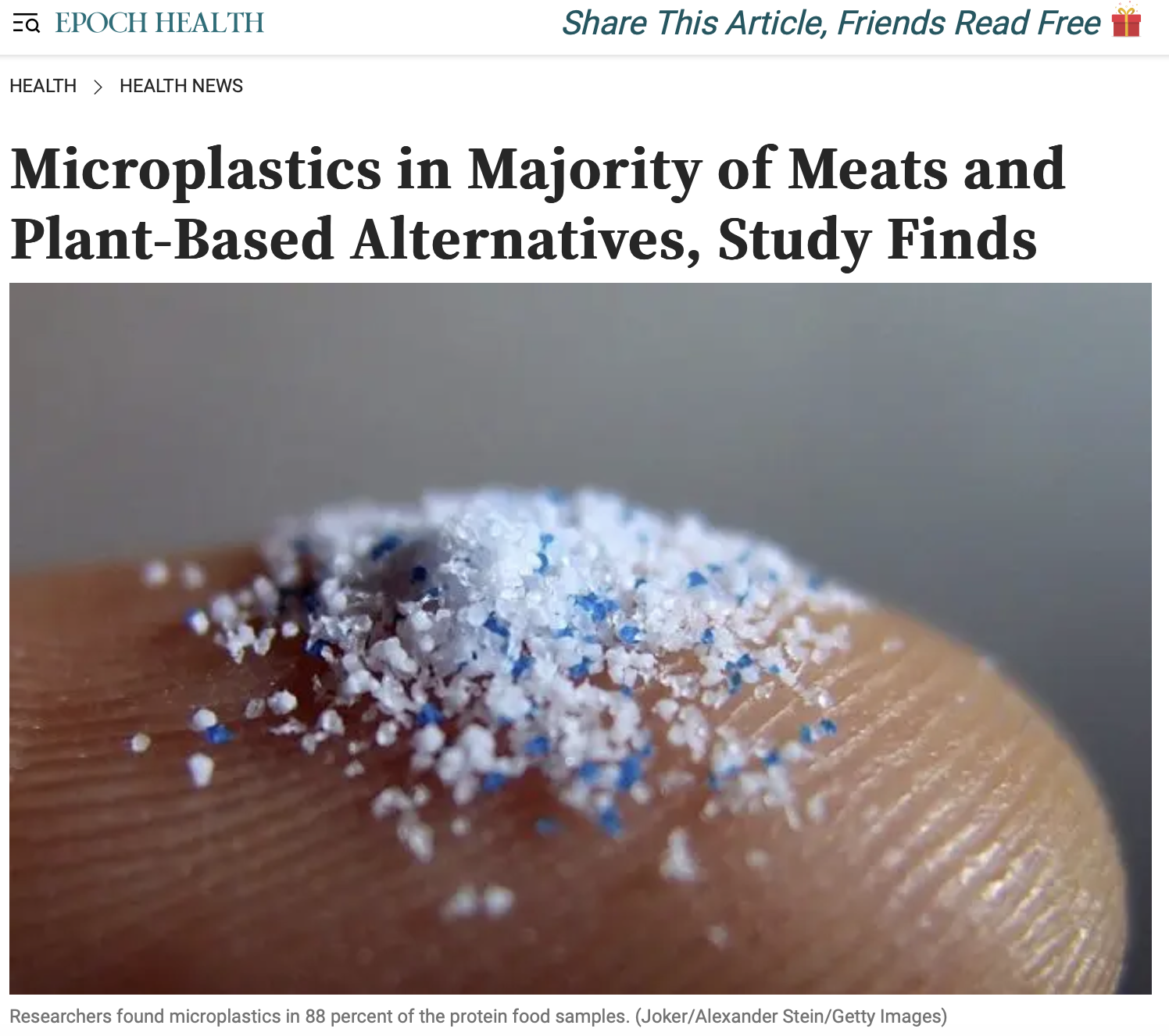
A study of protein foods sold in the United States found microplastics across several animal and plant-based product categories. That is evidence of contamination worth investigating. It is not, by itself, evidence that eating one of those foods causes disease or that a whole protein category should be avoided.

What the researchers measured
Researchers from the University of Toronto and Ocean Conservancy examined 16 protein-product types, including seafood, terrestrial meat and plant-based options. Their original study reported an average of 74 particles per serving across the products, with considerable variation. The researchers’ accompanying announcement said particles were detected in 88% of the samples and in every product type studied.
The percentage describes the tested samples, not 88% of all protein food on the market. Products came from a limited selection of brands and shops. Highly processed products contained more particles per gram than minimally processed products in this sample, suggesting processing deserves further investigation. The design cannot identify a single contamination source or establish that every processed food has the same pattern.
Detection and health risk are different questions
Microplastics vary in size, shape and chemical composition. Counting particles is one part of exposure assessment; it does not establish how much enters body tissues, what dose might cause harm or whether a particular food caused an illness.
The FDA states that available evidence does not demonstrate a human-health risk from the levels detected in foods, while also acknowledging substantial gaps in measurement methods and health-effects research. That is an assessment of current evidence, not a guarantee that every possible exposure is harmless. Better standardized testing and studies linking realistic exposure to outcomes are still needed.
What this means at the dinner table
The study does not establish a “plastic-free” protein source. Replacing all animal products with plant-based substitutes, or doing the reverse, would go beyond its findings. Continue choosing a varied diet that meets nutritional needs rather than removing major food groups because of a single study.
Reducing avoidable plastic waste and improving controls in food production are reasonable environmental goals. Claims that a supplement or cleanse removes microplastics from the body require clinical evidence; this food-sampling study supplies none.
Publication context: the researchers announced the findings on 8 January 2024. PubMed records online publication on 28 December 2023 and the journal issue date as 15 February 2024. The original headline’s “new” refers to that period.
References
- Milne et al.: Exposure of U.S. adults to microplastics from commonly-consumed proteins
- Ocean Conservancy: Study announcement, 8 January 2024
- FDA: Microplastics and Nanoplastics in Foods
