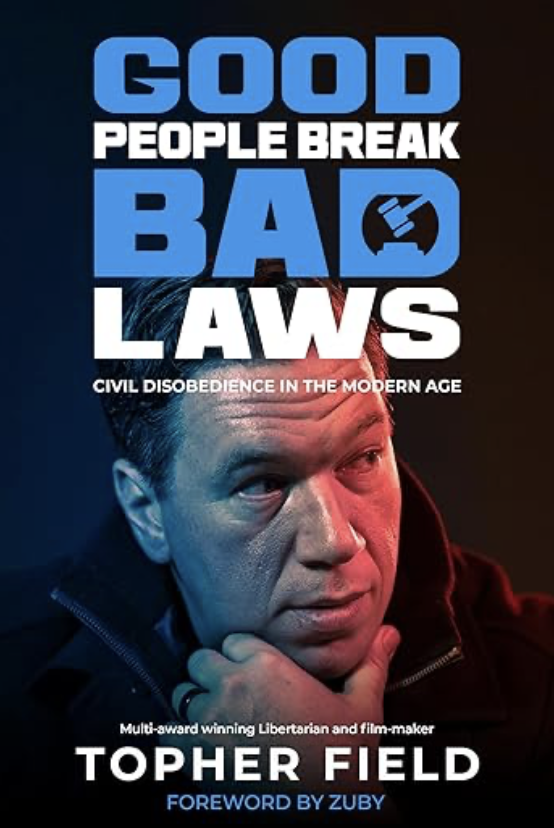
When a law appears unjust, obedience and conscience can come into conflict. Topher Field’s Good People Break Bad Laws: Civil Disobedience in the Modern Age addresses that tension through the author’s criticism of government power and experiences during the pandemic. The original post promoted the book and included the video preserved below.
A moral argument is not a legal exemption
Civil disobedience is commonly understood as deliberately refusing to comply with a law or official demand in order to challenge an injustice. Calling an action conscientious does not automatically make it lawful or remove its consequences. Equally, the fact that a government has enacted a restriction does not end legitimate debate about whether it respects rights.
The Australian Human Rights Commission describes peaceful protest as an important democratic freedom. Its guidance explains that governments have responsibilities to facilitate assembly, including tolerating reasonable disruption. Restrictions should pursue a legitimate purpose and be necessary and proportionate. In its 2026 assessment, the Commission also raises concerns about expanding protest offences and excessive penalties.
That framework offers a useful way to examine a disputed law: identify the right affected, the government’s stated objective, the evidence supporting its action and whether less restrictive alternatives exist. It invites scrutiny of officials and protesters alike without assuming that every rule is justified or every breach is defensible.
Read political claims critically
The original promotional text linked pandemic restrictions, low-emission zones, neighbourhood planning and alleged future “climate lockdowns.” Those are distinct subjects. Claims that they form a coordinated programme of total control require specific evidence; a book’s marketing language does not establish them.
Nor should a sweeping description of Melbourne’s pandemic experience replace a dated account of particular orders, protests or police conduct. Meaningful accountability depends on identifying the event and evidence, rather than repeating an emotionally powerful generalisation.
For someone considering civic action, useful preliminary questions include what outcome is sought, who may be affected, whether lawful routes remain available and what practical or legal risks arise. Petitions, public submissions, peaceful organising and court challenges can also advance disagreement. Where conduct could result in arrest or other serious consequences, advice from a qualified local lawyer matters.
The strongest contribution of this discussion is to encourage thoughtful scrutiny of power while preserving other people’s safety and dignity. Courage and careful judgment can work together.
Source credit: Topher Field is the author of the book promoted in the original post. Its existing YouTube embed and book image are preserved below; the surrounding discussion is independent commentary, not a transcript or legal advice.

References
- Topher Field: official book description
- Original embedded video: Good people, bad laws
- Australian Human Rights Commission: Protest rights in Australia, 2025 explainer
- Australian Human Rights Commission: Freedom of assembly, 2026 assessment
