A Queensland court found important legal defects in particular COVID-19 vaccination directions affecting police and ambulance staff. It did not rule that every vaccination mandate was unlawful, or that vaccination requirements could never be compatible with human rights. Understanding that distinction is central to the story.
Two different legal problems
In the February 2024 decision commonly cited as Johnston v Commissioner of Police [2024] QSC 2, the Supreme Court examined directions issued during the pandemic. The Queensland Human Rights Commission explains that the police directions were unlawful because the Commissioner had not properly considered human rights before issuing them, as required by section 58 of the Human Rights Act.
The ambulance-service direction failed on a different basis: the court was not satisfied that the decision-maker had the necessary authority to issue it. Treating these findings as one blanket judgment about the medical value of vaccination would misstate the case.
The court accepted that pressure involving a person’s livelihood limited the right concerning medical treatment without full, free and informed consent. It nevertheless found that this limitation was demonstrably justified in the circumstances considered. The distinction between a justified limitation and a defective decision-making process is legally significant.
The later class action was another proceeding
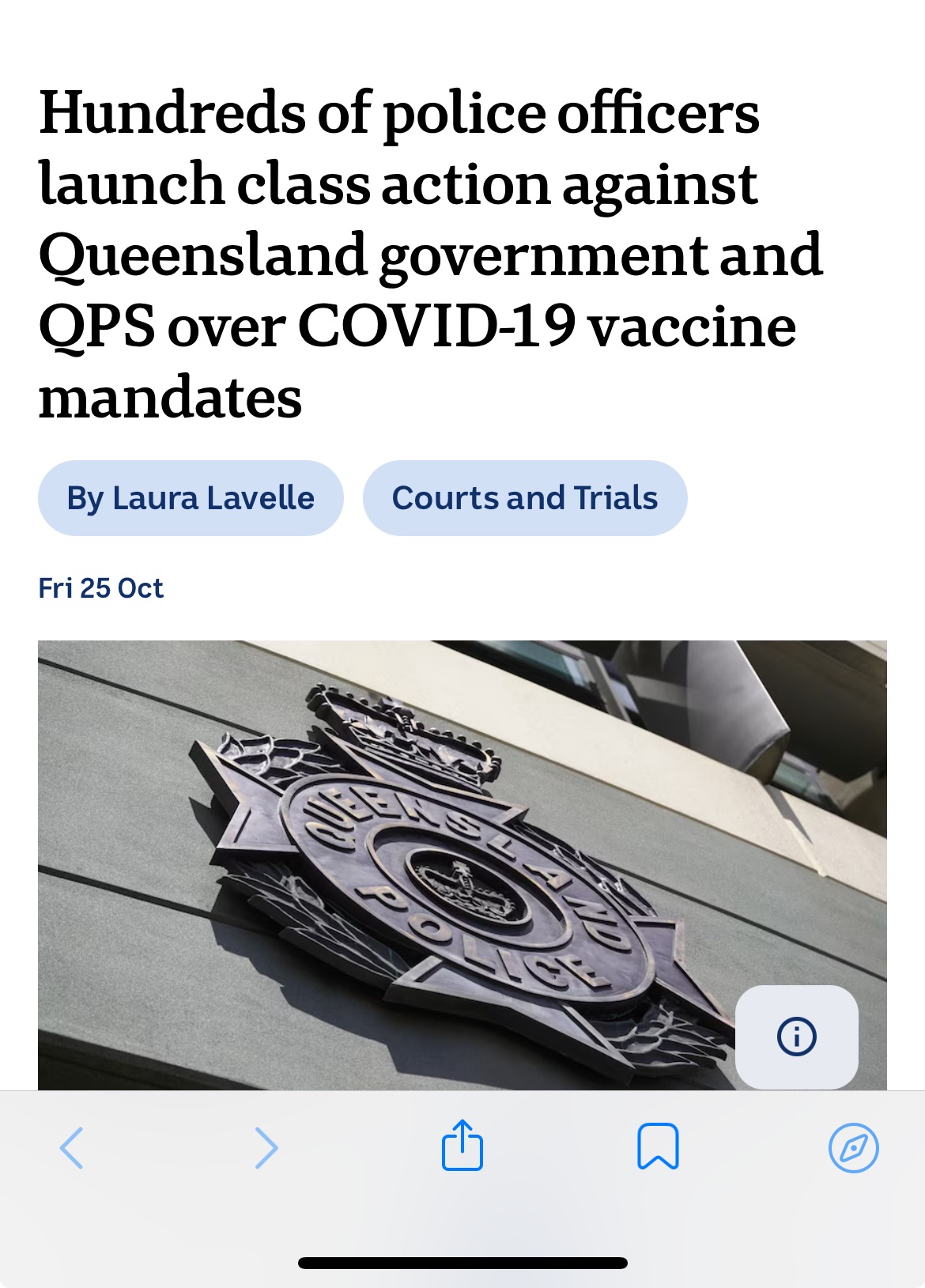
The original image reproduces an ABC News report by Laura Lavelle dated 25 October 2024. It describes a subsequent class action by current and former Queensland Police Service officers and staff, funded by Clive Palmer. The reported groups included people who were vaccinated, people whose exemption requests were refused, and people who were suspended or dismissed after declining vaccination.
Those allegations and claimed losses were matters for the later litigation. Filing a class action did not itself establish an entitlement to compensation. Nor did the earlier ruling automatically resolve every employment claim. The materials reviewed for this update do not establish a final damages outcome in that subsequent proceeding.
The broader lesson is about accountable public decision-making. Authorities must identify their legal powers, consider affected rights and explain why restrictions are justified. Equally, a responsible account of a judgment should separate the applicants, directions, findings and remedies. People affected by a specific employment decision need current advice about their own facts and applicable deadlines, rather than relying on a headline alone.
Source credit: the original clipping is from Laura Lavelle’s ABC News report. The court analysis above is independently summarised from the Queensland Human Rights Commission’s account.

References
- Queensland Human Rights Commission: Johnston case summary
- Queensland Human Rights Commission: detailed case note, September 2024
- Laura Lavelle, ABC News: subsequent police class action, 25 October 2024
