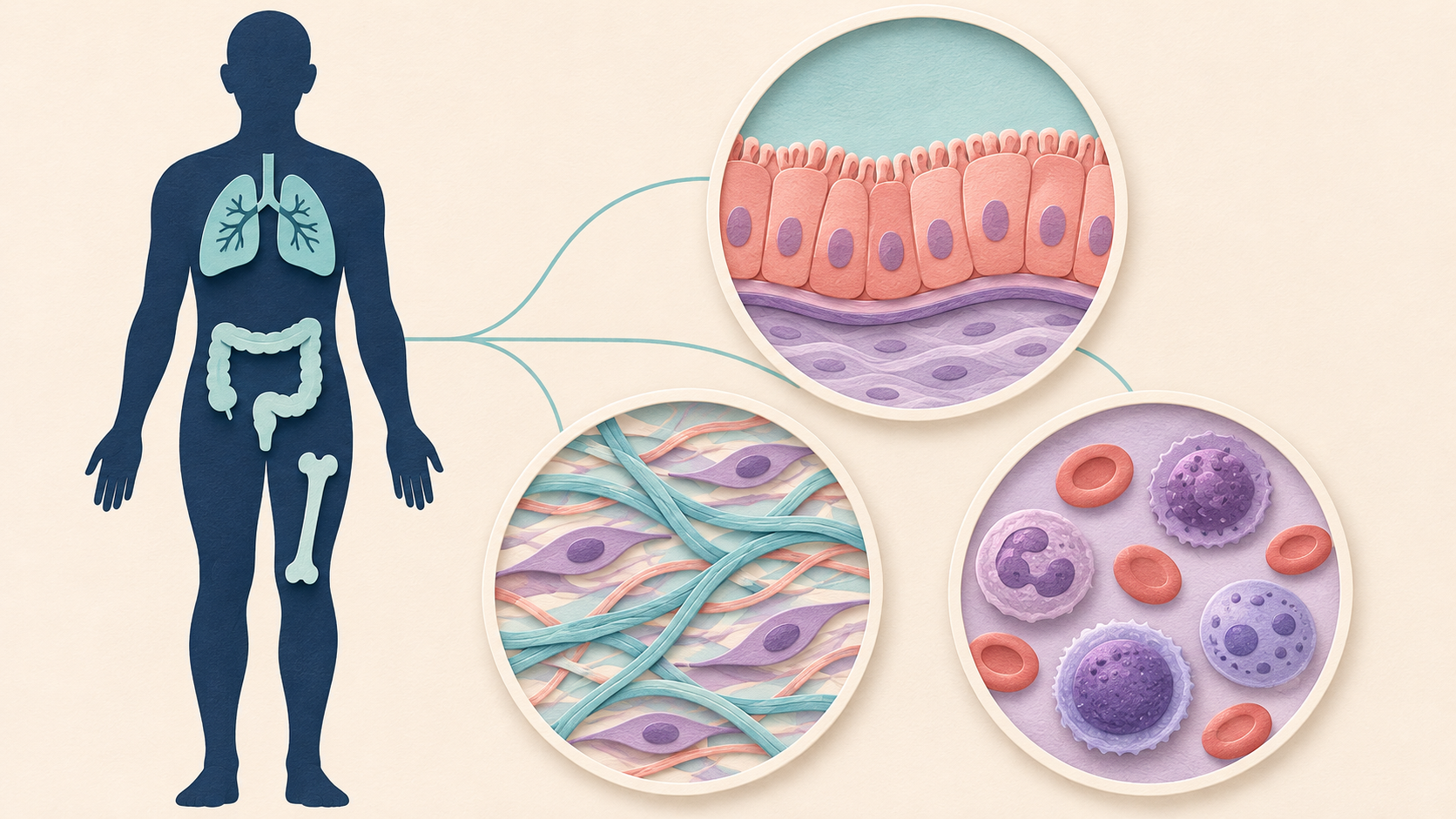
Cancer is a large group of diseases. Its name often tells you where it began, which cells are involved, or both. These details help clinicians choose tests and treatment.
A visual guide to cancer classification
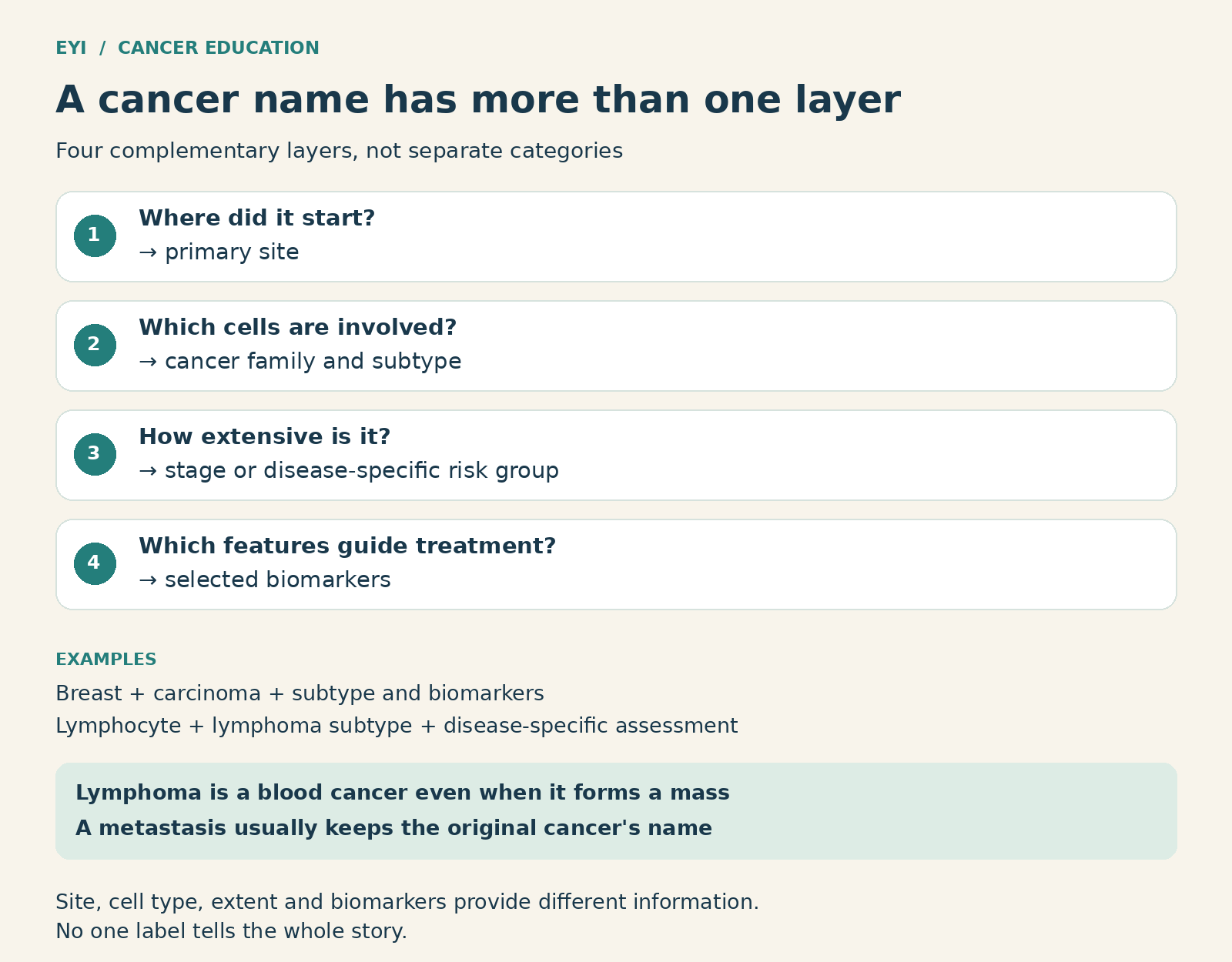
Two ways to describe a cancer
The primary site is where the cancer started, such as the breast, colon, lung or prostate. The cell or tissue type describes its biological family. Two people with cancer in the same organ may have different diseases and need different treatment. NCI SEER: Cancer Classification
Common families include:
- Carcinoma: begins in cells lining body surfaces or organs. Many breast, lung, bowel and prostate cancers are carcinomas. Adenocarcinoma is a carcinoma with gland-forming features; squamous cell carcinoma arises from squamous-type lining cells.
- Sarcoma: begins in supporting or connective tissues, such as bone, muscle, fat or blood vessels.
- Melanoma: begins in pigment-producing melanocytes, usually in the skin but sometimes elsewhere.
- Leukemia: begins in blood-forming tissue. Its major groups include acute or chronic and myeloid or lymphoid forms.
- Lymphoma: begins in lymphocytes. Hodgkin lymphoma and the many non-Hodgkin lymphomas are distinct groups.
- Myeloma: begins in plasma cells, which normally make antibodies.
There are additional families, including germ-cell tumors and many brain and spinal-cord tumors. This is an introductory map, not a complete classification. NCI: What Is Cancer?
Blood cancers and solid tumors
Blood cancers, also called hematologic cancers, include leukemias, lymphomas and myeloma. They arise from blood-forming or immune-system cells. Leukemias often involve marrow and blood without a single solid mass.
Solid tumors form a mass in an organ or tissue. Many carcinomas, sarcomas and melanomas are described this way. However, this shorthand has exceptions: lymphoma is a blood cancer that can form solid masses in nodes or organs, and myeloma-related tumors can also form masses. “Blood cancer” and “solid tumor” do not reliably describe severity or curability. Canadian Cancer Society: Types of Cancer
A simple body-site guide
- Head and neck: includes cancers of the mouth, throat and voice box; these are different from cancers that start in the brain.
- Brain, spinal cord and endocrine glands: includes many different nervous-system tumors and cancers of hormone-producing glands, such as the thyroid.
- Chest: includes lung and breast cancers, each with important subtypes.
- Digestive system: includes esophageal, stomach, liver, pancreatic, colon and rectal cancers.
- Urinary and reproductive organs: includes kidney, bladder, prostate, testicular, ovarian, cervical and endometrial cancers.
- Skin, bones and soft tissues: includes several different families, not one shared disease.
- Blood and immune system: includes leukemia, lymphoma and myeloma; these can affect multiple parts of the body.
This list gives examples rather than every possible cancer. NCI: A–Z List of Cancer Types
What happens to the name if cancer spreads?
A cancer generally keeps the name of its original site. For example, breast cancer that spreads to the lung is metastatic breast cancer, not a new primary lung cancer. A person can also develop a separate new primary cancer. Tests help distinguish these situations because treatment may be very different. Sometimes the origin cannot be identified; this is called cancer of unknown primary. Canadian Cancer Society: Types of Cancer and NCI: A–Z Cancer Types
Which details matter most on my report?
Ask for the full diagnosis, the primary site if known, the cell type, the stage or risk group used for that disease, and any biomarkers that affect treatment. Some blood cancers use different staging or risk systems from solid cancers. A site name alone cannot tell you the best treatment or predict the outcome.
A helpful starting question is: “Can you write down my exact cancer type and explain which features guide my care?”
This article is for general education. It does not diagnose a condition or replace advice from your healthcare team. Your symptoms, examination and test results need to be considered together.
#EYI #CancerTypes #BloodCancer #CancerEducation #PatientEmpowerment
