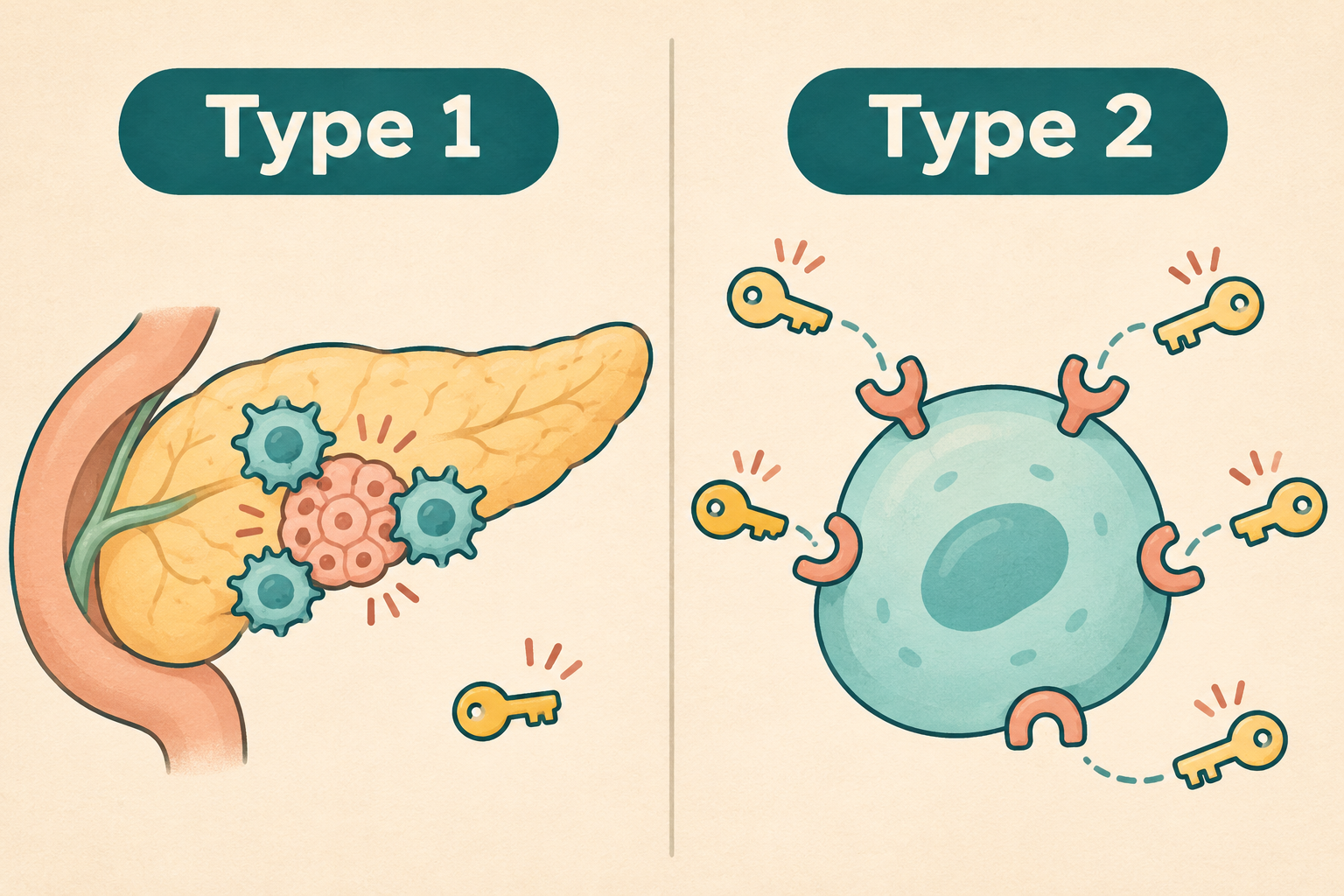
Diabetes means that the level of glucose, or sugar, in the blood is too high. Glucose gives the body energy. Insulin, a hormone made by the pancreas, helps glucose move from the blood into cells.
Type 1 and type 2 diabetes both involve insulin, but they develop in different ways. Knowing the difference helps people get the right care. Neither condition should be a reason for blame or shame.
Type 1: The body loses its insulin-making cells
Type 1 diabetes is usually an autoimmune condition. This means the immune system, which normally protects the body, attacks its own insulin-making cells by mistake. Over time, the pancreas makes little or no insulin.
People with clinical type 1 diabetes need insulin treatment to stay alive. Food choices and exercise cannot replace the insulin their bodies need.
Type 1 often starts in children or young adults, but it can begin at any age. In some adults, it develops more slowly. Eating sugar does not cause type 1 diabetes. CDC: Type 1 Diabetes
Type 2: Insulin does not work well enough
In type 2 diabetes, the body’s cells do not respond well to insulin. This is called insulin resistance. The pancreas may make extra insulin at first, but it cannot keep up with the body’s needs. Its ability to make enough insulin can decrease over time.
Type 2 is more common in adults, but children and teenagers can develop it too. Genes, family history, age, activity levels and other health factors can affect risk. It is not caused only by lifestyle, and having it is not a personal failure.
Care may include food and activity changes, medicines and sometimes insulin. Needing insulin does not mean that type 2 has turned into type 1, or that someone has failed. NIDDK: Type 2 Diabetes
Symptoms can look alike
Both types can cause:
- Feeling very thirsty or hungry.
- Passing urine more often.
- Feeling unusually tired.
- Blurred vision.
- Losing weight without trying.
- Slow-healing sores or repeated infections.
Type 1 symptoms may appear over days or weeks, although they can develop more slowly in adults. Type 2 can develop over years with few or no clear symptoms. Feeling well does not rule it out.
Contact a health professional promptly if you notice these signs. Rapidly worsening thirst, frequent urination or unexplained weight loss needs urgent assessment, especially in a child. NIDDK: Symptoms and Causes
Know the emergency warning signs
A serious lack of insulin can cause diabetic ketoacidosis, or DKA. Harmful acids called ketones build up in the blood. DKA is more common in type 1, but it can happen in type 2 too.
Warning signs include vomiting, stomach pain, fruity-smelling breath, fast or deep breathing, extreme tiredness, and confusion. Trouble breathing, confusion, inability to keep fluids down, or several DKA symptoms together are reasons to seek emergency care immediately. Call your local emergency number or go to an emergency department. Do not wait for a routine appointment or a home test to confirm the problem. DKA can be the first sign of diabetes. CDC: Diabetic Ketoacidosis
How blood tests diagnose diabetes
Doctors use blood tests to check for diabetes. For people who are not pregnant, the main diagnostic levels are:
- HbA1c, also called A1C: 6.5% or higher (48 mmol/mol). This reflects average blood sugar over roughly two to three months. Fasting is not needed.
- Fasting plasma glucose: 126 mg/dL or higher (7.0 mmol/L). This requires at least eight hours without food or drinks other than water.
- Two-hour oral glucose tolerance test: 200 mg/dL or higher (11.1 mmol/L). Blood sugar is measured two hours after a standard glucose drink, usually containing 75 grams of glucose for adults.
- Random plasma glucose: 200 mg/dL or higher (11.1 mmol/L), together with classic diabetes symptoms or a high-blood-sugar emergency. This test can be taken at any time.
Unless high blood sugar is clear-cut, doctors confirm the diagnosis with two abnormal results. These may be two different tests taken together, or a repeat test on another occasion. A single unexpected result needs follow-up, not self-diagnosis. ADA: Diagnosis and Classification, 2026
A home glucose meter or wearable glucose sensor cannot replace proper diagnostic testing. NIDDK: Diabetes Tests and Diagnosis
When A1C needs extra care
A1C does not suit every situation. Certain forms of anemia, recent blood loss or transfusion, some hemoglobin variants, and pregnancy can affect the result. A1C may also miss a rapid rise in blood sugar, so it should not delay urgent glucose testing when type 1 is suspected.
Testing during pregnancy follows specific guidance. Gestational diabetes usually requires glucose-based testing, often at 24 to 28 weeks, with different cutoffs. Your maternity team will advise about earlier testing and the right test. NIDDK: The A1C Test
How doctors tell which type it is
A high blood sugar result identifies diabetes, but does not by itself identify the type. Doctors consider symptoms, medical history and how the condition develops. Age or body size alone cannot settle the question.
If the type is unclear, blood tests for islet autoantibodies can help find signs of an immune attack. A negative result does not completely rule out type 1. These tests are not needed for everyone. ADA: Diagnosis and Classification, 2026
A C-peptide test can help estimate how much insulin the body makes. Doctors interpret it alongside blood glucose, meal timing and other factors. Results can overlap between types, especially early on, and testing shortly after a severe high-blood-sugar emergency can mislead. It is not a stand-alone answer. Urgent treatment must not wait for classification tests. ADA/EASD: Type 1 Diabetes in Adults, 2026
Get answers and a care plan
Ask your care team: Which tests confirmed my diagnosis? Is my diabetes type clear? What symptoms need urgent help?
Both types deserve timely care and ongoing support. Do not stop insulin or change diabetes medicines based on this article. Make treatment decisions with your health professional.
This article provides general education, not a personal diagnosis or treatment plan.
Sources
- American Diabetes Association: Diabetes Diagnosis
- American Diabetes Association: 2026 Diagnosis and Classification Standards
- ADA/EASD: Updated 2026 Type 1 Diabetes Consensus Report
- NIDDK: Diabetes Tests and Diagnosis
- NIDDK: Symptoms and Causes of Diabetes
- NIDDK: Type 2 Diabetes
- NIDDK: The A1C Test and Diabetes
- CDC: Type 1 Diabetes
- CDC: Diabetic Ketoacidosis
#Diabetes #Type1Diabetes #Type2Diabetes #DiabetesAwareness #HealthConditions #EYI
